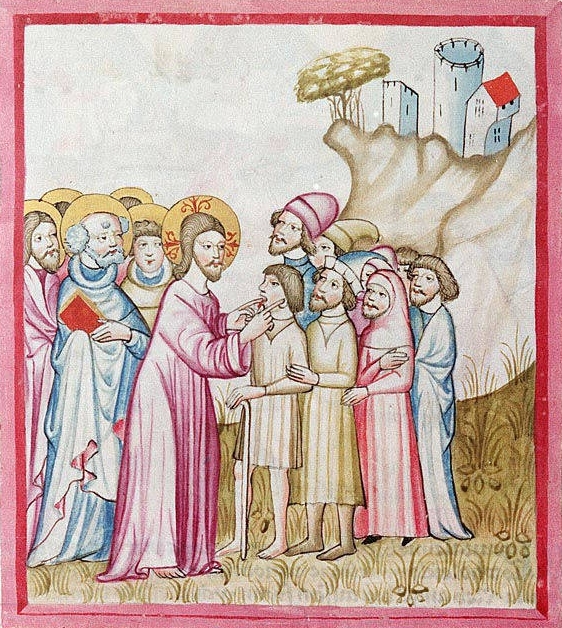
Jesus Christ healing the man who was deaf and dumb, Cura surdo mudo, miniature, folio 86 of the Codex Palatinus Vindobonensis 485 (4th or 5th century), Austrian National Library, Vienna.
One of the reasons so many crowds followed Jesus was his power to heal people – we hear of him healing cripples, blind men, a man with a skin disease, lepers, Peter’s mother-in-law, a man with a withered hand, the possessed, epileptics, the paralysed, a woman with a haemorrhage, not to mention those he brought back to life. In today’s Gospel, Jesus heals a deaf man with a speech impediment. He says to him “Ephphatha” – “Be opened!”
And his ears were opened, and the ligament of his tongue was loosened and he spoke clearly.
If you want to experience the transformative power of Jesus in your life, try and ‘hear’ his Word today. Open up a Bible and read the Gospels. Apply what he says to your life. Develop a personal relationship with Him. He is more alive than you are. Ask him to speak that word into your life: “Ephphatha!” And if you are already a Christian, ask what sort of witness you are? When people meet you, do you convey to them the excitement and joy of what it’s like to follow Christ?
I had a powerful experience of Christ’s action in my life this week. As you may know, I attend a weekly Bible study with some wonderful people from the Churches of Christ in Yanchep who love God and enjoy meditating on his Word and how it applies to their lives. We have just finished a study called 40 days in the Word and were wondering what to do next. I told them I had an inspiring series of DVDs on Catholicism if they were interested in watching it. And they agreed! When Catholics go to Bible studies with Protestants and when Protestants watch Catholic movies together, you can know that God is working out something interesting in our little part of the world. By the way, if you’re wondering why I don’t go to a Bible Study with Catholics, I can tell you that I invited the people from our Catholic Church to let me know if they were interested in more faith formation activities. Haven’t had a response yet …
Bishop Robert Barron has a homily for today here. Highly recommended.
I have often heard the claim that Catholicism is too prescriptive and full of human traditions. Some of the passages quoted to support this include one which occurs in our Gospel today:
This people honours me only with lip-service, while their hearts are far from me. The worship they offer me is worthless, the doctrines they teach are only human regulations. You put aside the commandment of God to cling to human traditions. (Mark 7:6-7)
(Just as a side note, Jesus is quoting here from the Septuagint (LXX) version of Isaiah, the one which Catholics have used from the beginning for their Old Testament.)
They follow this up with one that occurs in today’s Second Reading from James:
Pure, unspoilt religion, in the eyes of God our Father is this: coming to the help of orphans and widows when they need it (James 1:27)
… as if that’s all a Christian has to do. By the way, they often forget the second part of this sentence, which says
and keeping oneself uncontaminated by the world. (James 1:27)
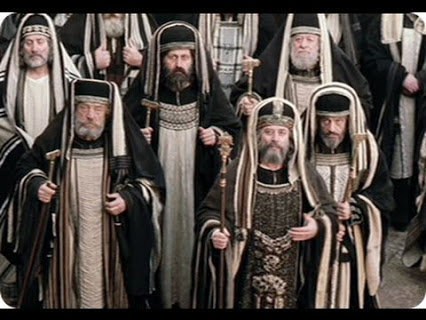
How odd then, that the very passages quoted by some anti-Catholics are the ones which we Catholics have ourselves placed together on the same day in the Lectionary. Is Jesus really telling the Pharisees to ignore the Mosaic law? Of course not, because in Matthew 23, which we read earlier in the week, Jesus says, regarding the scribes and Pharisees:
You must therefore do and observe what they tell you; but do not be guided by what they do, since they do not practise what they preach. (Matthew 23:3)
What Jesus is after is our conversion of the heart, a humble obedience to the central thrust of God’s commandments – love of God and love of neighbour. Some people seem to be under the misguided impression that Jesus condones sin, but Jesus himself calls out sin quite clearly further on in the same chapter of Mark.
For it is from within, from men’s hearts, that evil intentions emerge: fornication, theft, murder, adultery, avarice, malice, deceit, indecency, envy, slander, pride, folly. All these things come from within and make a man unclean.’ (Mark 7:21-22)
If we take the opposites of this list of potential evils and seek to develop our character along these lines, we will be entering into the heart of God’s law:
EVIL
GOOD
Fornication
Chastity, openness to children within marriage
Theft
Honesty and generosity
Murder
Supporting life, opposing abortion and euthanasia
Adultery
Faithfulness
Avarice
Generosity, charity and unselfishness
Malice
Wishing the good of the other
Deceit
Truthfulness, (including truthfulness about concepts such as marriage, by the way).
Indecency
Modesty and chastity
Envy
Contentment and kindness
Slander
Charity
Pride
Humility
Folly
Wisdom
To get back to our original question, the Catholic Church, even though its individual members may display all the propensities to evil that the rest of humanity is prone to, still proclaims what is at the heart of God’s laws, often in the face of violent opposition by the dominant culture. The many guidelines that the Catholic Church proposes are signposts to help us form our character in such a way that we will stay in alignment with Christ’s requirements for his followers. As one example, if we say it’s a sin to stay away from Sunday Mass, we mean that you are endangering your soul if honouring God is not a more important priority in your life than whatever else you have replaced that time with on Sunday (or Saturday Vigil).
Another message for us at all levels of the church is: have a good look at the example you’re setting. The Pharisees Jesus was talking to found it much easier to spend their time complaining about others rather than improving their own characters. If you are a priest, are you a real shepherd to your flock? Do you know every parishioner by name and know what their struggles are? Do you organise parish groups to learn and grow together in Christ or are you content to do no more than offer Mass? If you are a parishioner, how much time do you spend complaining about the priest? … or other parishioners? Well done if you’re a builder-upper and not a breaker-downer!
To listen to Fr Barron’s homily for today, which discusses the purpose of God’s laws, go here.
After hearing his doctrine many of the followers of Jesus said, ‘This is intolerable language. How could anyone accept it? (John 6:60)
Jesus gives everyone the opportunity of accepting or rejecting him. This is the ultimate choice we are all faced with. At the same time, faith is a gift.
He went on, ‘This is why I told you that no one could come to me unless the Father allows him.’ After this, many of his disciples left him and stopped going with him.
This looks like it is up to God the Father to decide whether anyone will accept Jesus or not, based on the quality of men’s hearts. This is why prayer is so important. Pray, pray, pray for your loved ones – and your enemies – to receive the gift of faith. Spend more time praying, and less time arguing. Spend more time telling others about Christ, and less time criticizing their morals and feeling self-righteous. You can’t expect atheists and agnostics to have a coherent system of morality unless they are grounded in Christ first. At the same time, you need to show how Christ is living and active in your life first – ask him to live in you and help you find the words to present Christ to everyone you come into contact with. And if you are readings this and don’t have faith but are intrigued by the idea of it being a gift, tell God you are open to him giving you any gifts he wants.
God gives the gift of faith to the twelve that remain with him, especially to Peter, who declares:
Lord, who shall we go to? You have the message of eternal life, and we believe; we know that you are the Holy One of God.
Peter doesn’t understand what Jesus has been talking about through most of chapter 6, but he has seen his miracles and heard his wisdom and loved him as a person, and that’s enough for him and enough for God. God can build on that openness of heart. But he can’t build on closed-minded arrogance (… although he can break down a person’s arrogance – I have a great story about that, but that will have to be a message for another day).
For a more detailed commentary on today’s Gospel, listen to Fr Barron’s homily for today. The Catholic interpretation of the Eucharist is deeply Christ-centred. If you have ever had a Protestant brother say to you, “ah, but the flesh counts for nothing” (John 6:63), then you need to listen to this.
And for a Scripture Study on these readings, go to Michael Barber’s commentary here.
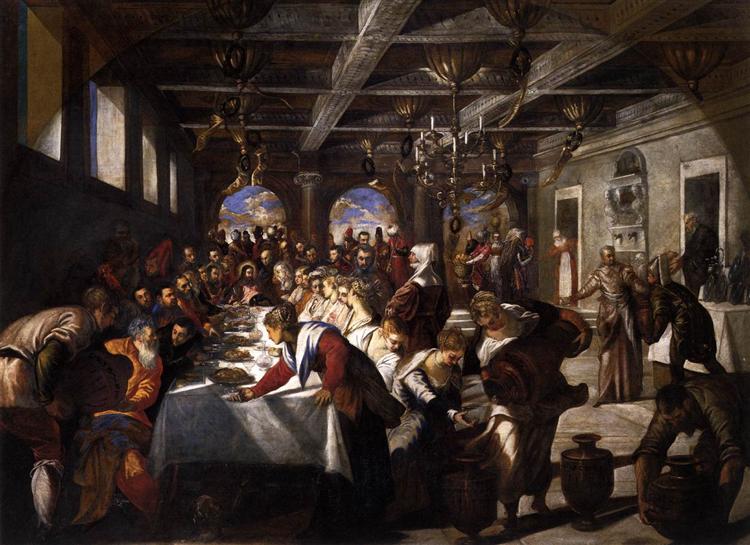
The Wedding Feast at Cana, Jacopo Tintoretto, 1561, oil on canvas, the church of Santa Maria della Salute (The Virgin Mary of Good Health), Venice, Italy.
I’m extremely busy with work commitments today, so I’ll just summarise in dot points and refer you to other pages that explain today’s readings in more detail.
Even in Proverbs (First Reading on Wisdom’s Table) and Psalms (Taste and See) God talks about the heavenly banquet he is inviting us to participate in.
St Paul (Ephesians 5) encourages us to give thanks constantly (links to the Todah sacrifice).
The heavenly banquet starts right here, right now in the Eucharist (the Todah sacrifice fulfilled):
“Amen, amen, I say to you,
unless you eat the flesh of the Son of Man and drink his blood,
you do not have life within you.
Whoever eats my flesh and drinks my blood
has eternal life,
and I will raise him on the last day.
For my flesh is true food,
and my blood is true drink.
Whoever eats my flesh and drinks my blood
remains in me and I in him.”
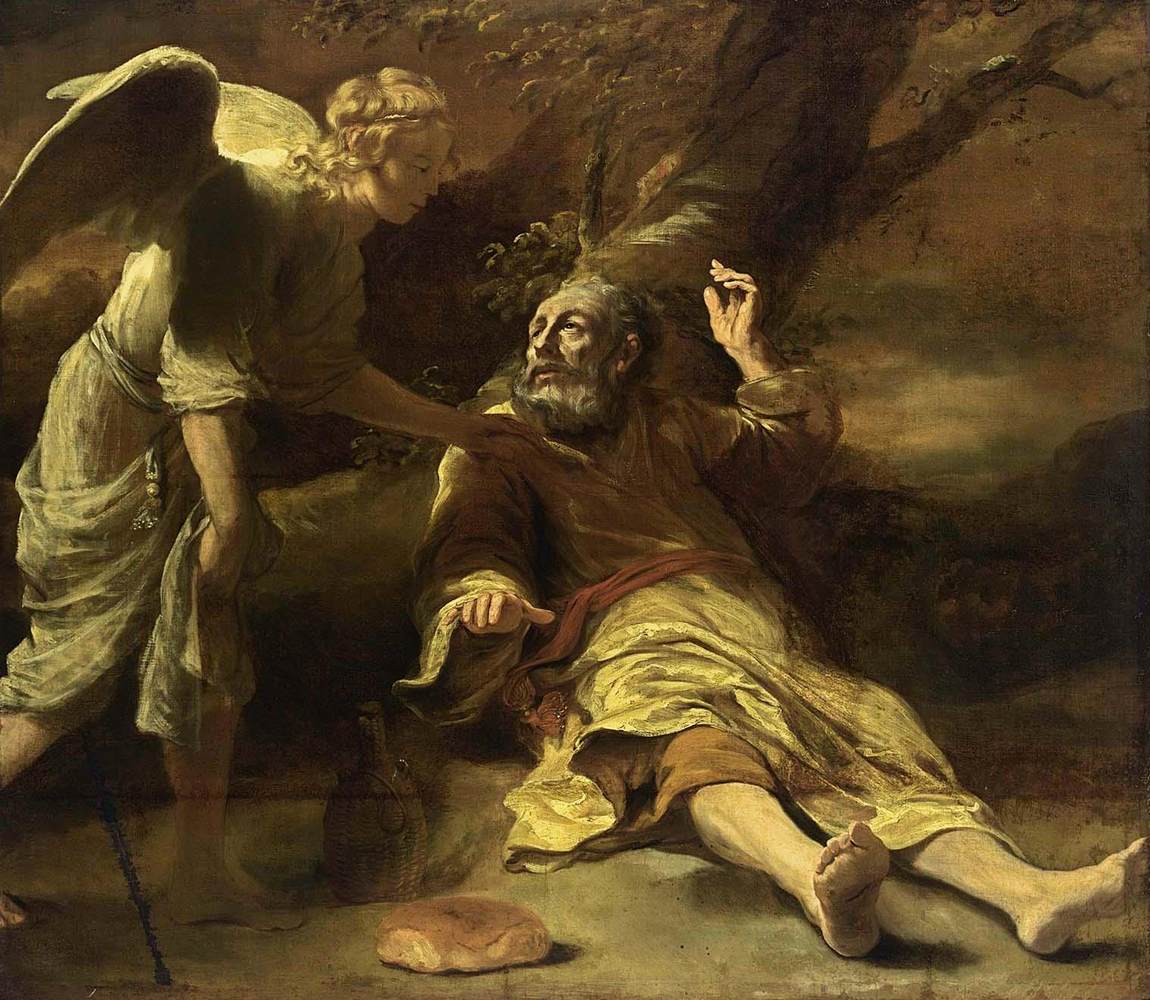
Elijah fed by an angel, Ferdinand Bol, 1660-1663, Private collection, New York.
Did God’s prophets ever contemplate suicide? Not exactly, but Elijah did feel so mentally and spiritually exhausted that he asked God to take his life (not at all the same thing as taking your own life). In today’s first reading from the book of Kings, Elijah,
sitting under a furze bush wished he were dead. ‘Lord,’ he said ‘I have had enough. Take my life; I am no better than my ancestors.’
Elijah was experiencing “ministry burnout.” Just days before, he had won a great show-down with 450 prophets of the false god Baal on Mt. Carmel, calling down fire from heaven and proving, in front of a crowd of thousands, that the LORD alone was the true God (1 Kings 18). Such a public demonstration of the power of God would seem like a tremendous victory that would lead to repentance and renewal in Israel, but that’s not what happened. The queen of Israel, a Gentile (Phoenician) princess by the name of Jezebel, was incensed by Elijah’s victory over her 450 prophets, and vowed to kill Elijah. When we find him in today’s reading, then, Elijah is fleeing for his life.
Elijah was waging a cultural and spiritual war in the kingdom of northern Israel. The war was between worship of the LORD and worship of Baal. One of the major cultural issues between these two religious was sexual practices and family life. Baal was a fertility god, and one of the ways he was worshiped was through ritual sex or “sacred” prostitution. What to do with the children that resulted? These could be sacrifice to the god (Jer 19:5). Needless to say, the standing of marriage in a culture with these practices was none too high.
By contrast, the law of the LORD had no place for sex outside of a covenant bond between a man and a woman, which would ensure that the child resulting would come into the world in the safety of a marriage, wherein he or she could be raised to adulthood by his/her own father and mother. This is “best practice” for human society. Marriage in Israel was modeled on God’s own fidelity to his covenant with the nation (Mal 2:16 and context). “Casual” sex, “cultic” sex, promiscuity, and the killing of infants had no place in worship of the God of Israel.
The king of northern Israel, Ahab, had married this Phoenician princess Jezebel, who was a Baal worshiper and was using government authority to promote Baal worship and its debased view of sexuality, marriage, and the value of infant children; and to suppress the religious freedom of the worshipers of the LORD, the God of Israel.
For all his efforts, Elijah was losing this cultural war, and now was in danger of his very life. We find him fleeing into the wilderness of Judah in order to escape from any of Jezebel’s agents. There he collapses in physical and spiritual exhaustion, and prays for death.
Yet God extends to Elijah a very gentle mercy in this passage. Twice he sends an angel to him, to awaken him and prod him to eat a mysterious meal: a jug of water and a cake of bread that inexplicably appears nearby. The nourishment from this food strengthens Elijah for a forty-day fast during his journey to Mt. Horeb (=Sinai), the mountain where God appeared to Moses. There at Horeb, Elijah will speak with God and his prophetic vocation will be renewed.
In this passage we see God’s compassion for the weakness of his prophet, expressed in the provision of this sacred meal which strengthens him for the next step in his prophetic ministry. In Christ, we “have not a high priest who is unable to sympathize with our weaknesses, but one who was tested in every way just as we are, yet without sin” (Heb 4:15). He knows our weakness and so has provided us day by day with a supernatural meal, the Eucharist, in which he comes into us and supplies the strength of spirit we need to carry on in our vocations.
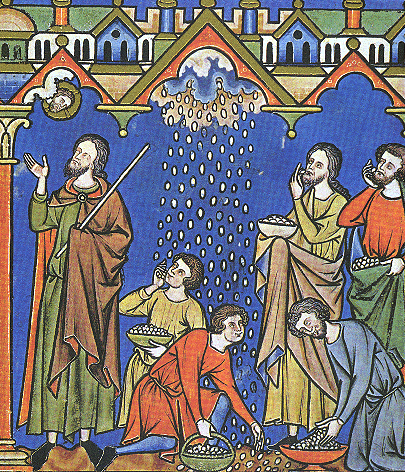
Manna, illuminated manuscript, 1244 to 1254, The Crusader Bible, MS M.638 (fol. 9v), Pierpont Morgan Library of Medieval and Renaissance Manuscripts, New York.
In conversation with atheist friends and colleagues, I have asked them, “What gives your life meaning?” Typical of the answers I have received are comments like, “I don’t care about meaning. I just want to pay the bills every week.” “I just want to be able to buy my children nice things.”(And in case you’re wondering, these comments came from people earning the average wage or higher.)
Is that all? No wonder there is such a high rate of suicide and depression! Christ came to give us so much more:
I came that they may have life and have it abundantly. (John 10:10)
In today’s readings (see end of page), Jesus tells the crowds following him,
Do not work for food that cannot last, but work for food that endures to eternal life, the kind of food the Son of Man is offering you, for on him the Father, God himself, has set his seal.’ (John 6:27)
Once you start attaching yourself to Christ and his teaching, your whole life will change from one of shallow materialism and selfishness to one of abundant life, joy and self-giving. Materialism and self-gratification can only lead to a callous disregard for others. As an example, the atheists I know, including close relatives, are all “pro-choice” when it comes to abortion. They hold that the freedom of the choice of the mother trumps the rights of the child. The fruits of this lack of respect for the most vulnerable of human lives has been supremely illustrated over the last few weeks by the secretly recorded videos made by the Center for Medical Progress. Only a few of the videos have so far been released, but they reveal the gruesome nature of the abortion industry and its profiteering from trade in the body parts of murdered children. Bishop-elect Robert Barron comments:
While they slurp wine in elegant restaurants, the good doctors—both women—blandly talk about what price they would expect for providing valuable inner organs, and how the skillful abortionists of Planned Parenthood know just how to murder babies so as not to damage the goods. One of the doctors specified that the abortion providers employ “less crunchy” methods when they know that the organs of a baby are going to be harvested for sale. Mind you, the “crunchiness” she’s talking about is a reference to the skull-crushing and dismemberment by knife and suction typically employed in abortions. For me, the most bone-chilling moment was when one of the kindly physicians, informed that the price she was asking was too low, leered and said, “Oh good, because I’d like a Lamborghini.” (The Death of God and the Loss of Human Dignity)
This issue is so important, I am posting links to all the videos that have been released so far:
VIDEO #1
A second undercover video shows Planned Parenthood Federation of America’s Medical Directors’ Council President, Dr. Mary Gatter, haggling over payments for intact fetal specimens and offering to use a “less crunchy technique” to get more intact body parts.
VIDEO #2
VIDEO #3
Dr Deborah Nucatola, Senior Director of Planned Parenthood’s Medical Services: “It makes a huge difference, I’d say a lot of people want liver. And for that reason, most providers will do this case under ultrasound guidance, so they’ll know where they’re putting their forceps. The kind of rate-limiting step of the procedure is calvarium. Calvarium—the head—is basically the biggest part. We’ve been very good at getting heart, lung, liver, because we know that, so I’m not gonna crush that part, I’m gonna basically crush below, I’m gonna crush above, and I’m gonna see if I can get it all intact.And wit h the calvarium, in general, some people will actually try to change the presentation so that it’s not vertex, so if you do it starting from the breech presentation, there’s dilation that happens as the case goes on, and often, the last step, you can evacuate an intact calvarium at the end.”
VIDEO #4
Dr Savita Ginde, Vice President and Medical Director of Planned Parenthood, Rocky Mountains: “We’d have to do a little bit of training with the providers or something to make sure that they don’t crush” [fetal organs during 2nd trimester abortions]. I think a per-item thing works a little better, just because we can see how much we can get out of it.”
Getting back to my first point, how is any of this “food that endures to eternal life”? Far more likely that it will result in eternal damnation. Pray for these people and for anyone that supports the ‘pro-choice’ lie, that their eyes will be opened to God’s light and love and that they will turn away from evil.
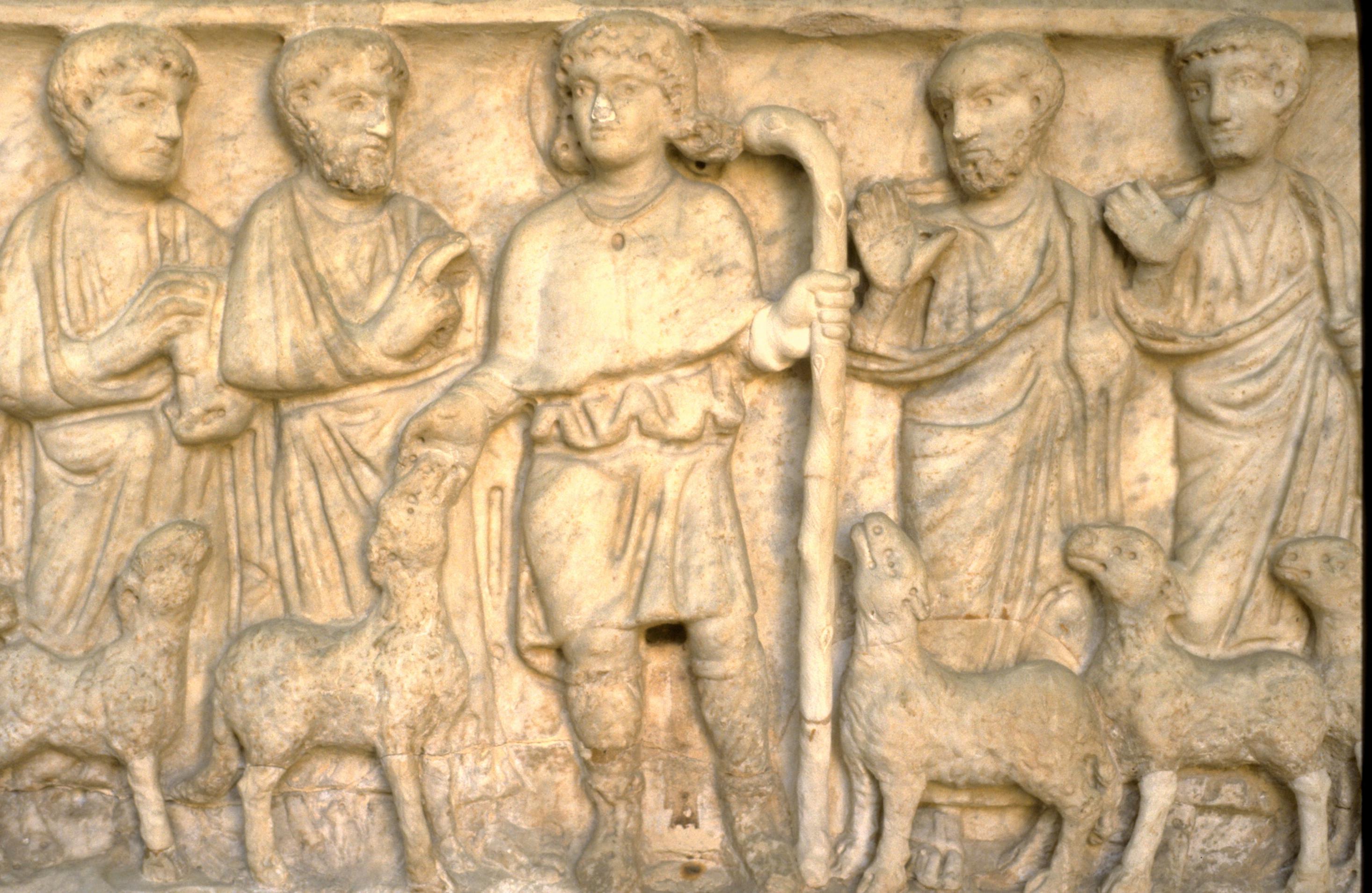
Christ as Good Shepherd with Apostles and lambs, Sarcophagus, 4th century, relief, Museo Pio Cristiano, Vatican.
We’re all looking for a leader, whether we realise it or not. This week, The Australian reported that ‘tipoffs to the National Security Hotline in Australia’s largest state have increased tenfold in two years’.
[NSW Police Force Counter Terrorism Command Head, Mark Murdoch] said that in 2013 NSW police received just 769 referrals from the National Security Hotline, which was set up in 2002 by the Howard government as a clearing-house for information from the public.
Last year, that figure jumped to 4600. This year, NSW police are projecting an estimated 6900 referrals, an almost tenfold increase on the figures of just two years ago.
…He said his officers often had just hours in which to thwart deadly terror attacks. Increasingly those attacks were either inspired or assisted by jihadists in Syria or Iraq, with the offenders getting younger and younger. Schoolchildren as young as 14 were falling under the spell of Islamic State, Mr Murdoch said.
These children are hungry for a leader, like sheep looking for a shepherd, except that they’ve attached themselves to evil shepherds, who are inspired by Satan himself. The news media will always attribute this to the wrong causes, because they do not understand the workings of Satan in the world. By contrast, the people in today’s Gospel are also described as ‘sheep without a shepherd’, but God rescues them by coming in his own person. Jesus ‘took pity on them because they were like sheep without a shepherd, and he set himself to teach them at some length.’ Let us pray that more of the lost sheep in our country will recognise the voice of the Good Shepherd, and that God will raise up strong evangelists and leaders in the Church.
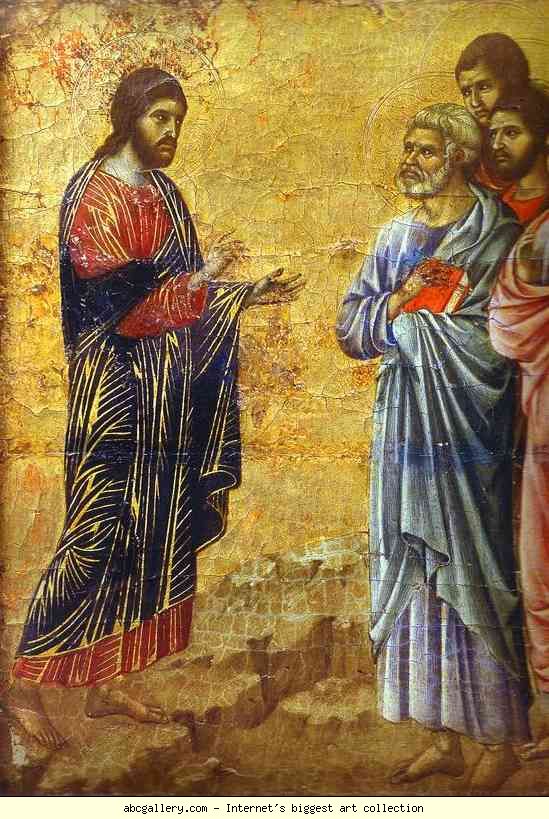
Christ commissions the disciples (detail), reverse surface of the Maesta, Altarpiece in Museo dell’Opera del Duomo, Siena, Duccio di Buoninsegna (ca 1255 – pre-1319), tempera on wood, 1308-1311.
To what extent are we free agents? Does God choose you to be saved, or do you get there (or not) by your own free choice? In his analysis of today’s readings, Dr John Bergsma says,
For myself, I’m not optimistic that I will ever understand predestination, or the mysterious interaction between God’s will and my own free will, in this life. With St. Paul, however, I do recognize that, although I often felt like I was “choosing for God” at various points in my life, when I look back now, it seems apparent that God was moving everything in a direction he always intended. How this works, I don’t know, but it is a common Christian experience. If someone wants to insist that it can’t be so, that God can’t “choose us” and at the same time we freely “choose him,” I would reply that reality is more mysterious then we realize. Even physicists have discovered this: there are apparent “contradictions” in the material world that are nevertheless true. For example, light is both a wave and particle at the same time, yet how this can be so is very difficult to imagine.
Read the rest of his commentary on the readings here. In particular he focuses on the unlikelihood of God’s choice of messengers. Download today’s Mass readings for Australia here:
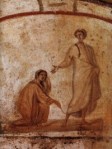
Christ healing the woman with the haemorrhage, 3rd to 4th century, Catacombs of Marcellinus and Peter, Via Casilina, Rome.
Our First Reading from the book of Wisdom today says, ‘Death was not God’s doing … It was the devil’s envy that brought death into the world.’ Obviously creatures have been dying in our universe since time immemorial, so we have to go a bit deeper than a purely literal interpretation of Genesis (and Wisdom). The most satisfying commentary I have been able to find is this excellent one from Fr Barron:
Some helpful Ignatian reflections on physical versus spiritual death can be found here.
Finally, to flesh out the discussion on what Scripture means by death, the Dominicans of the Province of St Joseph have a very helpful article called Molecules and Mourning.
The Storm on the Sea of Galilee, Rembrandt, 1633, Oil on canvas, location unknown, stolen from the Isabella Stuart Gardner Museum, Boston.
Do you trust God? If you want to know what trust in God is, look at the reactions of the relatives of the victims of the Charleston Church Shooting when they are confronted with the murderer of their loved ones in court.
“I just want everyone to know I forgive you,” said Nadine Collier, the daughter of 70-year-old victim Ethel Lance. “You hurt me, you hurt a lot of people, but I forgive you.”
“I forgive you, my family forgives you,” said Anthony Thompson. “We would like you to take this opportunity to repent. … Do that and you’ll be better off than you are right now.” (The Australian)
Trust is putting our faith in God even in the most excruciatingly painful circumstances, and knowing that his plan is much greater than our minds can understand.
In today’s first reading, Job has lost everything – children, property and health – and has been pouring out his heart to God for 37 chapters. God replies by showing Job his omnipotence:
Where were you when I laid the earth’s foundations? Tell me, since you are so well-informed! (Job 38:4)
Job only comes to the end of his sufferings when he realises his own ignorance before God:
I know that you are all-powerful: what you conceive, you can perform. I was the man who misrepresented your intentions with my ignorant words. You have told me about great works that I cannot understand, about marvels which are beyond me, of which I know nothing. Before, I knew you only by hearsay but now, having seen you with my own eyes, I retract what I have said, and repent in dust and ashes. (Job 42:2-3, 5-6)
God rewards Job for his faithfulness and humility:
And the Lord restored Job’s condition, while Job was interceding for his friends. More than that, the Lord gave him double what he had before.
Job still doesn’t understand why he had to go through such suffering, but in this book full of dramatic irony, the reader knows, because back in Chapters One and Two, we saw how Satan wanted to test the faith of Job.
‘Yes,’ Satan said, ‘but Job is not God-fearing for nothing, is he? … You have blessed all he undertakes, and his flocks throng the countryside. But stretch out your hand and lay a finger on his possessions: then, I warrant you, he will curse you to your face.’ ‘Very well,’ Yahweh said to Satan, ‘all he has is in your power.’ (Job 1:9, 11-12)
It was actually Satan who caused all of Job’s misery, not God. God only permits Satan to ‘sift us like wheat’ when He has a larger purpose in mind: an expansion of faith and trust, as in Job’s situation and in today’s Gospel where the Apostles are astounded at Jesus’ Divine Power.
Jesus tells his apostles in today’s Gospel, after he has calmed the storm,
‘Why are you so frightened? How is it that you have no faith?’
Jesus wants a lived faith, a life of radical trust and immersion in Him, not a superficial faith that runs fleeing in the other direction as soon as it encounters a challenge.
Other resources:
Read Dr Michael Barber’s Scripture Study on today’s readings.
Fr Barron in his homily for today relates the readings to today’s crisis within the Church.







 Catholic in Yanchep