Catholic in Yanchep

Go out into the deep.


Leave a comment

Ash Wednesday Masses for Perth Northern suburbs

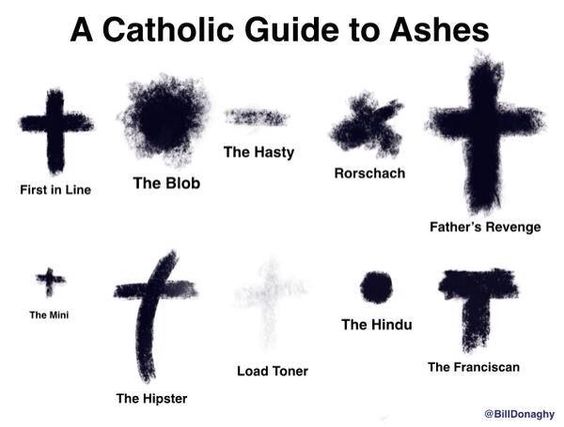
Catholic Guide to AshesNeed to get to Ash Wednesday Mass?  Here is a shortlist of venues for those in the far northern suburbs:

Yanchep to Lancelin: Sorry, Fr Augustine is away in India.

St Andrew’s Clarkson: 8 a.m. and 7 p.m.

Our Lady of the Mission, Whitfords: 6:45 a.m., 9 a.m. and 7.30 p.m.

St Anthony’s Wanneroo: 9 a.m. and 7 p.m.

St Simon Peter, Whitfords: 8:30 a.m. and 7:30 p.m.

Holy Spirit Chapel, Joondalup: 12:10 p.m.

Apologies for my tardiness in uploading the newsletter for last Sunday.  Here it is:

Word format: Year C 5th Sunday 2016

Pdf format: Year C 5th Sunday 2016


Leave a comment

4th Sunday in Ordinary Time, Year C | Righteousness without Self-righteousness: how do you do that?

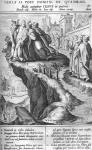
Jesus and crowd who want to throw him off cliff

Male accipitur Jesus in patria (Jesus is rejected in his hometown), Jerome Nadal, S.J., first published in Evangeliae Historiae Imagines (1593), woodcut.

Nobody loves a preacher.  Especially in Australia.  We are a practical nation who prefer those who actually do good to those who talk about it.  That’s why this year’s Australia Day awards stirred up much controversy in the newspapers and online forums.

This week’s readings offer much practical advice for anyone who considers himself a preacher.

If I have all the eloquence of men or of angels, but speak without love, I am simply a gong booming or a cymbal clashing. If I have the gift of prophecy, understanding all the mysteries there are, and knowing everything, and if I have faith in all its fullness, to move mountains, but without love, then I am nothing at all. If I give away all that I possess, piece by piece, and if I even let them take my body to burn it, but am without love, it will do me no good whatever.

Love is always patient and kind; it is never jealous; love is never boastful or conceited; it is never rude or selfish; it does not take offence, and is not resentful. Love takes no pleasure in other people’s sins but delights in the truth; it is always ready to excuse, to trust, to hope, and to endure whatever comes.

To avoid hypocrisy, I am now going to shut up and go out and see if I can do something constructive.  It will probably be something small, because I am a lazy person.   And I have to avoid talking about anything positive I might do, because of the injunction not to be ‘boastful or conceited’.  In fact I’ve already become a hypocrite, because I’ve showed off about my intention to do good.  You just can’t win!

But if you’re after more, Bishop Robert Barron’s comments on the primacy of love are essential listening.  And for a scripture study on the readings, I would recommend Dr. John Bergsma at The Sacred Page.

Today’s readings:

Word format: Year C 4th Sunday 2016

Pdf format: Year C 4th Sunday 2016


Leave a comment

3rd Sunday in Ordinary Time, Year C |Repent! What me? How dare you.

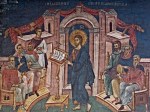
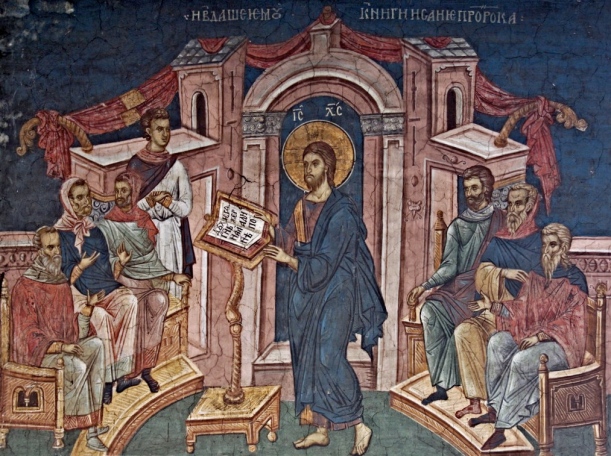
Christ in Synagogue

Christ preaching in the synagogue, fresco, ca 1350, Visoki Decani Monastery, Kosovo, Serbia.

Funny how the world seems to divide itself into two camps: those who are open to repentance and those who are closed.  Pope Francis talks about this in his new book, The Name of God is Mercy, which he has published to coincide with the Jubilee Year of Mercy.  In our Gospel Reading today, Jesus is also proclaiming a Jubilee Year: “He has sent me … to proclaim the Lord’s year of favour.”

On the one hand we have Jeffrey Tayler in Salon Magazine excoriating the Pope for – oh no!  – having the audacity to write a book.   I add my comments in red:

Not two weeks into the new year, the frocked and beanied capo dei capi of the Catholic Church, Pope Francis, chose to impose upon humanity this a book of his own authorship, “The Name of God Is Mercy.” [That’s just stupid.  You might as well say that anyone who writes anything is imposing it on humanity.  The Pope isn’t forcing anyone to read it.  Are you suggesting that anything the Pope writes should be put on the List of Forbidden Books?]  The title alone should have given reviewers cause to dispatch the tome, unopened, straight into the waste bin. “Mercy?” From a purportedly omnipotent Lord who chose to sire a kid whom He subjected to ghastly tortures culminating in execution? [1.  God didn’t “choose to sire a kid” as if God (the Father) preceded Jesus.  Jesus co-exists eternally as the ‘Son’ of God.  Son just happens to be the best word we have to describe the relationship between the First and Second Persons of the Trinity.  If you’re going to criticise the Bible, at least criticise an intelligent interpretation of it.  2.  God the Father did not subject the Son to anything.  Read the Gospels and you will see that it was humans who killed Jesus.  And it was out of love for us that Jesus paid the debt that we owed God for our sins.]  Who battered and abused poor Job on a whim? [Hello-o, read the text!  It was Satan who abused Job, not God.]  Who ordered a patriarch to knife his own long-awaited son? [You’re missing the point.  The story of Abraham and Isaac is about Trust and Obedience. If you bothered to read the whole story, God actually tells Abraham not to sacrifice his son.]  The name of God, were God to exist, would be anything but mercy.  [Sigh.  Can this writer not hear his own vitriolic tone?  He could be describing himself when he talks about ‘lack of mercy.’  But then that’s hypocrisy for you.]

On the other hand, what does Pope Francis actually say?

The Church condemns sin because it has to relay the truth: ‘this is a sin’. But at the same time, it embraces the sinner who recognises himself as such, it welcomes him, it speaks to him of the infinite mercy of God. Jesus forgave even those who crucified and scorned him.  To follow the way of the Lord, the Church is called on to dispense its mercy over all those who recognise themselves as sinners, who assume responsibility for the evil they have committed, and who feel in need of forgiveness. The Church does not exist to condemn people, but to bring about an encounter with the visceral love of God’s mercy.  I often say that in order for this to happen, it is necessary to go out: to go out from the churches and the parishes, to go outside and look for people where they live, where they suffer, and where they hope. I like to use the image of a field hospital to describe this “Church that goes forth”. It exists where there is combat. It is not a solid structure with all the equipment where people go to receive treatment for both small and large infirmities. It is a mobile structure that offers first aid and immediate care, so that its soldiers do not die.  It is a place for urgent care, not a place to see a specialist. I hope that the Jubilee [The Holy Year of Mercy] will serve to reveal the Church’s deeply maternal and merciful side, a Church that goes forth toward those who are “wounded,” who are in need of an attentive ear, understanding, forgiveness, and love.

But to receive mercy, one has to realise that one is a sinner in the first place.  Pope Francis continues:

Corruption is the sin which, rather than being recognised as such and rendering us humble, is elevated to a system; it becomes a mental habit, a way of living. We no longer feel the need for forgiveness and mercy, but we justify ourselves and our behaviours. Jesus says to his disciples: even if your brother offends you seven times a day, and seven times a day he returns to you to ask for forgiveness, forgive him. The repentant sinner, who sins again and again because of his weakness, will find forgiveness if he acknowledges his need for mercy. The corrupt man is the one who sins but does not repent, who sins and pretends to be Christian, and it is this double life that is scandalous. The corrupt man does not know humility, he does not consider himself in need of help, he leads a double life. We must not accept the state of corruption as if it were just another sin. Even though corruption is often identified with sin, in fact they are two distinct realities, albeit interconnected.  Sin, especially if repeated, can lead to corruption, not quantitatively — in the sense that a certain number of sins makes a person corrupt — but rather qualitatively: habits are formed that limit one’s capacity for love and create a false sense of self-sufficiency.  The corrupt man tires of asking for forgiveness and ends up believing that he doesn’t need to ask for it any more. We don’t become corrupt people overnight. It is a long, slippery slope that cannot be identified simply as a series of sins. One may be a great sinner and never fall into corruption if hearts feel their own weakness. That small opening allows the strength of God to enter.  When a sinner recognises himself as such, he admits in some way that what he was attached to, or clings to, is false. The corrupt man hides what he considers his true treasure, but which really makes him a slave and masks his vice with good manners, always managing to keep up appearances.

In the reading for today from Nehemiah, the people of Israel are overcome with repentance.

For the people were all in tears as they listened to the words of the Law.

They realise how far from the Lord they have been, and are overwhelmed with sorrow when this knowledge comes upon them.  But Ezra tells them, “Do not be sad: the joy of the Lord is your stronghold.”  It is only after we experience that metanoia, that we can participate in the Jubilee that flows out of it.

Prayer: Father God, help us to avoid the pride that makes us justify our self-sufficiency.  Help us to develop habits of humility and self-examination.  Help us to turn towards you daily and find peace and communion with you.

For a scripture study on today’s readings – including the historical background – read Dr John Bergsma’s commentary at The Sacred Page.

Bishop Barron takes this from a different angle – the importance of building our religious identity – in Walls and Bridges.

Also watch scripture scholar, Dr Brant Pitre’s Youtube video on this Sunday’s readings:

https://www.youtube.com/watch?v=wv3Pqfyxp1A

Today’s readings:

Word format: Year C 3rd Sunday 2016

Pdf format: Year C 3rd Sunday 2016


Leave a comment

The Baptism of the Lord, Year C | The Christian Age of Enlightenment

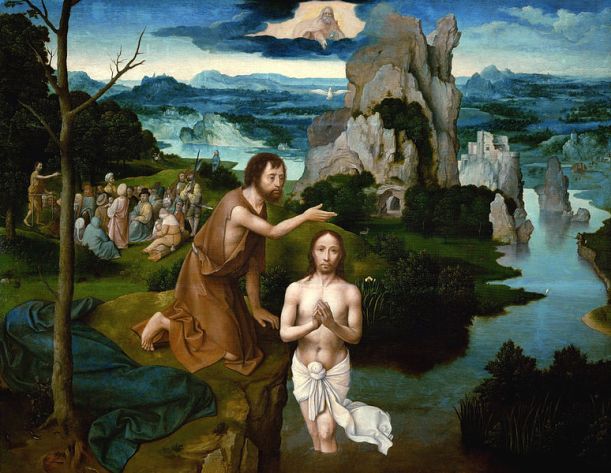
Baptism-of-Christ-Joachim Patinir

The Baptism of Christ, Joachim Patinir, 1510-20, oil on oak, Kunsthistorisches Museum, Vienna.

Fooled you with the title!  No I’m not going to talk about the 18th Century Age of (so-called) Enlightenment which was a reaction against the excesses of Monarchical power, the Thirty Years War and its ilk.  But I am going to talk about the meaning of Baptism and the history of the feast we celebrate today: The Baptism of the Lord.  It was as late as 1969 that this celebration was allocated to the First Sunday after Epiphany by Pope Paul VI, but its history dates back much further and provides an important milestone in linking the celebrations of the Eastern Orthodox and the Catholic Church.

In the Western Church, the focus of Epiphany on 6th January (or the Sunday after 1st January) is on the revelation of Christ to the Gentiles, represented by the Magi.  But in the Early Church, Epiphany marked the revelation of God to mankind as Trinity.  At his Baptism, we see all three persons of the triune God in action: Christ being affirmed by his Father as the Beloved Son and the Holy Spirit descending on him in the form of a dove.  In the Early Church, Epiphany was also known as the Feast of Holy Lights.  The Holy Lights refer to the many candles which illuminated the celebration of the Baptism of Catechumens (new converts) which occurred on the same day. But the deeper meaning is that of the illumination or enlightenment which Baptism brings.  There is a wonderful homily on Baptism given by St Gregory of Nazianzus, Archbishop of Constantinople, on 6th January in the year AD 381 (sorry, I refuse to give the politically correct CE).  St Gregory keeps us spellbound by his mystical description of Baptism.  Baptism is God’s gift to those of us who have been chosen to share heaven with him (he would like to choose us all, but out of respect for us gives us the freedom to reject his offer).  Over to Gregory:

I.  Yesterday we kept high Festival on the illustrious Day of the Holy Lights; for it was fitting that rejoicings should be kept for our Salvation, and that far more than for weddings and birthdays, and namedays, and house-warmings, and registrations of children, and anniversaries, and all the other festivities that men observe for their earthly friends. And now today let us discourse briefly concerning Baptism, and the benefits which accrue to us therefrom, even though our discourse yesterday spoke of it cursorily; partly because the time pressed us hard, and partly because the sermon had to avoid tediousness. For too great length in a sermon is as much an enemy to people’s ears, as too much food is to their bodies….[priests take note!]  It will be worth your while to apply your minds to what we say, and to receive our discourse on so important a subject not perfunctorily, but with ready mind, since to know the power of this Sacrament is itself Enlightenment.

II.  The Word recognizes three Births for us; namely, the natural birth, that of Baptism, and that of the Resurrection …

III. Concerning two of these births, the first and the last, we have not to speak on the present occasion. Let us discourse upon the second, which is now necessary for us, and which gives its name to the Feast of the Lights Illumination [He’s talking about Baptism] is the splendour of souls, the conversion of the life, the question put to the Godward conscience. It is the aid to our weakness, the renunciation of the flesh, the following of the Spirit, the fellowship of the Word, the improvement of the creature, the overwhelming of sin, the participation of light, the dissolution of darkness. It is the carriage to God, the dying with Christ, the perfecting of the mind, the bulwark of Faith, the key of the Kingdom of heaven, the change of life, the removal of slavery, the loosing of chains, the remodelling of the whole man. Why should I go into further detail? Illumination is the greatest and most magnificent of the Gifts of God. For just as we speak of the Holy of Holies, and the Song of Songs, as more comprehensive and more excellent than others, so is this called Illumination, as being more holy than any other illumination which we possess.

IV.  And as Christ the Giver of it is called by many various names, so too is this Gift, whether it is from the exceeding gladness of its nature (as those who are very fond of a thing take pleasure in using its name), or that the great variety of its benefits has reacted for us upon its names. We call it, the Gift, the Grace, Baptism, Unction, Illumination, the Clothing of Immortality, the Laver of Regeneration, the Seal, and everything that is honourable. We call it the Gift, because it is given to us in return for nothing on our part; Grace, because it is conferred even on debtors; Baptism, because sin is buried with it in the water; Unction, as Priestly and Royal, for such were they who were anointed; Illumination, because of its splendour; Clothing, because it hides our shame; the Laver, because it washes us; the Seal because it preserves us, and is moreover the indication of Dominion. In it the heavens rejoice; it is glorified by Angels, because of its kindred splendour. It is the image of the heavenly bliss. We long indeed to sing out its praises, but we cannot worthily do so.

V.  God is Light: the highest, the unapproachable, the ineffable, That can neither be conceived in the mind nor uttered with the lips,  That gives life to every reasoning creature. He is in the world of thought, what the sun is in the world of sense; presenting Himself to our minds in proportion as we are cleansed; and loved in proportion as He is presented to our mind; and again, conceived in proportion as we love Him; Himself contemplating and comprehending Himself, and pouring Himself out upon what is external to Him. That Light, I mean, which is contemplated in the Father and the Son and the Holy Ghost, Whose riches is Their unity of nature, and the one outleaping of Their brightness.  

(You can read the rest here: Gregory Nazianzen, Oration 40, The Oration on Holy Baptism)

You have to give the Greek Fathers credit for their emphasis on mysticism and beauty.  Now that is true Enlightenment!

And if you want a great contemporary talk about Baptism as the Door of the Spiritual Life, look no further than this one by Bishop Barron.

Today’s readings:

Word format – Baptism of the Lord Year C 2015

Pdf format –  Baptism of the Lord Year C 2015

by Deirdre Fleming


Leave a comment

The Epiphany | How God gives clues to the wise

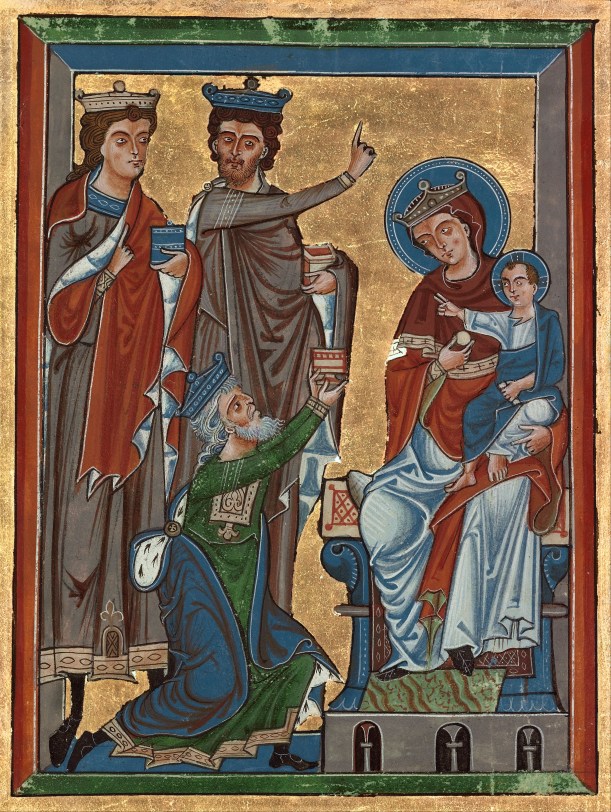
The_Adoration_of_the_Magi_-_Google_Art_Project_(6821891)

Adoration of the Magi, c. 1240, Illustrator unknown, tempera and gold leaf on parchment, Wurzburg, Germany, currently in J. Paul Getty Museum, California.

Today we celebrate the Epiphany of the Lord, with today’s Gospel recounting the story of the Magi following the star to arrive at the particular location of the King of Kings.

As we look back over the centuries, we can see how God has been moving through time, making it easier for The Wise to find him, even though oftentimes it may appear to the contrary.  But if we look at the course of human history, we have now arrived at a situation where we have this distribution of religions throughout the world:

Religion Percentage
Christians 31.50
Muslims 22.32
Judaism 0.20
TOTAL 54.02

If God is truly guiding the unfolding of world events, it appears that he is guiding the majority of people at least towards an understanding that there is One God.  For, of all belief systems, the Abrahamic Religions (Christianity, Islam and Judaism) have now arrived at a point where they make up 54% of the global population.

Hinduism and Buddhism make up only 13.95% and 5.25% of global religions respectively, so we’ll leave them to one side for now.

It is not that statistics ever prove that the most commonly held belief is the one likely to be true, but if God is in charge, he would be wanting most people to have a reasonable opportunity of coming to the belief that One God is much more likely than many Gods or no gods at all.  He is a loving Father, after all, and he doesn’t want us to be lost or without guidance.

Secondly, out of all the Christians in the world, approximately 50% are Catholic.  So again, God is guiding at least half of all the Christians in the world to the understanding that it is reasonable to expect that there should be a human steward (i.e. the Pope) appointed to act as an umpire for the Church in every era – as explained by Jesus in Matthew 16:18. Jesus did this so that the Church would be able to speak with a unified voice.  The problems of not having a duly appointed leader are evident in Islam today, where there is no clear and authoritative direction to the Islamic faithful on how to approach the concept of jihad in the modern world.

So even if it seems as if there is a multiplicity of different ideas and religions in our postmodern world such that it is impossible to choose truth in the face of chaos, God is clearly providing some pointers which the wise might take note of.

Thirdly, if God is in charge of your life, he will guide and direct you personally towards him.  I’m not joking.  All he wants is for you to say, like the Magi, “We have come seeking the King.  Where do I find him?”

You can be sure that anyone with an open heart filled with a desire for truth and goodness will be led in the right direction.

For a clearer explanation of this spiritual journey, listen here.

Today’s readings:

Word format: Epiphany Year C

Pdf format: Epiphany Year C

written by Deirdre Fleming


Leave a comment

4th Sunday of Advent, Year C | Loving Our Mother

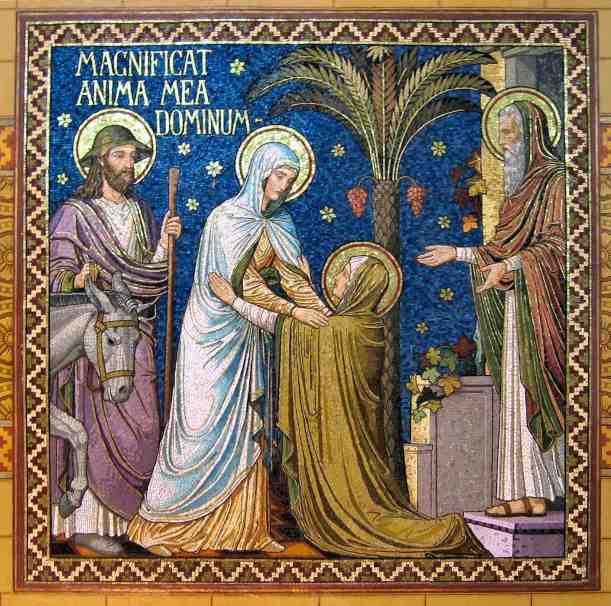
Visitation Clyde Monastery

The Visitation, mosaic, nave of Clyde Monastery, Missouri, USA.

No time for writing much today, as I’ve had to do my Christmas shopping! Others have done a much better job so I will point you in their direction:

  1. John Bergsma explains why the Catholic veneration of Mary is completely scriptural, based on today’s readings.
  2. Bishop Barron has a homily for today which asks us to look at our part in God’s theo-drama.  (Didn’t you know you are an actor in a great play and that it’s not all about you?  Best to get in touch with the Director, so that you can understand your part!)
  3. And even National Geographic realises that Mary is the world’s most powerful woman!

The readings for today are here:

Word format: Year C 4th Sunday of Advent 2015

Pdf format: Year C 4th Sunday of Advent 2015

For Christmas Mass times, go here.

And a very happy 21st birthday to Alistair Mungo Fleming (16th December) who may well be the first person in the Yanchep to Lancelin Pastoral Area to have been baptised here as a baby and still be an active member of our Pastoral Area at the age of 21.  Well done, Alistair!


1 Comment

Christmas Mass Times 2015 | Yanchep, Guilderton, Lancelin

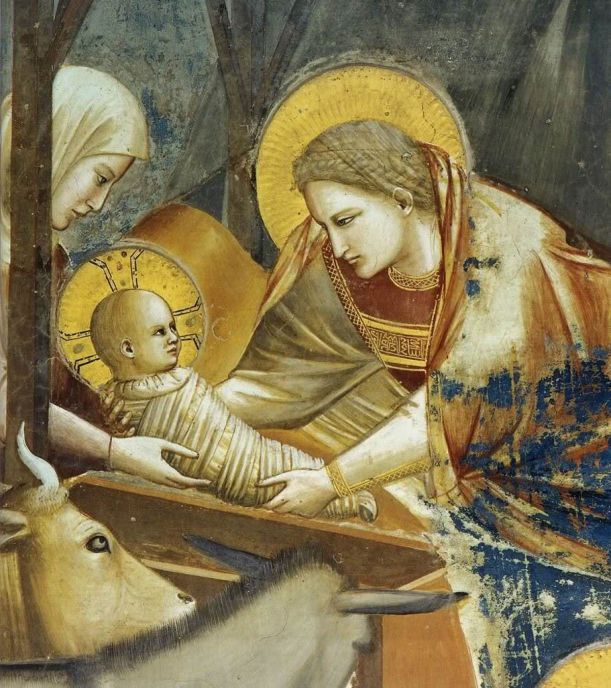
giotto-di-bondone-no.-17-scenes-from-the-life-of-christ-1.-nativity-birth-of-jesus-detail

No. 17, Scenes from the Life of Christ – Nativity: Birth of Jesus, Giotto di Bondone (1304-1306), Scrovegni Chapel, Padua, Veneto, Italy.

PLEASE JOIN US FOR CHRISTMAS MASS!

YANCHEP: 6 p.m. Christmas Eve, 24 December, Yanchep Community Centre, 7 Lagoon Drive.

GUILDERTON: 8 a.m. Christmas Day, 25 December, Guilderton Community Hall, Wedge Street.

LANCELIN:  9.45 a.m. Christmas Day, 25 December, 33 Gingin Road, Lancelin.

Enquiries?  Phone Fr Augustine on 9561-2172 or text 0400-660-337.


Leave a comment

3rd Sunday of Advent, Year C | Unwavering Joy!

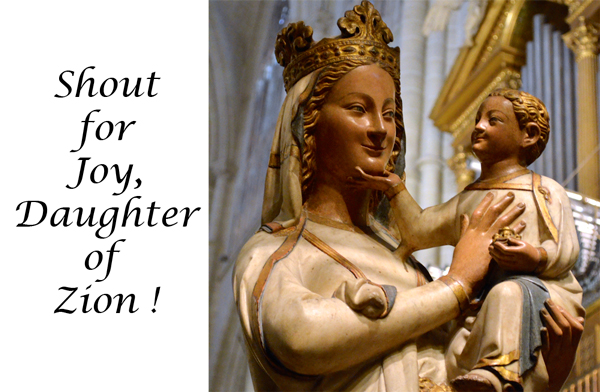
Daughter-of-Zion-600px

Statue of the Smiling Virgin Mary, Cathedral of Santa Maria de Toledo, Castile-La Mancha, Spain.

The third Sunday of Advent, Gaudete Sunday, reminds us to rejoice!

(The thoughts below are distilled from a 2003 homily by Bishop Robert Barron.)

I wonder how many of us associate God with joy?  God, by his nature, is joy.  The Father empties himself in love for the Son.  The Son empties himself in love for the Father.  The Holy Spirit is the empowering love shared by the Father and the Son.

How do we obtain real joy?  It comes from the act of letting go of oneself.  God created us, not because he needed us or needed created things, but out of the sheer intensity of his joy.

The 5th century Syrian philosopher, Pseudo-Dionysius said: “Goodness is diffusive of itself.” There is a natural inclination in all good things to spread their goodness to others.  That is what God is like.  Jesus makes this clear when he says, “I came that you might have life, and have it to the full.”  He didn’t come primarily to give us the law, not primarily to judge us, but to give us joy.  The minute you put anything other than joy at the centre of the Christian life, you have misconstrued it.

When we think of God primarily as judge, as someone who is brooding over us, it’s a sign that we’re caught in sin.  When you run away from the Divine Love, you run to the far country of sin, that’s when God seems distant.  It’s not that God has moved, but that you’ve moved.  When God seems difficult and overbearing, that’s not because he is, but it’s because by closing yourself in, you have made yourself the enemy of God.

The moral life begins with joy.  Law, virtue, obligation only exist to serve joy.

Christ’s purpose is to baptise us in the Holy Spirit.  Baptism in the Holy Spirit means to let God live in you in such a way that you experience the very joy which is the inner life of God.  In today’s Gospel, John the Baptist says, “he will baptise you with the Holy Spirit and fire.”  Fire is that passion, enthusiasm and sense of purpose, that the Holy Spirit gives you.  Purposeful people are joyful.  When the Holy Spirit is in you, you know what to do!  You know where to go, your life is on fire!  That’s what Jesus has come to do to you!

John also says, “His winnowing fan is in his hand to clear his threshing-floor and to gather the wheat into his barn; but the chaff he will burn in a fire that will never go out.”  Uh-oh – this sounds like bad news.  On the contrary, this is very good news!  The winnowing fan is like a rake that tosses the wheat up into the air, so that the wind can blow the chaff away, allowing the good grain to fall to the ground.  When Christ is in your life, when you have been baptised in the Holy Spirit, it means that Christ is now going to work in you, separating out all that is evil and dark and dysfunctional, from all that is in the Image of God.  When you let Christ work in you, then your hatred and your violence and your selfishness and your self-absorption and your division – he will throw these up into the air so that they might be blown away!  This is very good news.  When Jesus lives in you, this is the process of transformation that happens, and it is conducive to joy!

Joy is something we can be commanded to experience: in the Second Reading, Paul says, “I want you to be happy, always happy in the Lord.” or “Rejoice in the Lord always, and again I say rejoice!”  It is an action.  If you just sit around waiting for something to come and make you joyful, then you’re not going to be joyful.  Paul continues: “Everyone should see how unselfish you are!”  God is joy because God is a communion of love. Paul is commanding us to be like God in being unselfish.  You are joyful in the measure that you forget about yourself and look to the other, in love.  It’s not that complicated.  Hard to do?  Yes it is, for us sinners, but not that complicated to describe.

Let me give you a hint.  When you find yourself depressed, listless, hopeless, desperate … perform a simple act of love.  What’s love?  It’s willing the good of the other – nothing grandiose, it doesn’t have to be.  Just a simple act of caring for someone around you.  And believe me, Christians are surrounded by people whom we can love.  When you find yourself depressed, act, act, be selfless.  And that’s where joy comes from.  Paul goes on, “Dismiss all anxiety from your minds.  Present your needs to God in every form of prayer, and in petitions full of gratitude.”  What did Jesus say?  “Perfect love casts out all fear!”  The opposite of love is not hate.  The opposite of love is fear.  Where does anxiety come from?  Anxiety comes from the conviction that we are in charge of our lives.  I worry and fret because I’ve got to make things right.  I’ve got to determine how things go.  No, dismiss fear from your mind when you hand your life over to God, and you say, “Lord, you are the Lord of my life.”  What does God want us to do?  He wants us to ask him, “Lord guide me, Lord give me direction, Lord show me the path.”  He wants us to turn our lives away from our own obsessions and anxieties and to turn to him.  This is true of all the saints.  At some stage they said, “My life is not about me.  It’s about Him, and I’m going to let God run my life.”  In that moment and in that measure we find joy!

Listen to Bishop Barron’s homily here.

Today’s Readings (Australia):

Word format: Year C 3rd Sunday of Advent 2015

Pdf format:  Year C 3rd Sunday of Advent 2015


Leave a comment

2nd Sunday of Advent, Year C | Ruminations on hypocrisy

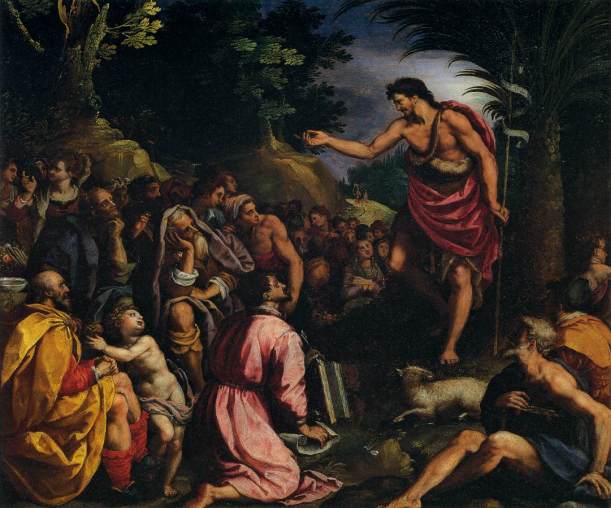
Preaching of John the Baptist-Alessandro Allori

The Preaching of St John the Baptist, Allesandro Allori (1527-1607), oil on copper, Palazzo Pitti, Florence, Italy.

In this Advent season, we are looking forward to the arrival (adventus) of Christ, not only at Christmas time, but when he returns “at the end of the age”.

Paul, in today’s reading from Philippians, urges us:

My prayer is that your love for each other may increase more and more and never stop improving your knowledge and deepening your perception so that you can always recognize what is best.  This will help you to become pure and blameless, and prepare you for the Day of Christ.

I would say to all Christians:  Let’s spend more time become ‘pure and blameless’, examining our consciences and going to confession.  Remember that the devil knows your failings, and is only too ready to point them out to anyone who doesn’t agree with you so that they may call you a hypocrite and use that as an excuse for not believing you about the important things in life (yes, other people sometimes take great delight in accusing us).  For an obvious example, look at how the action, or rather the inaction, of Archbishop Frank Little has caused immeasurable harm to so many abused children.  When we Christians set a poor example, how can we expect anyone to believe us?

So to continue in our examination of conscience …  Do you harbour feelings of resentment towards anyone?  Is there anyone in your family you don’t speak to?  Do you constantly gripe about ‘other people’?  Is there any aspect of Church teaching you have difficulty believing?  How hard have you tried to understand Church doctrine and educate yourself?  Are you ready to defend and explain your faith? Keep going here …

If you, like me, have relatives who do not follow Christ, there is a wonderful new resource out from Brandon Vogt to help you draw others to Christ.  Prayer is essential, but there are also many practical things you can do.  Sign up to Help Them Return.

Finally, here is an excellent talk from Bishop Robert Barron on the historicity of the Gospel, based on today’s Gospel Reading from Luke.  And a fantastic video on what exactly we mean by the Gospel.  Can you explain the Gospel, or are you tongue-tied?

I must admit to laughing my head off when I see people like Bill Maher dismissing Christianity as ‘silly stories’ and ‘intellectually embarrassing myths from the Bronze Age’.  Observe Stephen Colbert’s humility in the face of Maher’s attack and note that Maher doesn’t actually address Christianity’s claims using serious historical argument, but merely indulges in name-calling.

Anyway, if you want an answer to Bill Maher and his straw men, watch this video from the ever relevant Bishop Barron.

Today’s Bulletin with Readings (Australia):

Word format  Year C 2nd Sunday of Advent 2015

Pdf format Year C 2nd Sunday of Advent 2015


Leave a comment

Christ the King |… and the threat to Western Civilisation

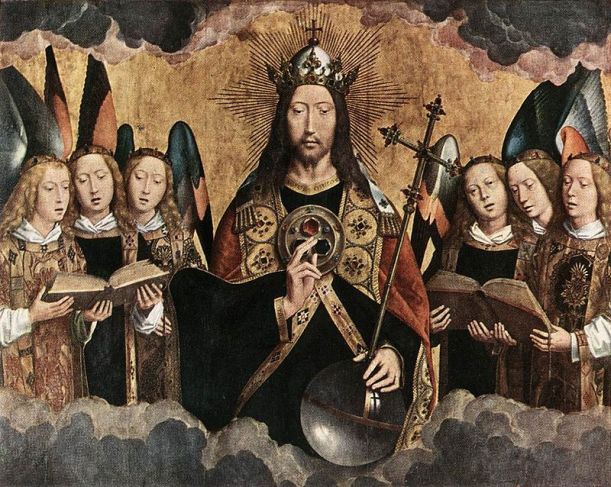
Hans_Memling_-_Christ_Surrounded_by_Musician_Angels_-Christ the King

Christ surrounded by Musician Angels, Hans Memling (c.1480), Royal Museum of Fine Arts, Antwerp, Belgium.

Let’s not be surprised that God has allowed the recent murderous atrocities in Paris, Lebanon and Mali to occur just before the Solemnity of Christ the King.  In an article in The Australian called Western Civilisation is under threat, but not just from terrorism, Greg Sheridan writes with great insight.

The interaction of the terror threat with traditional geo-strategic issues makes both much more difficult for the West to ­manage. At the same time, the West is undergoing a genuine civilisational crisis of belief and of governance. This is the first generation in Western history that, substantially, is not sustained by any transcendent beliefs. The death of God is also in the West the death of purpose and, for many, the death of meaning.

Can a civilisation really sustain itself on the basis of an ideology of self-realisation and entitlement liberalism? If so, it will be the first time in history. Not only that, even if the model was internally sustainable, can it really produce a society vigorous enough to defend itself against these multiplying ­security challenges.

George Orwell once remarked that the English sleep easy in their beds at night because rough men stand ready to do rough things on their behalf. Every soldier, every police officer, is ultimately prepared to sacrifice their life for an idea, a set of principles, a set of values, that they believe transcends their own experience and even their own mortality.

Western society is moving ever further away from the idea that anything beyond the individual can demand such sacrifice. The internal liberalism has never been more oppressive, while the ability to stand seriously against enemies is very much in question.

Straws in the wind even in Australia demonstrate grotesque elements to our civilisation. The Catholic Archbishop of Hobart is to be hauled before a thought police tribunal for the crime of propounding traditional Catholic sexual morality. Meanwhile, we rejoice in televised cage fights between women, which even our parents, much less our grandparents, would have regarded as the essence of barbarism.

At the same time demonstrators can march through the streets calling death to Israel, or even denouncing the evil of the Jews, without attracting legal penalty.

If a society has lost strong beliefs, can it really excite the transcendent loyalty of its own citizens, or of people who join it through migration?

At the same time there is well-documented crisis of governance across the Western world. No Western nation can balance its expenditures with its revenues. All are caught up in an entitlements ­crisis. Health and welfare spending are ballooning, so are unsustainable deficits. The prestige of democracy is under severe attack. For most of the Cold War, millions of people in the Third World, and in communist societies, yearned to live in nations governed as well as those of the West. It is a hard argument to make to a young banker or IT worker in Shanghai now that they would be better off if their government had the resolve and technical skill of Greece or Spain.

Put this all together and it’s not quite yet a full-blown crisis of a civilisation. But there’s a great deal of trouble ahead.

Though Australia is not technically in the West, we have inherited the values of Western Civilisation, which have largely been formed by Christian institutions and ethics.  (If you want to read more on that, go here.)  But what happens when the formerly Christian west turns away from God and towards atheism, agnosticism and the ideology of self-realisation and self-indulgence?  Well, God is a loving Father, and what loving Father fails to correct his child when his child is headed on a self-destructive path?  We see this constantly in the narratives of the Old Testament, where God allows the Israelites to be captured by the Babylonians and the Assyrians in order that they might eventually repent and return to Him.

But they became disobedient and rebelled against You, and cast Your law behind their backs and killed Your prophets who had admonished them so that they might return to You, and they committed great blasphemies.”  Therefore You delivered them into the hand of their oppressors who oppressed them.  (Nehemiah 9:26-27)

The West has a choice in front of it at the moment and the choice is this. Do you want to continue in your unfaithfulness to God, or do you want to turn back to Christ and acknowledge him as the King of the Universe?  And what a beautiful king he is!  If only our worldly leaders were like this!

How can we describe the Kingship of Jesus?

  • He is Love itself: “For God so loved the world that he gave his one and only Son, that whoever believes in him shall not perish but have eternal life. For God did not send his Son into the world to condemn the world, but to save the world through him. Whoever believes in him is not condemned, but whoever does not believe stands condemned already because they have not believed in the name of God’s one and only Son.” (John 3:16-17)
  • He is Humility “who, though he was in the form of God, did not count equality with God a thing to be grasped, but emptied himself, by taking the form of a servant, being born in the likeness of men.” (Phillipians 2:6-7)
  • He is Justice: “For we must all appear before the judgment seat of Christ, so that each of us may receive what is due us for the things done while in the body, whether good or bad.” (2 Corinthians 5:10).

I could go on, but if you want to know him better, read the Gospels.

It’s not even as if following Jesus is too hard to do.  Is praying for a few minutes a day and worshipping God in community with the Church for an hour a week too hard?  Let us pray with love and compassion for our brothers and sisters all over the world who have turned away from Christ, that they may realise before it’s too late whom they are rejecting, and turn back to the true King of the Universe.

Today’s readings:

Word format: Christ the King Year B

Pdf format: Christ the King Year B