Catholic in Yanchep

Go out into the deep.


Leave a comment

Holy Week: Palm Sunday, Year B | Yeshua, name above all names

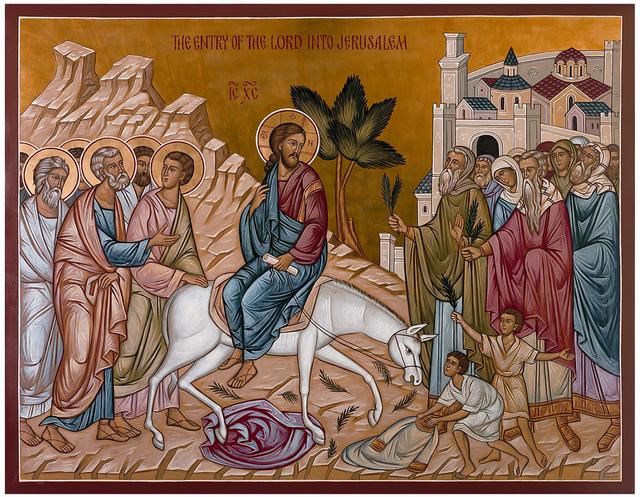
Jesus' Entry into Jerusalem

The Entry of The Lord into Jerusalem

“One day I will do something that will change the system and everyone will then know my name and remember me.”  These are reported to be the words of Andreas Lubitz to his former girlfriend, prior to committing mass murder by deliberately crashing an Airbus A320 into the French Alps this week.  His action is currently being described in the news media as a case of depression.  But depressed people don’t generally commit murder on a grand scale.  On the other hand, people under the influence of Satan do.  Let’s remember who the real enemy is.  And remember that the best way to counter evil is prayer.

Lubitz wanted to elevate his own name.  In contrast, we read in today’s reading from Paul’s letter to the Philippians , how Jesus:

 … humbled himself,
becoming obedient to the point of death,
even death on a cross.
Because of this, God greatly exalted him
and bestowed on him the name
which is above every name,
that at the name of Jesus
every knee should bend,
of those in heaven and on earth and under the earth,
and every tongue confess that
Jesus Christ is Lord,
to the glory of God the Father.

John Bergsma has a beautiful commentary on this reading over at The Sacred Page.

This famous passage—often thought to be a early Christian hymn or creed that St. Paul is quoting—gives an outline of the whole Gospel.  Jesus did not see “equality with God as something to be seized,” using the Greek word harpagmon, from a root harpazo, “to snatch or seize, often quickly or violently.”  Jesus is thus a contrast with the Greco-Roman mythical hero Prometheus, who ascended to the realm of the gods and “snatched” fire, bringing it back to man in an effort to attain equality with the divine.  So Prometheus has always stood as an icon of rebellion against God or the gods, and a worldview that imagines the divine as opposed to or limiting the human.  In this worldview, humanity is liberated and fulfilled at the expense of the divine; the realm of God must be rolled back to make way for the kingdom of man.  This spirit continues to animate the New Atheist movement in our own day (with their flagship publisher, Prometheus Books), which is more a miso-theistic (God-hating) cultural force than an a-theistic (no-God) one.

In contrast to Prometheus, Jesus does not conceive of the relationship between God and man as one of antagonism, in which the divine nature must be violently “snatched” from the Divinity.  Jesus empties himself of the glory of his divinity in order to descend to the status of creature, of “slave.”  Crucifixion was the form of execution mandated for slaves; citizens could not be crucified.  Having taken on human nature, he submits to the death of slaves: “even death on a cross.”  But paradoxically, this great act of self-giving love shows the glory of Jesus and the glory of God.  Truly, a God who would so empty himself out of love is greater, more lovable, more worthy of worship, than a God who will not give of himself. The cross is the glory of our God.  So God the Father bestows on Jesus “the Name which is above every name”, so that at the Name of Jesus, “every knee should bend.”  St. Paul probably has in mind here the ancient ritual of the Day of Atonement (Yom Kippur), on which, according to the Mishnah, the High Priest would exit the Holy of Holies after making atonement for Israel and pronounce the priestly blessing of Numbers 6 upon the gathered worshipers.  This was the one day a year (apparently) when the Divine Name YHWH was pronounced audibly, and each time the assembly heard the name pronounced, they dropped to the ground in prostration.  The name of “Jesus” is now heir to the glory of the divine name YHWH.  In the Name of Jesus we now find salvation.  Thus, in the Catholic tradition we bow the head at the Name of Jesus and celebrate the Feast Day of the Most Holy Name of Jesus (Jan 3), for which our present text is an optional Second Reading.

Unlike the New Atheists, the Jesus and his disciples do not regard the divine-human relationship as one of antagonism where goods are “snatched” from each other, but a relationship of communion, love, and self-gift.  The human is not exalted at the expense of the divine; rather, human and divine are exalted together.  God and man are mutually glorified by loving each other.  Humanity becomes more human by becoming more divine.  Divinization also humanizes.

Today is the beginning of Holy Week, where we follow Jesus from his final entry into Jerusalem to his Resurrection.  This year we have the narration from the Gospel of Mark.  You can download a 12 page Mass booklet for the Palm Sunday Procession and Mass here:

Word format: Year B Palm Passion Sunday

Pdf format: Year B Palm Passion Sunday


Leave a comment

Fifth Sunday of Lent, Year B | Attuning Ourselves to the Divine Will

Adoration of the Trinity (Landauer Altarpiece), Albrecht Dürer, 1511, oil on poplar panel, Kunst-historisches Museum, Vienna.

Adoration of the Trinity (Landauer Altarpiece), Albrecht Dürer, 1511, oil on poplar panel, Kunst-historisches Museum, Vienna.

In one of my posts on Facebook last week, a comment was made that our religion was ‘repressive’ (referring to my support for traditional marriage).  By that, the speaker meant ‘how dare you tell other people how to behave’!  (The people who say these sorts of things are usually, by the way, advocates of free speech.)  Actually, the Church doesn’t tell ‘other people’ how to behave.  It tells its members how to behave, and it is the job of these members (the faithful) to advocate for best practice in the public square, for the good of society.  It is also the job of the faithful to bring up their children to follow the good, the true and the beautiful and to repress (yes, repress – or suppress, if you want to be less Freudian) its baser desires: selfishness, unfaithfulness, dishonesty, disobedience, pride, lust, envy, and so on.

In today’s Readings from Hebrews and the Gospel of John, we see Jesus wrestling with the natural desire not to die (i.e. repressing this desire), versus obedience to the Divine plan:

During his life on earth, Christ offered up prayer and entreaty, aloud and in silent tears, to the one who had the power to save him out of death, and he submitted so humbly that his prayer was heard. Although he was Son, he learnt to obey through suffering; but having been made perfect, he became for all who obey him the source of eternal salvation. (Heb 5:7-9)

and again in today’s Gospel:

‘Now my soul is troubled.
What shall I say:
Father, save me from this hour?
But it was for this very reason
that I have come to this hour.
Father, glorify your name!’ (Jn 12:27-28)

In Jesus of Nazareth, Vol. 2, Pope Benedict discusses the troubled soul of Jesus:

The great Byzantine theologian Maximus the Confessor (d. 662) formulated an answer to this question [on the relationship between Jesus’ humanity and divinity] by struggling to understand Jesus’ prayer on the Mount of Olives. Maximus is first and foremost a determined opponent of monotheletism: Jesus’ human nature is not amputated through union with the Logos; it remains complete. And the will is part of human nature. This irreducible duality of human and divine willing in Jesus must not, however, be understood to imply the schizophrenia of a dual personality. Nature and person must be seen in the mode of existence proper to each. In other words: in Jesus the “natural will” of the human nature is present, but there is only one “personal will”, which draws the “natural will” into itself. And this is possible without annihilating the specifically human element, because the human will, as created by God, is ordered to the divine will. In becoming attuned to the divine will, it experiences its fulfillment, not its annihilation. Maximus says in this regard that the human will, by virtue of creation, tends toward synergy (working together) with the divine will, but that through sin, opposition takes the place of synergy: man, whose will attains fulfillment through becoming attuned to God’s will, now has the sense that his freedom is compromised by God’s will. He regards consenting to God’s will, not as his opportunity to become fully himself, but as a threat to his freedom against which he rebels.

The drama of the Mount of Olives lies in the fact that Jesus draws man’s natural will away from opposition and back toward synergy, and in so doing he restores man’s true greatness. In Jesus’ natural human will, the sum total of human nature’s resistance to God is, as it were, present within Jesus himself. The obstinacy of us all, the whole of our opposition to God is present, and in his struggle, Jesus elevates our recalcitrant nature to become its real self.

The question for each of us is: do we experience God as a threat to our freedom, or do we desire God so much that we happily allow him to use our freedom for his purposes, and in so doing, achieve true self-fulfilment?

Mass readings for today …
Word format: Year B Lent 5th Sunday 2015

Pdf format: Year B Lent 5th Sunday 2015

Other resources:

  1. Listen to Fr Barron’s homily for today.
  2. Scripture study for this weekend.


Leave a comment

3rd Sunday of Lent, Year B | Jesus, the Embodiment of the Law

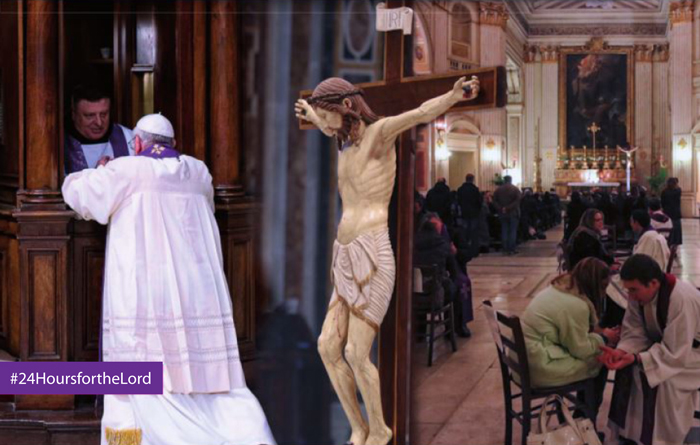
Pope Francis, Penance and Reconciliation during 24 Hours for the Lord

Pope Francis, Penance / Reconciliation during 24 Hours for the Lord

Are The Ten Commandments still relevant for us?  I have friends who claim the Bible is nothing special – just a man-made unenlightened compilation of Bronze Age writings, and certainly not inspired by the Holy Spirit.  If that were the case, Jesus would not fulfil so many prophecies from the Old Testament.  In today’s Gospel, for example, we see Jesus fulfilling prophecies from Isaiah 56:6-7, Jeremiah 7:1-11 and Malachi 3:1-3, to name only a few.

Mass Readings Word format: Year B Lent 3rd Sunday 2015

Mass Readings Pdf format: Year B Lent 3rd Sunday 2015

John Bergsma gives a great analysis of the readings here.

I have to conclude that my friends who denigrate the Bible are too used to thinking of themselves as ‘good people’ and find it too confronting to consider themselves as sinners, so they are compelled to ‘shoot the messenger’.  Getting down to practicalities, Pope Francis has called all Christians to make 13th and 14th March “24 Hours for the Lord”.  He wants us to go to Adoration, examine our consciences (take some time about this – perhaps spend an hour in Adoration asking the Lord to reveal your sins to you) and receive the sacrament of penance / reconciliation / confession during this time.  To prepare for this, why not listen to Fr Barron’s homily on the Ten Commandments here:

Click-here-to-listen


and do a thorough examination of conscience.  You can download these as a guide:

Word format: Confession and Examination of Conscience

Pdf format: Confession and Examination of Conscience

By the way, these lists of sins are not exhaustive – they are just meant as a guide.  If you take time to examine yourself and listen to the Holy Spirit, you’ll find many imperfections that aren’t even on the list.

For those of you in the Perth Northern Suburbs, you can attend 24 hours for the Lord events here:

  • Joondalup Holy Spirit Chapel: Adoration and Confession from 00h00 (midnight) Friday until midnight Saturday.  Mass: 12:10 Friday.   Please put your name on the adoration roster in the front porch.
  • Our Lady of the Mission, Whitfords: Exposition of the Blessed Sacrament: Friday 09.30 a.m. to 7.00 p.m., Mass Friday 9 a.m, Saturday 08.30.  Confession: Saturday 12.00 to 13:00and 17:30 – 18:00.
  • St Simon Peter, Ocean Reef: Blessed Sacrament Adoration Friday 9:00 to 18:50.  Mass: Friday 19:00, Saturday 8:30, Reconciliation: Friday 18:30-18:50, Saturday 17:00-17:45.
  • St Andrew’s, Clarkson: Mass: Friday and Saturday 08:00, Reconciliation: Saturday 17:00 to 17:30, Exposition of the Blessed Sacrament and Benediction: Friday 15:00 to 17:00.

Wishing you joy and grace this Lent!


Leave a comment

2nd Sunday of Lent, Year B | Can you sacrifice what you love the most?

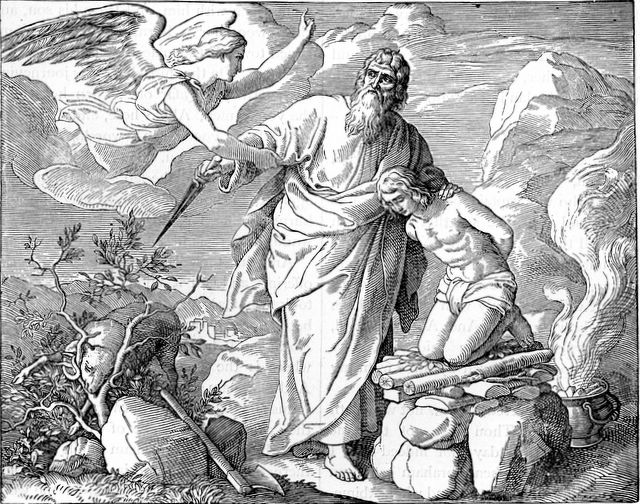
Abraham and Isaac, Henry Davenport Northrop, 1894, Treasures of the Bible, illustration.

Abraham and Isaac, Henry Davenport Northrop, 1894, Treasures of the Bible, illustration.

This Sunday’s readings link Abraham’s willingness to sacrifice Isaac with the Transfiguration of Christ.  What’s the connection?  And how are we to respond when people like Richard Dawkins say things like this in The God Delusion?

“Any modern legal system would have prosecuted Abraham for child abuse, and if he had actually carried through his plan to sacrifice Isaac, we would have convicted him of first degree murder.” 

Mass readings, Word format:Year B Lent 2nd Sunday

Mass readings, Pdf format:Year B Lent 2nd Sunday

John Kincaid lays it out brilliantly for you at The Sacred Page and Fr Barron also speaks about the meaning of the Abraham and Isaac narrative in his Lent reflections.  If you haven’t signed up to these yet, please do!  His homily for today focuses on the mystical experience of God.

Click-here-to-listen

The trouble with Dawkins is that he does not understand the manner of God’s revelation of himself, and neither does he want to.  If you really desire to understand God, pray for a heart that is humble and open to a mystical experience of him.  Nothing gets in the way of experiencing God like arrogance and self-righteousness.  And read a commentary that explains how the Bible works, such as Tim Gray and Jeff Cavins’ Walking with God.


Leave a comment

6th Sunday in Ordinary Time | The leprosy left him and he was cured

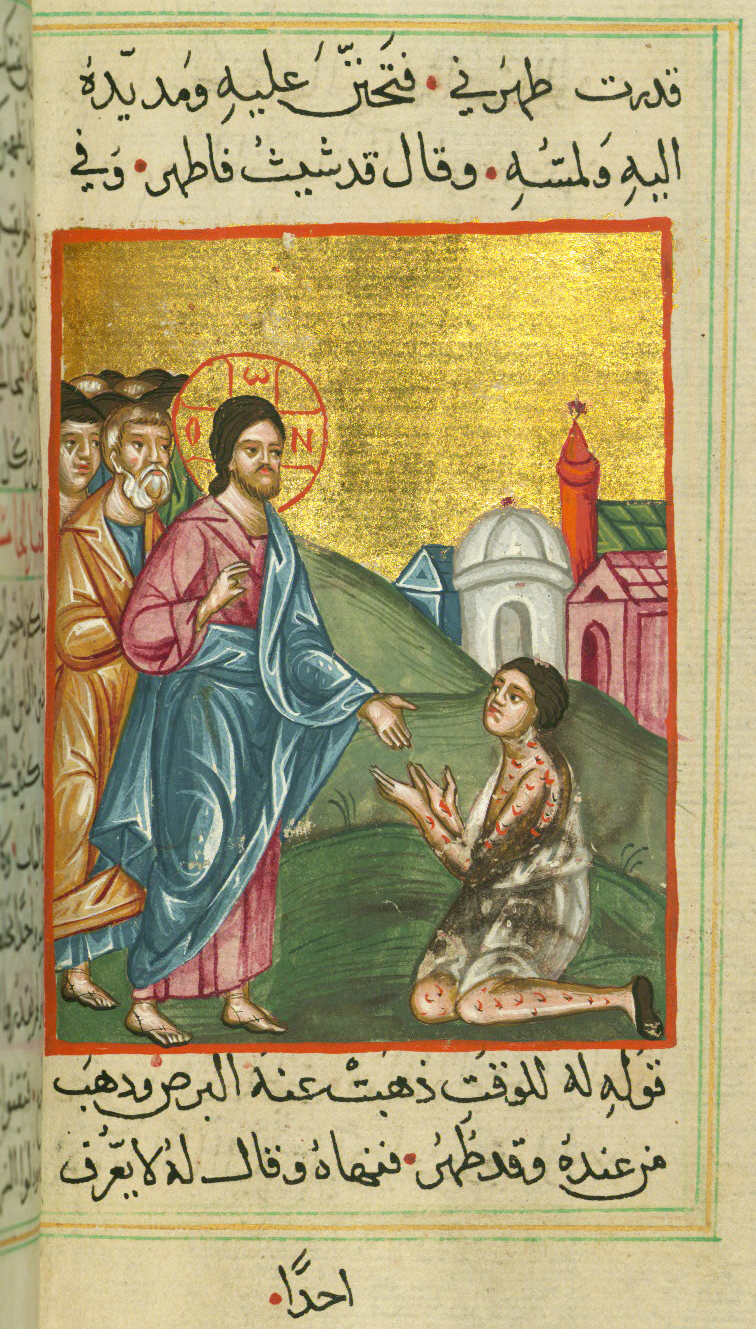
Ilyās Bāsim Khūrī Bazzī Rāhib,  Jesus Cleanses a Leper, Arabic Gospels, 1684, Walters Art Museum, Baltimore, Maryland, Manuscript W.592, fol. 89b.

Ilyās Bāsim Khūrī Bazzī Rāhib, Jesus Cleanses a Leper, Arabic Gospels, 1684, Walters Art Museum, Baltimore, Maryland, Manuscript W.592, fol. 89b.

How interesting it is that at the same time that Stephen Fry’s YouTube video on God is going viral, our Gospel Readings are all about the healing miracles of Jesus.  This Sunday’s readings can be downloaded here:

Word format: Year B 6th Sunday

Pdf format: Year B 6th Sunday

We can respond to Fry’s comments on suffering in a variety of ways.  Two of these are:

1.  Suffering can be redemptive (if you are willing to offer it in this way).  Many Saints offered their suffering united with the cross of Christ: think of Therese of Lisieux, Gemma Galgani, Maria Goretti, Chiara Badano … the list is very long.

2. Suffering can be healed.  Jesus provides ample evidence of his ability to perform miracles through our faith-filled prayer.  Two huge volumes by Craig Keener give numerous examples of well-attested miracles, for those who want to take a scholarly, historiographical approach.  And then there are websites like this giving public testimony of Jesus’ miracles, intended for a more general audience.

But if you just want to reflect on today’s Scriptures, I would recommend this Scripture Study by Dr John Bergsma, and this homily by Fr Robert Barron.

Click-here-to-listen

Apologies for the irregularity of my posts lately.  I have been in South Africa and when I returned, my internet connection was down as a result of lightning strikes!


Leave a comment

4th Sunday in Ordinary Time, Year B | He taught them with authority and power

Jesus casts out an Unclean Spirit, illuminated manuscript, folio 166R, Tres Riches Heures du Duc du Berry, Limbourg Brothers, 1412-1416, Musee Condee, Chantilly, France.

Jesus casts out an Unclean Spirit, illuminated manuscript, folio 166R, Tres Riches Heures du Duc du Berry, Limbourg Brothers, 1412-1416, Musee Condee, Chantilly, France.

Apologies for not posting last week.  I am in South Africa visiting my mother who has been ill.  Your prayers for her would be greatly appreciated.

One of my friends recently told me it was her opinion that the Bible was ‘man-made’ and not inspired by God.  One of the many counter-arguments to this is the numerous fulfilments of Old Testament prophecy in the person of Christ.  In this week’s readings, Jesus reveals himself as the prophet foretold in Deuteronomy 18 (First Reading).  The Gospel describes the astonishment of the people in the Synagogue as Jesus supports his authoritative teaching by carrying out an exorcism.

The people were so astonished that they started asking each other what it all meant. ‘Here is a teaching that is new’ they said ‘and with authority behind it: he gives orders even to unclean spirits and they obey him.’ And his reputation rapidly spread everywhere, through all the surrounding Galilean countryside.

Jesus didn’t just talk, his miraculous acts provided the evidence that here indeed was someone possessing supernatural power.

Word Format: Year B 4th Sunday

Pdf Format: Year B 4th Sunday

For a Scripture Study on this week’s readings, read Dr John Bergsma’s article here.

And to listen to Fr Robert Barron’s homily, click here.


1 Comment

2nd Sunday in Ordinary Time, Year B | Are you listening for God’s call?

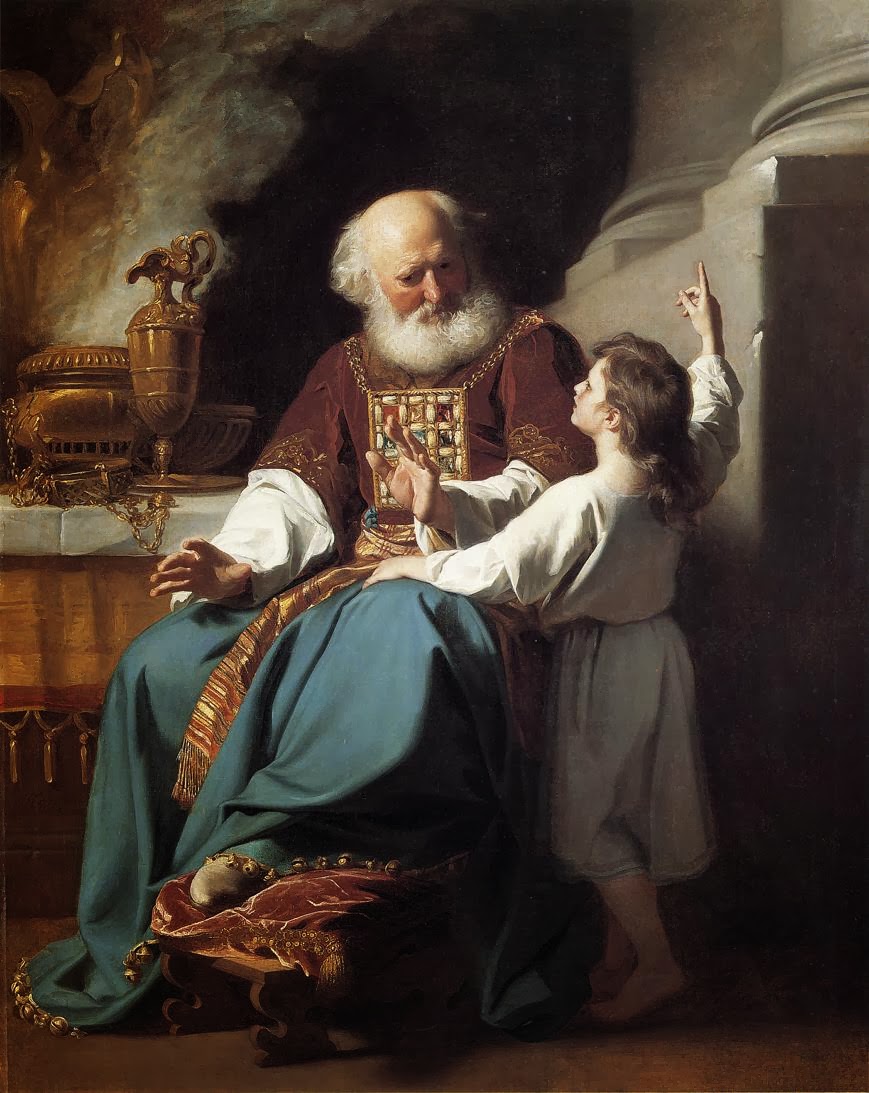
Eli and Samuel, John Singleton Copley (1780), Wadsworth Atheneum, Hartford, Connecticut.

Eli and Samuel, John Singleton Copley (1780), Wadsworth Atheneum, Hartford, Connecticut.

Today in our readings we have the story of the call of Samuel.  To appreciate the story fully, read the whole of 1 Samuel, Chapter 2 and 3.  The priest, Eli, has not fulfilled his responsibility as a priest in teaching his sons to respect God, and God raises up Samuel to prophesy against him.  God will allow Eli to be chastened by his enemies.  In his homily for today, Fr Robert Barron relates this story to our own times: many priests and bishops have not fulfilled their responsibilities in caring for their flock, and so the Church in many ways is being chastened by its enemies (largely the secular media and secular society in general), in order to cleanse and purify us.

We can see this also in the wider world in the events of the past two weeks.  Aggressive secularism (typified by the blasphemous magazine, Charlie Hebdo) does not teach people to respect God, and so God allows them to be chastised by their enemies, aggressive Islamic fundamentalists.

Listen in full here: Click-here-to-listen

Download today’s Mass readings for Australia:

Word format: Year B 2nd Sunday

Pdf format: Year B 2nd Sunday

For a further Scripture Study of today’s readings by Dr John Bergsma, on the personal nature of God’s call, go here.


Leave a comment

The Baptism of the Lord | Did Jesus need Baptism?

The Baptism of Jesus, fresco, Orthodox Church of St John the Baptist, Bethany-beyond-the-Jordan, Jordan.

The Baptism of Jesus, fresco, Orthodox Church of St John the Baptist, Bethany-beyond-the-Jordan, Jordan.

Why on earth does Jesus, the sinless God-made-flesh, need to be baptised?

For the background on this, first download this Sunday’s readings:

Word format: Year B Baptism of the Lord

Pdf format: Year B Baptism of the Lord

Some answers:

  1. The humility of God expresses itself through His immersion into the human condition so that he can lift people out of their slavery to sin. (listen to Fr Robert Barron’s homily here);
  2. This is the first great theophany of The Trinity (see Fr Steve Grunow’s comments here);
  3. Just like David and Solomon before him, Jesus is being anointed for his kingly mission (see John Bergsma’s comments here).


Leave a comment

The Feast of the Epiphany | God reveals himself to the truth-seeking heart

Adoration of the Magi, Domenico Ghirlandaio, 1485-1488, Tempera on Panel, Ospedale degli Innocenti, Florence.

Adoration of the Magi, Domenico Ghirlandaio, 1485-1488, Tempera on Panel, Ospedale degli Innocenti, Florence.

Today’s readings are rich with meaning, and we have some snippets to help you reflect on what God has revealed about himself.  First, the Mass Readings for today:

Word format: Epiphany

Pdf format: Epiphany

The Epiphany is all about God’s revelation to the world.  But how does God reveal himself to you personally?  Fr Barron talks here about Oprah-style ‘spirituality’ versus God’s particular revelation of himself in Christ.

Click-here-to-listen


Want to do some quiet adoration?  Let God speak to your heart through the music and art in this video.

Finally, Fr John Speekman has some great insights on God’s plan here.

Here is a small distillation of his thought, but you need to read the whole article to get the explanation.

And so, from the Epiphany event we learn a few truths:

  • The Father is presenting the world with his only Son, born of the Virgin. He is indeed ‘King of the Jews’, as the wise men call him, but only when he is ‘exalted’ on the Cross will the title take on its most accurate meaning.
  • The Father has a plan to make his Son known to the world. It is a sovereign plan; which, despite all resistance, will be fulfilled. Herod may plot but God’s purpose will be accomplished– the wise men will simply return ‘by a different way’.
  • God sees the heart. The presence of God’s Son on earth will reveal what lies in the hearts of men. The Magi who travel to seek the divine child travel in a line as straight as their hearts; while Herod shows himself to be evil. He is the precursor of all those throughout history who will oppose Jesus in one way or another, trying to expunge him from the earth.
  • God has come for all men. The Magi were pagans, perhaps even astrologers, and were invited to find and worship the Lord of the Universe. He was revealed to them and before him they fell to their knees and ‘did him homage’.


Leave a comment

Fourth Sunday of Advent, Year B | His reign will have no end

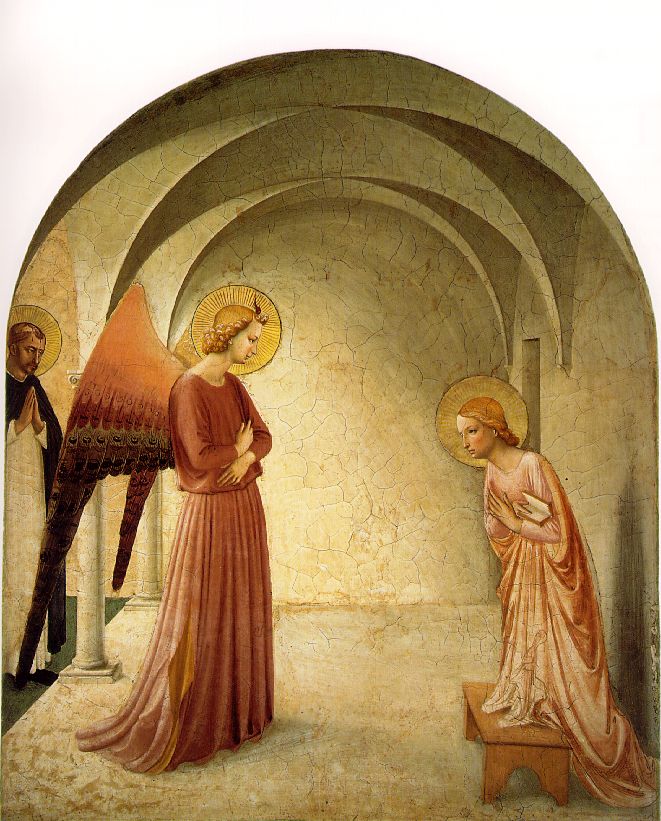
The Annunciation with St Dominic, Fra Angelico (1395 – 1455), Cell No. 3, Fresco Cycle in the Dominican Convent of San Marco, Florence.

The Annunciation with St Dominic, Fra Angelico (1395 – 1455), Cell No. 3, Fresco Cycle in the Dominican Convent of San Marco, Florence.

In the Gospel reading for this Sunday, the angel says, “He will be great and will be called Son of the Most High. The Lord God will give him the throne of his ancestor David; he will rule over the House of Jacob for ever and his reign will have no end.”

How is Jesus the fulfilment of Old Testament expectations?  Fr Robert Barron talks about kingship from Adam to Jesus in his homily here:

Click-here-to-listen


Download the readings here:

Word format:Year B Advent 4th Sunday

Pdf format: Year B Advent 4th Sunday

For a scripture study on these readings, see John Kincaid’s commentary at The Sacred Page.

And if you are fascinated by the idea of angels bringing messages from God, watch Professor of Philosophy, Peter Kreeft, discussing angels (and demons) here: