Catholic in Yanchep

Go out into the deep.


Leave a comment

First Sunday of Lent, Year C |Christ in the Desert

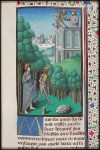
Temptation in the Desert Maitre Francois

Two of the Temptations of Jesus in the Desert by Satan and Jesus served by the Angels, Maitre François, 1475, miniature, from St Augustine’s “La Cité de Dieu”; manuscript MMW 10 A 11; Koninklijke Bibliotheek, The Hague.

The First Sunday of Lent focuses us on one of the key features of our Lenten journey: finding self-knowledge and working out how to make God the centre of your life.  Try these:

Bishop Robert Barron on “Three Questions from the Desert“.

Bible Scholar, Dr John Bergsma, on “The Temptations of Jesus“.

Bible Scholar, Dr Brant Pitre, on the readings for the First Sunday of Lent.

https://www.youtube.com/watch?v=Tg1rDbm4Kfw

In other news, on Friday, 12 February, Pope Francis and Patriarch Kirill of Russia met in Cuba. This is the first time the head of the Catholic Church has met the head of the Russian Orthodox Church since the Great Schism of 1054!  Pope Francis and Patriarch Kirill have issued a Joint Declaration. Read and observe how the Holy Spirit is working in the Church today.

Today’s readings:

Word format: Year C 5th Sunday 2016

Pdf format: Year C Lent 1st Sunday 2016


Leave a comment

33rd Sunday in Ordinary Time | The Four Last Things

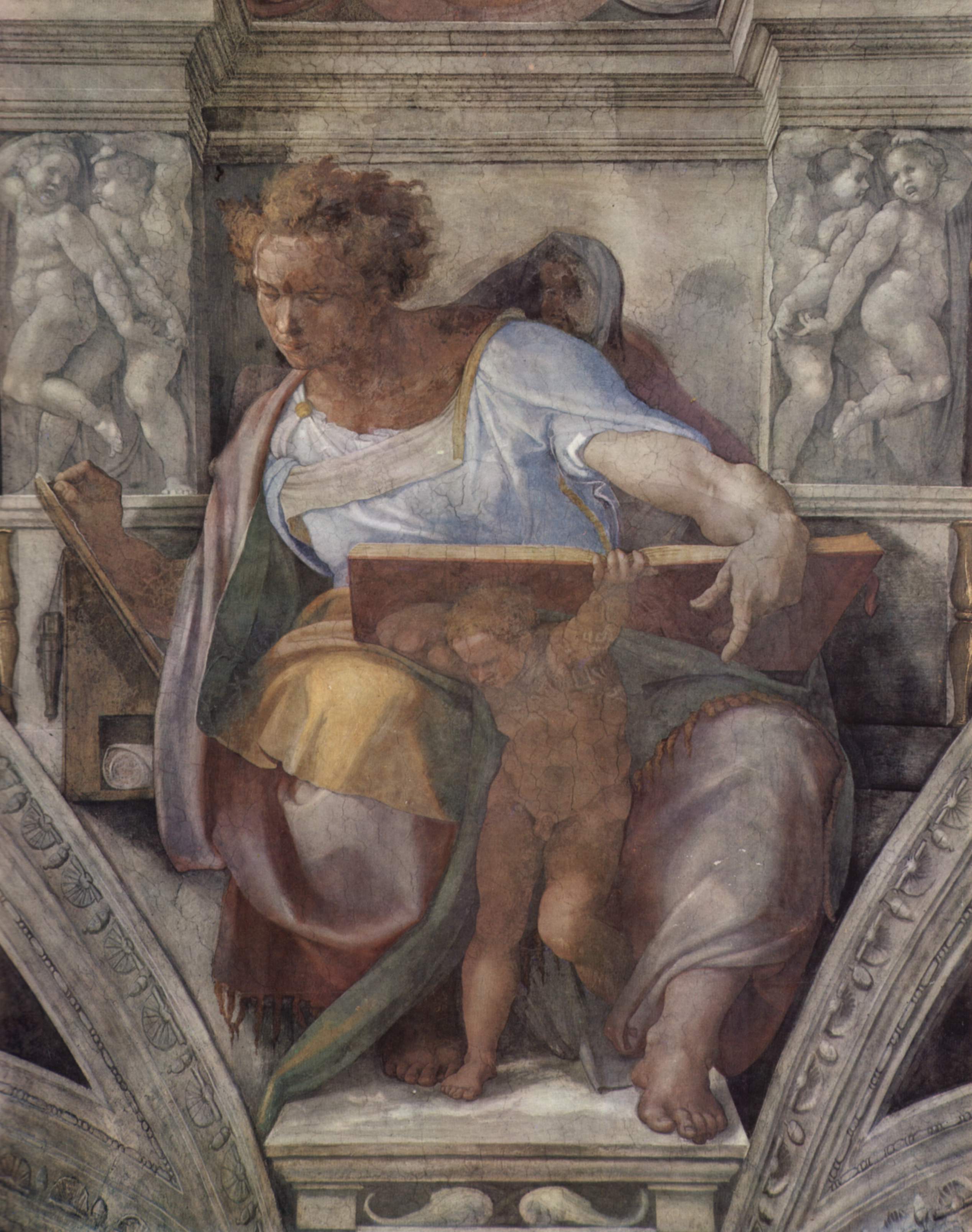
The Prophet Daniel, Michelangelo Buonarotti, c. 1508-1512, fresco, detail from the Sistine Chapel ceiling, Vatican Palace, Vatican City.

The Prophet Daniel, Michelangelo Buonarotti, c. 1508-1512, fresco, detail from the Sistine Chapel ceiling, Vatican Palace, Vatican City.

Today we are all shocked at the terrorist attacks that have left over 150 people dead in Paris.  It is sobering to remember that death can come upon us suddenly, when we are in the midst of life. This is something that during November, leading up to the end of the Church Year, we are reminded to consider – the four last things: death, judgment, heaven and hell.

If you google “judgment quotes”, you’ll come up with some interesting insights into how people generally feel about the idea of judgment:

“Never judge someone without knowing the whole story.  You may think you understand, but you don’t.”

“Judging a person does not define who they are.  It defines who you are.”

“Before you judge me, make sure you’re perfect.”

“Love is the absence of judgment.”

“Don’t judge someone just because they sin differently than you.”Judge Not

While it is easy to use these lines against other people, what are we going to say when we come before God?  After all, he’s perfectly entitled to judge us, because he does know us inside and out, and he is completely perfect.  And I doubt God would agree that love is the absence of judgement.  Anyone who says that, doesn’t believe in Justice.  In today’s Gospel, Jesus describes how the Son of Man will come ‘with great power and glory; then too he will send the angels to gather his chosen from the four winds, from the ends of the world to the ends of heaven.’

Who are his chosen?  The truth is that God is a loving Father and he wants us all to be his chosen, but he gives us the freedom to reject him.  So when God comes to judge us, there will be two basic responses.  One leads to everlasting life, and one is very likely to lead to eternal separation from God.

RESPONSE 1

Now listen here, God.  I’ve tried my best to live a pretty good life.   And I’m not judgmental like those awful people who always talk about other people’s faults and imperfections.  Anyway, you made me with certain desires and needs, so whatever I’ve done in my life, I’ve been true to myself, my wants, my nature.  What could be more natural than that?  I’m proud of what I’ve done in my life.  If you’re a loving God, why on earth would you want to judge me?  Nobody has the right to judge me.

RESPONSE 2

Loving Father, you know all things.  You gave me life, you know my heart, you know just how well or poorly I have followed you in my life.  And I am aware that I can’t get to heaven by my own effort.  I am totally reliant on your grace.  Jesus offered up his life to save me.  Please forgive me and through your great mercy allow me to live with you forever in heaven.

We don’t know the hour when we will end up before the judgement seat of the Throne of God.  Let’s spend some time examining our consciences and going to confession before Christmas.  And let’s pray for God’s mercy on those who have lost their lives in France.  While we’re about it, how about the grace of conversion for those involved in terrorism and for those who are too full of themselves to be open to God.

Today’s readings:

Word format: Year B 33rd Sunday 2015

Pdf format: Year B 33rd Sunday 2015

If you want some evidence for the accuracy of the Prophet Daniel’s predictions about the Messiah, listen to Bishop Robert Barron’s homily here.  Bishop Barron explains why the Jews were expecting a Messiah right around the time that Jesus appeared.  And for a Scripture Study on today’s readings, try Dr John Bergsma’s commentary at The Sacred Page.


1 Comment

30th Sunday in Ordinary Time | To see things as they really are

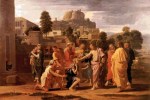
The Healing of the Blind Man of Jericho, Nicholas Poussin, 1650, oil on canvas, Musée du Louvre, Paris.

The Healing of the Blind Man of Jericho, Nicholas Poussin, 1650, oil on canvas, Musée du Louvre, Paris.

Today’s Gospel (Mark 10:46-52) is an icon of the spiritual life.

As Jesus left Jericho with his disciples and a large crowd, Bartimaeus (that is, the son of Timaeus), a blind beggar, was sitting at the side of the road. When he heard that it was Jesus of Nazareth, he began to shout and to say, ‘Son of David, Jesus, have pity on me.’ And many of them scolded him and told him to keep quiet, but he only shouted all the louder, ‘Son of David, have pity on me.’ Jesus stopped and said, ‘Call him here.’ So they called the blind man. ‘Courage,’ they said ‘get up; he is calling you.’ So throwing off his cloak, he jumped up and went to Jesus. Then Jesus spoke, ‘What do you want me to do for you?’ ‘Rabbuni,’ the blind man said to him ‘Master, let me see again.’ Jesus said to him, ‘Go; your faith has saved you.’ And immediately his sight returned and he followed him along the road.

Some highlights from Bishop Robert Barron’s homily:

  1. Jesus’ healings were real events in history.  Bartimaeus is named and might well have been alive when the Gospels were passed along in the oral tradition and then written down.  He would have been able to confirm the story.
  2. The story is also an icon – a symbolic itinerary – of the spiritual life.
  3. The setting is Jericho, a city symbolic of sin and standing athwart the purposes of God (remember Joshua). It stands for the culture that poisons the mind and the heart, the culture that produces spiritual blindness, the inability to see the deepest truth of things.  In our day, secularism is a kind of blindness.  Secularists do not see the transcendent dimension, the dimension of the First Cause.
  4. Blind Bartimaeus is a symbol of all of us, sunk in a blindness caused by the world and culture that we inhabit.
  5. His first great virtue is that he begs. We live in a culture of self-affirmation and self-assertion.  “I’m beautiful in every way … Your words can’t get me down …  I’m OK and you’re OK.”  Bartimaeus knows that he’s blind and knows that there’s nothing he can do to solve his own problem.  A very important moment in the spiritual life is when we realise our own helplessness in the face of our sin.  The twelve step program in dealing with addictions is really useful here: when a person realises he or she has hit bottom and says, “There is nothing I can do!  I can’t solve this problem.  I’ve got to turn my life over to a higher power.”
  6. Sin is addictive. We have to turn ourselves to a higher power to solve our problem with sin.  We echo Bartimaeus at the beginning of every Mass, when we say Kyrie Eleison, Lord have pity on me.  We commence the Mass with a keen awareness of our blindness and our inability to save ourselves.
  7. We are told, “Many rebuked him, telling him to be silent.” This is, sadly, typically the case.  Don’t think for a second that the majority of people will support you when you turn to Christ in our hyper-secularised time.  Don’t think people will applaud you when you start begging to a higher spiritual power.  That will strike a lot of people today as weird, medieval, maybe a little bit embarrassing.
  8. Bartimaeus kept calling out all the more. The second great virtue of Bartimaeus is persistence.  How often does the Bible insist on perseverance in prayer.  Augustine saw it most clearly when he said that this persistence causes the heart to expand, so that it can receive what God wants to give.  If God immediately responded to all our prayers, we wouldn’t be ready to receive what he wants to give.  Some of the expansion is caused by waiting.
  9. Jesus stopped and said, “Call him.” Many times in Mark’s Gospel, Jesus is presented as the still point in a chaotic world.  “They came at him from all sides.”  “He remained sleeping in the stern of the boat.”  Think of that when you’re lost.  Throughout the Gospel Jesus calls people.  We are the sheep who are supposed to hear the call of the Good Shepherd.  And of course, the church is the ekklesia, derived from the word kalein, which means to call.  What is the Church but the assembly of those who have been called by Christ into intimacy with him?  Bartimaeus is evocative of anybody aware of their own sin, blindness and incapacity who call out, “Help me!” and who then are hearing the summons of Jesus to come into the Church, the ekklesia.  The Church is the place where your vision will be restored.  The world has blinded you, the Church is the place where you will renew your vision.
  10. Bartimaeus throws aside his cloak, sprang up and went to Jesus. The throwing off of the cloak is a reference to baptism, for that’s precisely what someone did in the ancient Church when he approached the font for baptism.  They would see his street clothes as symbolic of the old life, so he would strip off his street clothes, be plunged down into the waters of baptism and then clothed in a white garment.
  11. Are you burdened by your old life? Good!  Throw it off.  Christ is calling you to something deeper.
  12. Jesus asks, “What do you want me to do for you?” This is one of the handful of times when Jesus directly asks someone this question. I’ve always recommended, move into that space: you’re kneeling down before the Lord, Jesus Christ, and listen to him as he asks, “What do you want me to do for you?”  That’s a really clarifying question.  What would you say?
  13. Bartimaeus’s answer is excellent: “Master, I want to see!” Read it also on the symbolic level.  He wants what we all want, namely to see things as they really are, to know the deepest truth of things, to know where he’s going.  So much of life today is like drifting along without purposeful movement.
  14. The Lord tells him, “Your faith has saved you.” In a word, your trust and confidence in God has healed you.  That’s what saved means here.  What’s making us sick is our closed attitude regarding the transcendent reality of God.
  15. Finally, having regained his sight, he immediately follows Jesus on the way. That’s confident discipleship.  He’s gone through several stages, from spiritual blindness to openness to Christ, resisting the crowd, being called and then answering the question the right way, and then recovering his sight within the life of the Church.  He now knows where he’s going.

Download the readings for today:

Word format:Year B 30th Sunday 2015

Pdf format: Year B 30th Sunday 2015


Leave a comment

22nd Sunday in Ordinary Time, Year B | Does the Catholic Church follow only human traditions?

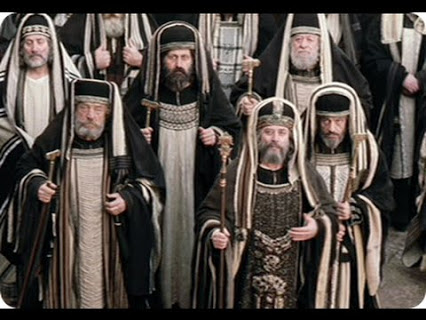
Are you a Pharisee?

Are you a Pharisee?

I have often heard the claim that Catholicism is too prescriptive and full of human traditions.  Some of the passages quoted to support this include one which occurs in our Gospel today:

This people honours me only with lip-service,
while their hearts are far from me.
The worship they offer me is worthless,
the doctrines they teach are only human regulations.
You put aside the commandment of God
to cling to human traditions. (Mark 7:6-7)

(Just as a side note, Jesus is quoting here from the Septuagint (LXX) version of Isaiah, the one which Catholics have used from the beginning for their Old Testament.)

They follow this up with one that occurs in today’s Second Reading from James:

Pure, unspoilt religion, in the eyes of God our Father is this: coming to the help of orphans and widows when they need it (James 1:27)

… as if that’s all a Christian has to do.  By the way, they often forget the second part of this sentence, which says

and keeping oneself uncontaminated by the world. (James 1:27)

How odd then, that the very passages quoted by some anti-Catholics are the ones which we Catholics have ourselves placed together on the same day in the Lectionary.  Is Jesus really telling the Pharisees to ignore the Mosaic law?  Of course not, because in Matthew 23, which we read earlier in the week, Jesus says, regarding the scribes and Pharisees:

You must therefore do and observe what they tell you; but do not be guided by what they do, since they do not practise what they preach.  (Matthew 23:3)

What Jesus is after is our conversion of the heart, a humble obedience to the central thrust of God’s commandments – love of God and love of neighbour.  Some people seem to be under the misguided impression that Jesus condones sin, but Jesus himself calls out sin quite clearly further on in the same chapter of Mark.

For it is from within, from men’s hearts, that evil intentions emerge: fornication, theft, murder, adultery, avarice, malice, deceit, indecency, envy, slander, pride, folly. All these things come from within and make a man unclean.’ (Mark 7:21-22)

If we take the opposites of this list of potential evils and seek to develop our character along these lines, we will be entering into the heart of God’s law:

EVIL GOOD
Fornication Chastity, openness to children within marriage
Theft Honesty and generosity
Murder Supporting life, opposing abortion and euthanasia
Adultery Faithfulness
Avarice Generosity, charity and unselfishness
Malice Wishing the good of the other
Deceit Truthfulness, (including truthfulness about concepts such as marriage, by the way).
Indecency Modesty and chastity
Envy Contentment and kindness
Slander Charity
Pride Humility
Folly Wisdom

To get back to our original question, the Catholic Church, even though its individual members may display all the propensities to evil that the rest of humanity is prone to, still proclaims what is at the heart of God’s laws, often in the face of violent opposition by the dominant culture.  The many guidelines that the Catholic Church proposes are signposts to help us form our character in such a way that we will stay in alignment with Christ’s requirements for his followers.  As one example, if we say it’s a sin to stay away from Sunday Mass, we mean that you are endangering your soul if honouring God is not a more important priority in your life than whatever else you have replaced that time with on Sunday (or Saturday Vigil).

Another message for us at all levels of the church is: have a good look at the example you’re setting.  The Pharisees Jesus was talking to found it much easier to spend their time complaining about others rather than improving their own characters.  If you are a priest, are you a real shepherd to your flock?  Do you know every parishioner by name and know what their struggles are? Do you organise parish groups to learn and grow together in Christ or are you content to do no more than offer Mass?     If you are a parishioner, how much time do you spend complaining about the priest?  … or other parishioners?  Well done if you’re a builder-upper and not a breaker-downer!

To listen to Fr Barron’s homily for today, which discusses the purpose of God’s laws, go here.

Mass readings 

Word format: Year B 22nd Sunday 2015

Pdf format: Year B 22nd Sunday 2015


Leave a comment

16th Sunday in Ordinary Time, Year B | Like sheep without a shepherd

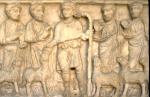
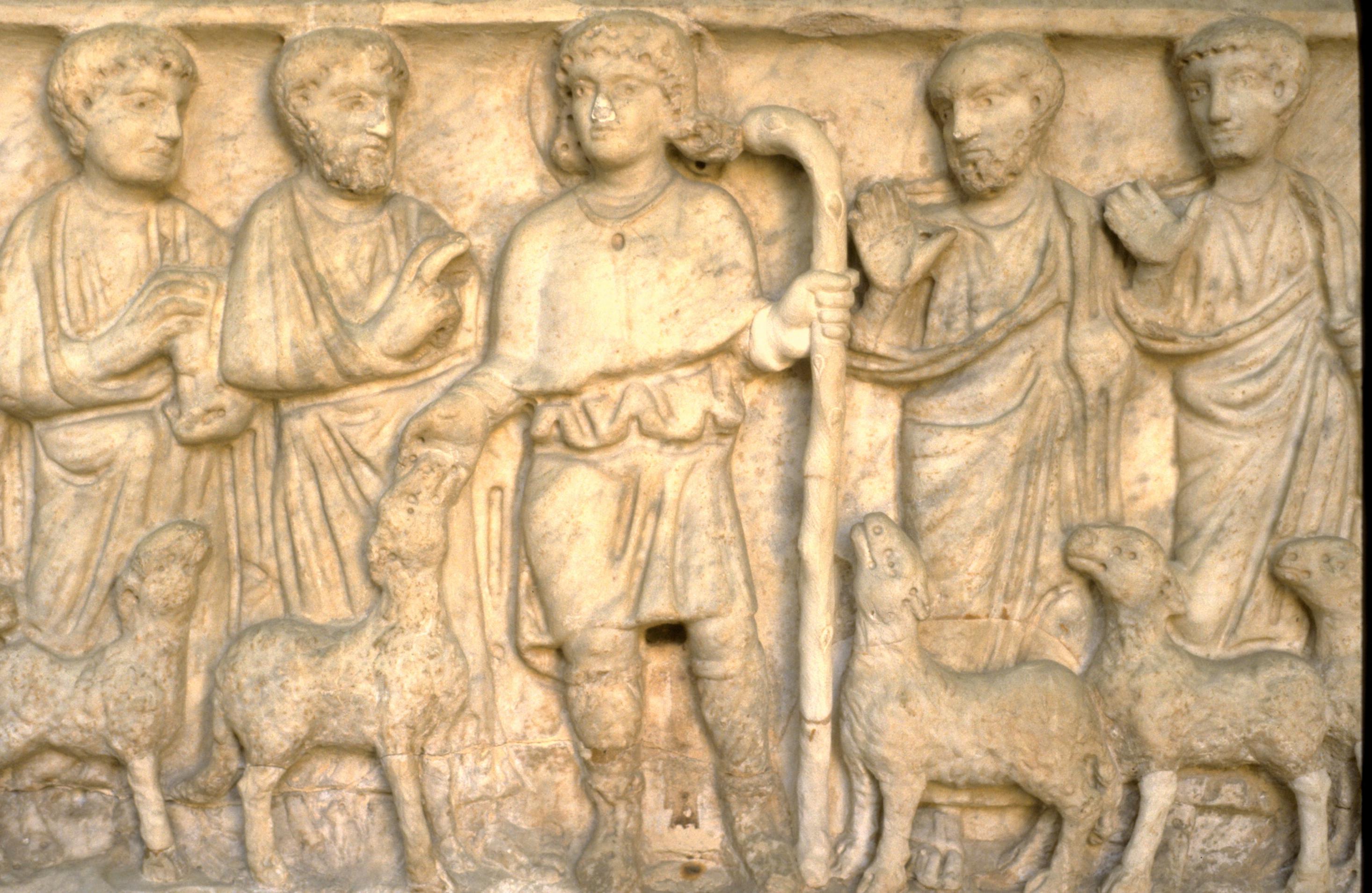
Christ as Good Shepherd with Apostles and lambs, Sarcophagus, 4th century, relief, Museo Pio Cristiano, Vatican.

Christ as Good Shepherd with Apostles and lambs, Sarcophagus, 4th century, relief, Museo Pio Cristiano, Vatican.

We’re all looking for a leader, whether we realise it or not.  This week, The Australian reported that ‘tipoffs to the National Security Hotline in Australia’s largest state have increased tenfold in two years’.

[NSW Police Force Counter Terrorism Command Head, Mark Murdoch] said that in 2013 NSW police received just 769 referrals from the National Security Hotline, which was set up in 2002 by the Howard government as a clearing-house for information from the public.

Last year, that figure jumped to 4600. This year, NSW police are projecting an estimated 6900 referrals, an almost tenfold increase on the figures of just two years ago.

…He said his officers often had just hours in which to thwart deadly terror attacks.  Increasingly those attacks were either inspired or assisted by jihadists in Syria or Iraq, with the offenders getting younger and younger. Schoolchildren as young as 14 were ­falling under the spell of Islamic State, Mr Murdoch said.

These children are hungry for a leader, like sheep looking for a shepherd, except that they’ve attached themselves to evil shepherds, who are inspired by Satan himself.  The news media will always attribute this to the wrong causes, because they do not understand the workings of Satan in the world.  By contrast, the people in today’s Gospel are also described as ‘sheep without a shepherd’, but God rescues them by coming in his own person.  Jesus ‘took pity on them because they were like sheep without a shepherd, and he set himself to teach them at some length.’  Let us pray that more of the lost sheep in our country will recognise the voice of the Good Shepherd, and that God will raise up strong evangelists and leaders in the Church.

Download this Sunday’s readings:,

Word format: Year B 16th Sunday 2015

Pdf format: Year B 16th Sunday 2015

For more on this, listen to Fr Barron’s homily, Looking for a Shepherd.

And for a word study on today’s readings, go to Dr John Bergsma’s commentary, The Shepherd Teaches the Flock.


Ascension of Jesus


Leave a comment

Ascension Sunday |Why did Jesus have to leave after his resurrection? Or did he …

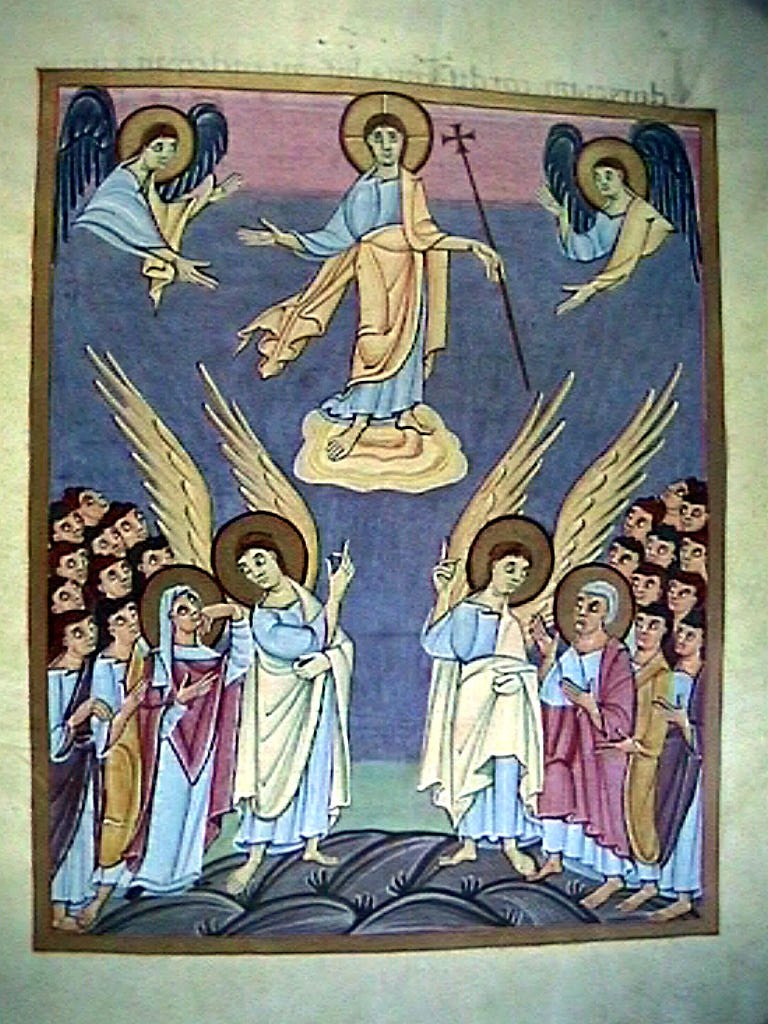
Ascension of Jesus

The Ascension,
a page from the Gospel Lectionary portion of the Bamberg Apocalypse, 11th century Staatsbibliothek, MS A. II. 42, Bamberg, Germany.

Before we discuss this question, let’s get the housekeeping out of the way.  Today’s Mass readings (Australia) can be downloaded here:

Word format: Year B Ascension

Pdf format: Year B Ascension

So why did Jesus have to leave his disciples after appearing to them for forty days after his resurrection?  From Fr Barron:

The key to understanding both the meaning and significance of this feast is a recovery of the Jewish sense of heaven and earth. In regard to “heaven” and “earth,” most of us are, whether we know it or not, Greek in our thought patterns. By this I meant that we tend to set up—in the manner of the ancient Greek philosophers—a rather sharp dichotomy between the material and the spiritual, between the realm of appearance and the realm of true reality, between the fleeting earth and the permanent heaven. And if we’re spiritually minded, we tend to think of salvation as an escape from this world—this vale of tears—to a disembodied state called “heaven.” The problem is that these convictions have far more to do with Plato than with the Bible.

Biblical cosmology is not fundamentally dualistic. It speaks indeed of “heaven” and “earth,” but it sees these two realms as interacting and interpenetrating fields of force. Heaven, the arena of God and the angels, touches upon and calls out to earth, the arena of humans, animals, plants, and planets. On the Biblical reading, salvation, therefore, is a matter of the meeting of heaven and earth, so that God might reign as thoroughly here below as he does on high. Jesus’ great prayer, which is constantly on the lips of Christians, is distinctively Jewish in inspiration: “Thy kingdom come, thy will be done, on earth as it is in heaven.” Notice please that this is decidedly not a prayer that we might escape from the earth, but rather that earth and heaven might come together. The Lord’s prayer recapitulates and raises to a new level precisely what the prophet Isaiah anticipated: “the knowledge of the Lord will fill the earth, as the water covers the sea.”   Continue reading here.

Or if you prefer video:

Listen to the homily for today here.


Leave a comment

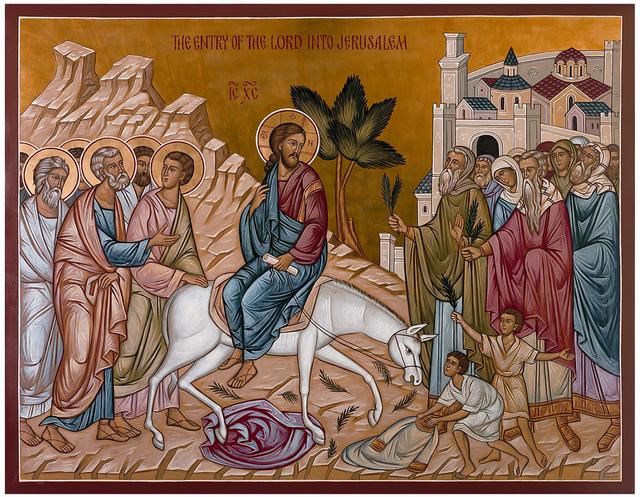
Holy Week: Palm Sunday, Year B | Yeshua, name above all names

Jesus' Entry into Jerusalem

The Entry of The Lord into Jerusalem

“One day I will do something that will change the system and everyone will then know my name and remember me.”  These are reported to be the words of Andreas Lubitz to his former girlfriend, prior to committing mass murder by deliberately crashing an Airbus A320 into the French Alps this week.  His action is currently being described in the news media as a case of depression.  But depressed people don’t generally commit murder on a grand scale.  On the other hand, people under the influence of Satan do.  Let’s remember who the real enemy is.  And remember that the best way to counter evil is prayer.

Lubitz wanted to elevate his own name.  In contrast, we read in today’s reading from Paul’s letter to the Philippians , how Jesus:

 … humbled himself,
becoming obedient to the point of death,
even death on a cross.
Because of this, God greatly exalted him
and bestowed on him the name
which is above every name,
that at the name of Jesus
every knee should bend,
of those in heaven and on earth and under the earth,
and every tongue confess that
Jesus Christ is Lord,
to the glory of God the Father.

John Bergsma has a beautiful commentary on this reading over at The Sacred Page.

This famous passage—often thought to be a early Christian hymn or creed that St. Paul is quoting—gives an outline of the whole Gospel.  Jesus did not see “equality with God as something to be seized,” using the Greek word harpagmon, from a root harpazo, “to snatch or seize, often quickly or violently.”  Jesus is thus a contrast with the Greco-Roman mythical hero Prometheus, who ascended to the realm of the gods and “snatched” fire, bringing it back to man in an effort to attain equality with the divine.  So Prometheus has always stood as an icon of rebellion against God or the gods, and a worldview that imagines the divine as opposed to or limiting the human.  In this worldview, humanity is liberated and fulfilled at the expense of the divine; the realm of God must be rolled back to make way for the kingdom of man.  This spirit continues to animate the New Atheist movement in our own day (with their flagship publisher, Prometheus Books), which is more a miso-theistic (God-hating) cultural force than an a-theistic (no-God) one.

In contrast to Prometheus, Jesus does not conceive of the relationship between God and man as one of antagonism, in which the divine nature must be violently “snatched” from the Divinity.  Jesus empties himself of the glory of his divinity in order to descend to the status of creature, of “slave.”  Crucifixion was the form of execution mandated for slaves; citizens could not be crucified.  Having taken on human nature, he submits to the death of slaves: “even death on a cross.”  But paradoxically, this great act of self-giving love shows the glory of Jesus and the glory of God.  Truly, a God who would so empty himself out of love is greater, more lovable, more worthy of worship, than a God who will not give of himself. The cross is the glory of our God.  So God the Father bestows on Jesus “the Name which is above every name”, so that at the Name of Jesus, “every knee should bend.”  St. Paul probably has in mind here the ancient ritual of the Day of Atonement (Yom Kippur), on which, according to the Mishnah, the High Priest would exit the Holy of Holies after making atonement for Israel and pronounce the priestly blessing of Numbers 6 upon the gathered worshipers.  This was the one day a year (apparently) when the Divine Name YHWH was pronounced audibly, and each time the assembly heard the name pronounced, they dropped to the ground in prostration.  The name of “Jesus” is now heir to the glory of the divine name YHWH.  In the Name of Jesus we now find salvation.  Thus, in the Catholic tradition we bow the head at the Name of Jesus and celebrate the Feast Day of the Most Holy Name of Jesus (Jan 3), for which our present text is an optional Second Reading.

Unlike the New Atheists, the Jesus and his disciples do not regard the divine-human relationship as one of antagonism where goods are “snatched” from each other, but a relationship of communion, love, and self-gift.  The human is not exalted at the expense of the divine; rather, human and divine are exalted together.  God and man are mutually glorified by loving each other.  Humanity becomes more human by becoming more divine.  Divinization also humanizes.

Today is the beginning of Holy Week, where we follow Jesus from his final entry into Jerusalem to his Resurrection.  This year we have the narration from the Gospel of Mark.  You can download a 12 page Mass booklet for the Palm Sunday Procession and Mass here:

Word format: Year B Palm Passion Sunday

Pdf format: Year B Palm Passion Sunday


Leave a comment

3rd Sunday of Lent, Year B | Jesus, the Embodiment of the Law

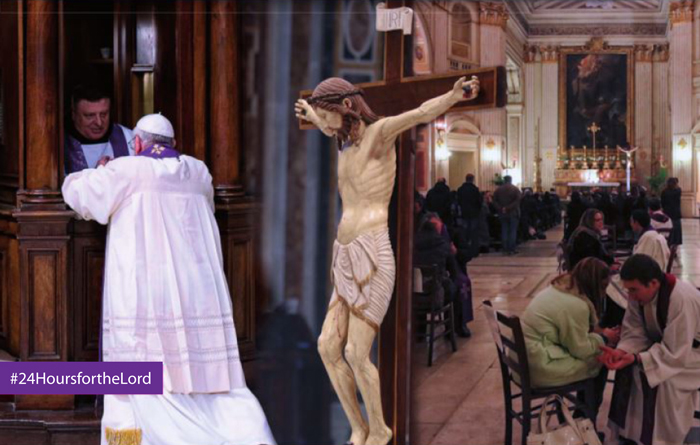
Pope Francis, Penance and Reconciliation during 24 Hours for the Lord

Pope Francis, Penance / Reconciliation during 24 Hours for the Lord

Are The Ten Commandments still relevant for us?  I have friends who claim the Bible is nothing special – just a man-made unenlightened compilation of Bronze Age writings, and certainly not inspired by the Holy Spirit.  If that were the case, Jesus would not fulfil so many prophecies from the Old Testament.  In today’s Gospel, for example, we see Jesus fulfilling prophecies from Isaiah 56:6-7, Jeremiah 7:1-11 and Malachi 3:1-3, to name only a few.

Mass Readings Word format: Year B Lent 3rd Sunday 2015

Mass Readings Pdf format: Year B Lent 3rd Sunday 2015

John Bergsma gives a great analysis of the readings here.

I have to conclude that my friends who denigrate the Bible are too used to thinking of themselves as ‘good people’ and find it too confronting to consider themselves as sinners, so they are compelled to ‘shoot the messenger’.  Getting down to practicalities, Pope Francis has called all Christians to make 13th and 14th March “24 Hours for the Lord”.  He wants us to go to Adoration, examine our consciences (take some time about this – perhaps spend an hour in Adoration asking the Lord to reveal your sins to you) and receive the sacrament of penance / reconciliation / confession during this time.  To prepare for this, why not listen to Fr Barron’s homily on the Ten Commandments here:

Click-here-to-listen


and do a thorough examination of conscience.  You can download these as a guide:

Word format: Confession and Examination of Conscience

Pdf format: Confession and Examination of Conscience

By the way, these lists of sins are not exhaustive – they are just meant as a guide.  If you take time to examine yourself and listen to the Holy Spirit, you’ll find many imperfections that aren’t even on the list.

For those of you in the Perth Northern Suburbs, you can attend 24 hours for the Lord events here:

  • Joondalup Holy Spirit Chapel: Adoration and Confession from 00h00 (midnight) Friday until midnight Saturday.  Mass: 12:10 Friday.   Please put your name on the adoration roster in the front porch.
  • Our Lady of the Mission, Whitfords: Exposition of the Blessed Sacrament: Friday 09.30 a.m. to 7.00 p.m., Mass Friday 9 a.m, Saturday 08.30.  Confession: Saturday 12.00 to 13:00and 17:30 – 18:00.
  • St Simon Peter, Ocean Reef: Blessed Sacrament Adoration Friday 9:00 to 18:50.  Mass: Friday 19:00, Saturday 8:30, Reconciliation: Friday 18:30-18:50, Saturday 17:00-17:45.
  • St Andrew’s, Clarkson: Mass: Friday and Saturday 08:00, Reconciliation: Saturday 17:00 to 17:30, Exposition of the Blessed Sacrament and Benediction: Friday 15:00 to 17:00.

Wishing you joy and grace this Lent!


Leave a comment

The Baptism of the Lord | Did Jesus need Baptism?

The Baptism of Jesus, fresco, Orthodox Church of St John the Baptist, Bethany-beyond-the-Jordan, Jordan.

The Baptism of Jesus, fresco, Orthodox Church of St John the Baptist, Bethany-beyond-the-Jordan, Jordan.

Why on earth does Jesus, the sinless God-made-flesh, need to be baptised?

For the background on this, first download this Sunday’s readings:

Word format: Year B Baptism of the Lord

Pdf format: Year B Baptism of the Lord

Some answers:

  1. The humility of God expresses itself through His immersion into the human condition so that he can lift people out of their slavery to sin. (listen to Fr Robert Barron’s homily here);
  2. This is the first great theophany of The Trinity (see Fr Steve Grunow’s comments here);
  3. Just like David and Solomon before him, Jesus is being anointed for his kingly mission (see John Bergsma’s comments here).