Catholic in Yanchep

Go out into the deep.


Leave a comment

3rd Sunday of Advent, Year C | Unwavering Joy!

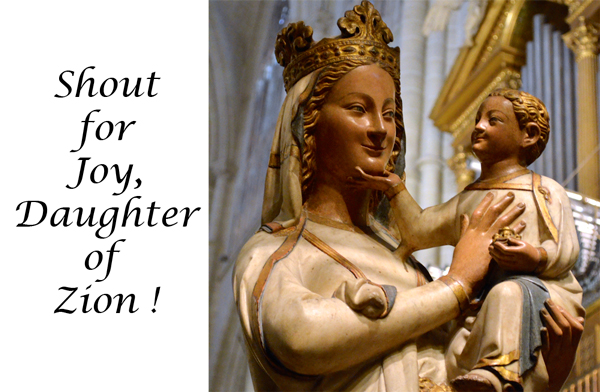
Daughter-of-Zion-600px

Statue of the Smiling Virgin Mary, Cathedral of Santa Maria de Toledo, Castile-La Mancha, Spain.

The third Sunday of Advent, Gaudete Sunday, reminds us to rejoice!

(The thoughts below are distilled from a 2003 homily by Bishop Robert Barron.)

I wonder how many of us associate God with joy?  God, by his nature, is joy.  The Father empties himself in love for the Son.  The Son empties himself in love for the Father.  The Holy Spirit is the empowering love shared by the Father and the Son.

How do we obtain real joy?  It comes from the act of letting go of oneself.  God created us, not because he needed us or needed created things, but out of the sheer intensity of his joy.

The 5th century Syrian philosopher, Pseudo-Dionysius said: “Goodness is diffusive of itself.” There is a natural inclination in all good things to spread their goodness to others.  That is what God is like.  Jesus makes this clear when he says, “I came that you might have life, and have it to the full.”  He didn’t come primarily to give us the law, not primarily to judge us, but to give us joy.  The minute you put anything other than joy at the centre of the Christian life, you have misconstrued it.

When we think of God primarily as judge, as someone who is brooding over us, it’s a sign that we’re caught in sin.  When you run away from the Divine Love, you run to the far country of sin, that’s when God seems distant.  It’s not that God has moved, but that you’ve moved.  When God seems difficult and overbearing, that’s not because he is, but it’s because by closing yourself in, you have made yourself the enemy of God.

The moral life begins with joy.  Law, virtue, obligation only exist to serve joy.

Christ’s purpose is to baptise us in the Holy Spirit.  Baptism in the Holy Spirit means to let God live in you in such a way that you experience the very joy which is the inner life of God.  In today’s Gospel, John the Baptist says, “he will baptise you with the Holy Spirit and fire.”  Fire is that passion, enthusiasm and sense of purpose, that the Holy Spirit gives you.  Purposeful people are joyful.  When the Holy Spirit is in you, you know what to do!  You know where to go, your life is on fire!  That’s what Jesus has come to do to you!

John also says, “His winnowing fan is in his hand to clear his threshing-floor and to gather the wheat into his barn; but the chaff he will burn in a fire that will never go out.”  Uh-oh – this sounds like bad news.  On the contrary, this is very good news!  The winnowing fan is like a rake that tosses the wheat up into the air, so that the wind can blow the chaff away, allowing the good grain to fall to the ground.  When Christ is in your life, when you have been baptised in the Holy Spirit, it means that Christ is now going to work in you, separating out all that is evil and dark and dysfunctional, from all that is in the Image of God.  When you let Christ work in you, then your hatred and your violence and your selfishness and your self-absorption and your division – he will throw these up into the air so that they might be blown away!  This is very good news.  When Jesus lives in you, this is the process of transformation that happens, and it is conducive to joy!

Joy is something we can be commanded to experience: in the Second Reading, Paul says, “I want you to be happy, always happy in the Lord.” or “Rejoice in the Lord always, and again I say rejoice!”  It is an action.  If you just sit around waiting for something to come and make you joyful, then you’re not going to be joyful.  Paul continues: “Everyone should see how unselfish you are!”  God is joy because God is a communion of love. Paul is commanding us to be like God in being unselfish.  You are joyful in the measure that you forget about yourself and look to the other, in love.  It’s not that complicated.  Hard to do?  Yes it is, for us sinners, but not that complicated to describe.

Let me give you a hint.  When you find yourself depressed, listless, hopeless, desperate … perform a simple act of love.  What’s love?  It’s willing the good of the other – nothing grandiose, it doesn’t have to be.  Just a simple act of caring for someone around you.  And believe me, Christians are surrounded by people whom we can love.  When you find yourself depressed, act, act, be selfless.  And that’s where joy comes from.  Paul goes on, “Dismiss all anxiety from your minds.  Present your needs to God in every form of prayer, and in petitions full of gratitude.”  What did Jesus say?  “Perfect love casts out all fear!”  The opposite of love is not hate.  The opposite of love is fear.  Where does anxiety come from?  Anxiety comes from the conviction that we are in charge of our lives.  I worry and fret because I’ve got to make things right.  I’ve got to determine how things go.  No, dismiss fear from your mind when you hand your life over to God, and you say, “Lord, you are the Lord of my life.”  What does God want us to do?  He wants us to ask him, “Lord guide me, Lord give me direction, Lord show me the path.”  He wants us to turn our lives away from our own obsessions and anxieties and to turn to him.  This is true of all the saints.  At some stage they said, “My life is not about me.  It’s about Him, and I’m going to let God run my life.”  In that moment and in that measure we find joy!

Listen to Bishop Barron’s homily here.

Today’s Readings (Australia):

Word format: Year C 3rd Sunday of Advent 2015

Pdf format:  Year C 3rd Sunday of Advent 2015

Leave a comment

2nd Sunday of Advent, Year C | Ruminations on hypocrisy

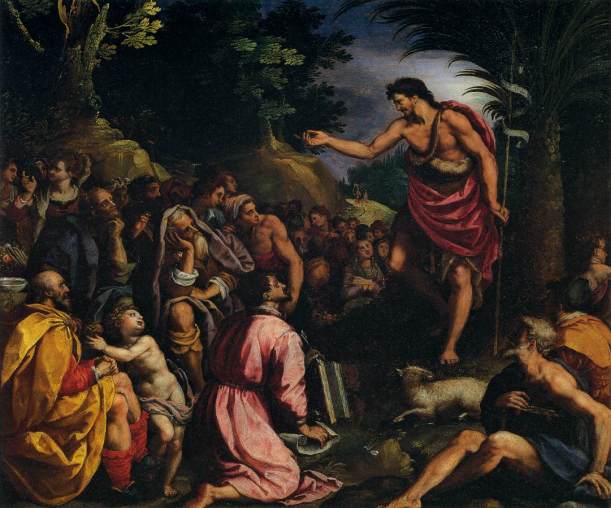
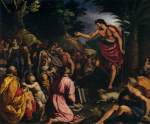
Preaching of John the Baptist-Alessandro Allori

The Preaching of St John the Baptist, Allesandro Allori (1527-1607), oil on copper, Palazzo Pitti, Florence, Italy.

In this Advent season, we are looking forward to the arrival (adventus) of Christ, not only at Christmas time, but when he returns “at the end of the age”.

Paul, in today’s reading from Philippians, urges us:

My prayer is that your love for each other may increase more and more and never stop improving your knowledge and deepening your perception so that you can always recognize what is best.  This will help you to become pure and blameless, and prepare you for the Day of Christ.

I would say to all Christians:  Let’s spend more time become ‘pure and blameless’, examining our consciences and going to confession.  Remember that the devil knows your failings, and is only too ready to point them out to anyone who doesn’t agree with you so that they may call you a hypocrite and use that as an excuse for not believing you about the important things in life (yes, other people sometimes take great delight in accusing us).  For an obvious example, look at how the action, or rather the inaction, of Archbishop Frank Little has caused immeasurable harm to so many abused children.  When we Christians set a poor example, how can we expect anyone to believe us?

So to continue in our examination of conscience …  Do you harbour feelings of resentment towards anyone?  Is there anyone in your family you don’t speak to?  Do you constantly gripe about ‘other people’?  Is there any aspect of Church teaching you have difficulty believing?  How hard have you tried to understand Church doctrine and educate yourself?  Are you ready to defend and explain your faith? Keep going here …

If you, like me, have relatives who do not follow Christ, there is a wonderful new resource out from Brandon Vogt to help you draw others to Christ.  Prayer is essential, but there are also many practical things you can do.  Sign up to Help Them Return.

Finally, here is an excellent talk from Bishop Robert Barron on the historicity of the Gospel, based on today’s Gospel Reading from Luke.  And a fantastic video on what exactly we mean by the Gospel.  Can you explain the Gospel, or are you tongue-tied?

I must admit to laughing my head off when I see people like Bill Maher dismissing Christianity as ‘silly stories’ and ‘intellectually embarrassing myths from the Bronze Age’.  Observe Stephen Colbert’s humility in the face of Maher’s attack and note that Maher doesn’t actually address Christianity’s claims using serious historical argument, but merely indulges in name-calling.

Anyway, if you want an answer to Bill Maher and his straw men, watch this video from the ever relevant Bishop Barron.

Today’s Bulletin with Readings (Australia):

Word format  Year C 2nd Sunday of Advent 2015

Pdf format Year C 2nd Sunday of Advent 2015


Leave a comment

First Sunday of Advent | The Virtuous Branch of the House of David

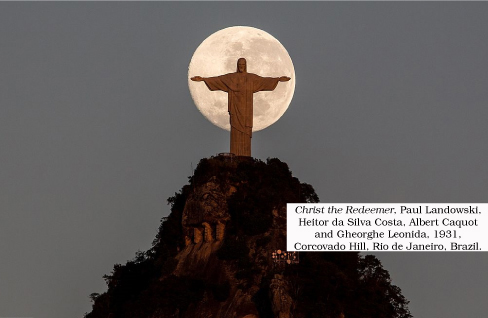
Christ-the-Redeemer-Rio-de-Janeiro

Christ the Redeemer, Paul Landowski, Heitor da Silva Costa, Albert Caquot and Gheorghe Leonida, 1931, Corcovado Hill, Rio de Janeiro, Brazil.

Most people are unaware of the sheer number of prophecies in the Old Testament which are fulfilled in Jesus Christ.  Taylor Marshall has compiled a list in his book, The Crucified Rabbi: Judaism and the Origins of Catholic Christianity, The Origins of Catholicism, Volume 1. Our first reading today includes one of these prophecies:

See, the days are coming — it is the Lord who speaks — when I am going to fulfil the promise I made to the House of Israel and the House of Judah:

‘In those days and at that time,
I will make a virtuous Branch grow for David,
who shall practise honesty and integrity in the land.

In those days Judah shall be saved and Israel shall dwell in confidence.
And this is the name the city will be called:
The Lord-our-integrity.’  (Jer 33:14-16)

Dr John Bergsma explains Jeremiah’s reference to a branch.

  … we notice that the Reading refers to a “just shoot” (other translations: “Righteous Branch”) raised up for David.  Here the word is Hebrew tzemakh, “branch, sprout.”  In a more famous passage that speaks of the “Branch,” a Hebrew synonym is employed, netzer: “There shall come forth a shoot from the stump of Jesse, and a branch (netzer) shall grow out of his roots.” This word netzer is the root of the geographical name Nazareth, and in Matt 2:23, the Evangelist finds it particularly fitting that Jesus, the “Branch” (netzer) should come from “Branchton” (Nazareth) and be called a “Branchian” (Nazarene).

Jesus is the ultimate fulfilment of ‘the Lord-our-integrity’.  There has been a lot of commentary in the media and on social networking sites in recent weeks about the causes of and solutions to the threat of terrorism.  I would urge all commentators to examine the life of Jesus next to someone like Mohammed and decide where the integrity really lies.  There is a tolerable comparison here. And Marc Barnes has an article which goes to the core of the problem that Western Secular Liberalism has in understanding Islam.

Meanwhile, what is a Christian to do?  Let’s look at what Paul says in the second reading: “May the Lord be generous in increasing your love and make you love one another and the whole human race as much as we love you.  And may he so confirm your hearts in holiness that you may be blameless in the sight of our God and Father when our Lord Jesus Christ comes with all his saints.”

Perhaps the best advice is to follow our Blessed Mother’s request and pray the rosary for our confused world.

Today’s readings (Australia):

Word Format: Year C 1st Sunday of Advent 2015

Pdf Format: Year C 1st Sunday of Advent 2015


Leave a comment

Christ the King |… and the threat to Western Civilisation

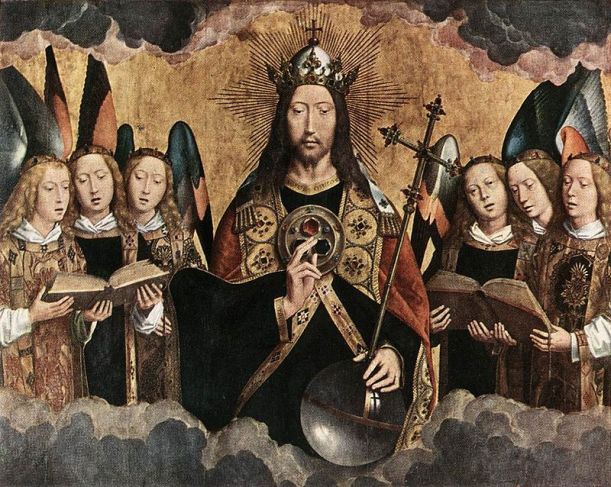
Hans_Memling_-_Christ_Surrounded_by_Musician_Angels_-Christ the King

Christ surrounded by Musician Angels, Hans Memling (c.1480), Royal Museum of Fine Arts, Antwerp, Belgium.

Let’s not be surprised that God has allowed the recent murderous atrocities in Paris, Lebanon and Mali to occur just before the Solemnity of Christ the King.  In an article in The Australian called Western Civilisation is under threat, but not just from terrorism, Greg Sheridan writes with great insight.

The interaction of the terror threat with traditional geo-strategic issues makes both much more difficult for the West to ­manage. At the same time, the West is undergoing a genuine civilisational crisis of belief and of governance. This is the first generation in Western history that, substantially, is not sustained by any transcendent beliefs. The death of God is also in the West the death of purpose and, for many, the death of meaning.

Can a civilisation really sustain itself on the basis of an ideology of self-realisation and entitlement liberalism? If so, it will be the first time in history. Not only that, even if the model was internally sustainable, can it really produce a society vigorous enough to defend itself against these multiplying ­security challenges.

George Orwell once remarked that the English sleep easy in their beds at night because rough men stand ready to do rough things on their behalf. Every soldier, every police officer, is ultimately prepared to sacrifice their life for an idea, a set of principles, a set of values, that they believe transcends their own experience and even their own mortality.

Western society is moving ever further away from the idea that anything beyond the individual can demand such sacrifice. The internal liberalism has never been more oppressive, while the ability to stand seriously against enemies is very much in question.

Straws in the wind even in Australia demonstrate grotesque elements to our civilisation. The Catholic Archbishop of Hobart is to be hauled before a thought police tribunal for the crime of propounding traditional Catholic sexual morality. Meanwhile, we rejoice in televised cage fights between women, which even our parents, much less our grandparents, would have regarded as the essence of barbarism.

At the same time demonstrators can march through the streets calling death to Israel, or even denouncing the evil of the Jews, without attracting legal penalty.

If a society has lost strong beliefs, can it really excite the transcendent loyalty of its own citizens, or of people who join it through migration?

At the same time there is well-documented crisis of governance across the Western world. No Western nation can balance its expenditures with its revenues. All are caught up in an entitlements ­crisis. Health and welfare spending are ballooning, so are unsustainable deficits. The prestige of democracy is under severe attack. For most of the Cold War, millions of people in the Third World, and in communist societies, yearned to live in nations governed as well as those of the West. It is a hard argument to make to a young banker or IT worker in Shanghai now that they would be better off if their government had the resolve and technical skill of Greece or Spain.

Put this all together and it’s not quite yet a full-blown crisis of a civilisation. But there’s a great deal of trouble ahead.

Though Australia is not technically in the West, we have inherited the values of Western Civilisation, which have largely been formed by Christian institutions and ethics.  (If you want to read more on that, go here.)  But what happens when the formerly Christian west turns away from God and towards atheism, agnosticism and the ideology of self-realisation and self-indulgence?  Well, God is a loving Father, and what loving Father fails to correct his child when his child is headed on a self-destructive path?  We see this constantly in the narratives of the Old Testament, where God allows the Israelites to be captured by the Babylonians and the Assyrians in order that they might eventually repent and return to Him.

But they became disobedient and rebelled against You, and cast Your law behind their backs and killed Your prophets who had admonished them so that they might return to You, and they committed great blasphemies.”  Therefore You delivered them into the hand of their oppressors who oppressed them.  (Nehemiah 9:26-27)

The West has a choice in front of it at the moment and the choice is this. Do you want to continue in your unfaithfulness to God, or do you want to turn back to Christ and acknowledge him as the King of the Universe?  And what a beautiful king he is!  If only our worldly leaders were like this!

How can we describe the Kingship of Jesus?

  • He is Love itself: “For God so loved the world that he gave his one and only Son, that whoever believes in him shall not perish but have eternal life. For God did not send his Son into the world to condemn the world, but to save the world through him. Whoever believes in him is not condemned, but whoever does not believe stands condemned already because they have not believed in the name of God’s one and only Son.” (John 3:16-17)
  • He is Humility “who, though he was in the form of God, did not count equality with God a thing to be grasped, but emptied himself, by taking the form of a servant, being born in the likeness of men.” (Phillipians 2:6-7)
  • He is Justice: “For we must all appear before the judgment seat of Christ, so that each of us may receive what is due us for the things done while in the body, whether good or bad.” (2 Corinthians 5:10).

I could go on, but if you want to know him better, read the Gospels.

It’s not even as if following Jesus is too hard to do.  Is praying for a few minutes a day and worshipping God in community with the Church for an hour a week too hard?  Let us pray with love and compassion for our brothers and sisters all over the world who have turned away from Christ, that they may realise before it’s too late whom they are rejecting, and turn back to the true King of the Universe.

Today’s readings:

Word format: Christ the King Year B

Pdf format: Christ the King Year B


1 Comment

32nd Sunday in Ordinary Time | God wants … what!?

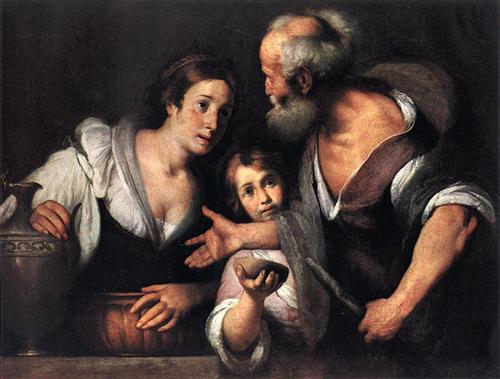
Elijah and the Widow of Zarephath, Bernardo Strozzi, 1630, oil on canvas, Kunsthistorisches Museum, Vienna, Austria

Elijah and the Widow of Zarephath, Bernardo Strozzi, 1630, oil on canvas, Kunsthistorisches Museum, Vienna, Austria

In today’s stories of Elijah and the widow of Zarephath (first reading) and the poor widow in the Gospel, God challenges us to think outside the square.

Here is a poor widow sitting down to her last meal, and not only does God’s prophet Elijah ask her to share it, but he asks her to make a scone for him first, and only afterwards to make one for herself and her son.  One’s first reaction is to wonder if he cares about her plight at all!  How arrogant this seems to our ears today!  At the same time Elijah promises that her meal and oil will not run out.  Well, a prophet is known by whether his prophecies are fulfilled, and we are told that they are.

The jar of meal was not spent nor the jug of oil emptied, just as the Lord had foretold through Elijah.

So what is God’s point here?  What we have to understand is that it is our job to keep giving.  This might not necessarily be in monetary terms – it could also be in one’s time, one’s talents, anything, as long as we give.  Too many of us think we go to Church because we want to receive something from God.  (The “I never get anything out of Mass.” excuse.)  Actually our primary purpose in going to church is to give: our gratitude to God for giving us this wonderful gift of life, our practical talents voluntarily offered for the community, whether it be visiting the sick or the lonely, helping the needy, bringing hope to the despairing or any number of good works.

The woman in the story could have argued and said, “You lazy so-and-so!  It’s all very well to stand there prophesying, but why should I believe you?”  (Unlike me!) she doesn’t argue, but trusts and obeys in faith, and her trust is rewarded.  We have to give God a chance to act and not pre-determine the outcome by our lack of faith.  Is God giving you a challenge right now to keep giving despite the apparent futility?  How are you going to respond?

In the Gospel reading, we see two pictures: first the scribes, who in their long robes are addicted to receiving the honour of the crowds and make a show of their “lengthy prayers”; secondly, the poor widow who contributes everything she possesses, without ostentation and without recognition from anyone in the crowd except Jesus.

Ask yourself whether you, perhaps, might be one of these scribes.  Do you love to tell everyone how many hours you spend praying, going to Mass, saying the Divine Office or praying the Liturgy of the Hours?  Jesus warns us that we – especially his ordained ministers – are in great spiritual danger if we show off about these things.  Of the scribes, he says, “The more severe will be the sentence they receive.”   The Catechism of the Catholic Church warns us about this danger:

1550 This presence of Christ in the minister is not to be understood as if the latter were preserved from all human weaknesses, the spirit of domination, error, even sin. The power of the Holy Spirit does not guarantee all acts of ministers in the same way. While this guarantee extends to the sacraments, so that even the minister’s sin cannot impede the fruit of grace, in many other acts the minister leaves human traces that are not always signs of fidelity to the Gospel and consequently can harm the apostolic fruitfulness of the Church.

1551 This priesthood is ministerial. “That office . . . which the Lord committed to the pastors of his people, is in the strict sense of the term a service.” [28] It is entirely related to Christ and to men. It depends entirely on Christ and on his unique priesthood; it has been instituted for the good of men and the communion of the Church. The sacrament of Holy Orders communicates a “sacred power” which is none other than that of Christ. The exercise of this authority must therefore be measured against the model of Christ, who by love made himself the least and the servant of all. [29] “The Lord said clearly that concern for his flock was proof of love for him.” [30]

Nevertheless, even though Jesus has harsh words for the scribes, he doesn’t expect the faithful to stop doing the right thing in protest at what the scribes are doing.  He praises the poor widow for giving all that she has to give.  Sometimes, when parishioners see a minister of God failing to fulfil his duty, they are tempted to leave the Church or shop around to find a better minister.  Perhaps, however, Jesus wants the faithful to give more in this situation.  Perhaps his word to us is, “Don’t worry about what the unfaithful are doing.  God will deal with them.  This is an opportunity for you to double your efforts!  Give of yourself with my blessing, and I promise you will not run out!”

Today’s readings:

Word format: Year B 32nd Sunday 2015

Pdf format: Year B 32nd Sunday 2015


Leave a comment

All Saints Day | We celebrate the Eve of All Hallows!

St Ignatius Loyola being welcomed into heaven by Christ, detail of nave ceiling fresco by Andrea Pozzo, c. 1685, Chiesa di Sant'Ignazio di Loyola in Campo Marzio, Rome.

St Ignatius Loyola being welcomed into heaven by Christ, detail of nave ceiling fresco by Andrea Pozzo, c. 1685, Chiesa di Sant’Ignazio di Loyola in Campo Marzio, Rome.

Join us for our Halloween supper after Mass tonight!   Some Christians have a problem celebrating Halloween, thinking it gives too much glory to Satan, death and evil itself.  Actually Halloween was originally a celebration leading up to the greater feast of All Saints or All Hallows (1 November), the purpose of which is to celebrate those Saints who are with Christ in glory because of his victory over sin, death and the devil.

From Fr Steve Grunow:

There is a lot that is unsavory about the contemporary celebration of Halloween. What does the singular focus on violence, horror and death have to say about our culture? The traditional, Catholic Halloween placed these realities within the context of Christ’s victory over sin, death and the devil. The current secularized version of the festival has no salvific content and has been loosed from its theological moorings. It looks very much like a festival of death for a culture of death and for that reason I can see why parents might be concerned.

But what is the proper response to a culture of death? To lock the Church behind closed doors or to let her out into the world? I think it is time for Catholics to accept the religious liberties that this culture claims to afford them and go public with their own festivals- and to do so dramatically and with a great deal of public fervor. What is holding us back? What are we afraid will happen? The reticence and fear that characterizes Catholics is costing the Church its unique culture and it is allowing the culture of death to flourish.  Halloween should not be a day when our churches go dark and Christians retreat into the shadows, but when we fill the darkness with Christ’s light and go out into the culture, inviting everyone to the prepare for the festival of the Saints with all the joy we can muster.

Read the rest here.

For a great scripture study on today’s readings, try The Sacred Page.  And listen to Bishop Robert Barron’s homily, What Does it Mean to be a Saint?

Today’s Mass Readings:

Word format: All Saints 2015

Pdf format:All Saints 2015


Leave a comment

29th Sunday in Ordinary Time | Be careful what you ask God for … but ask him anyway

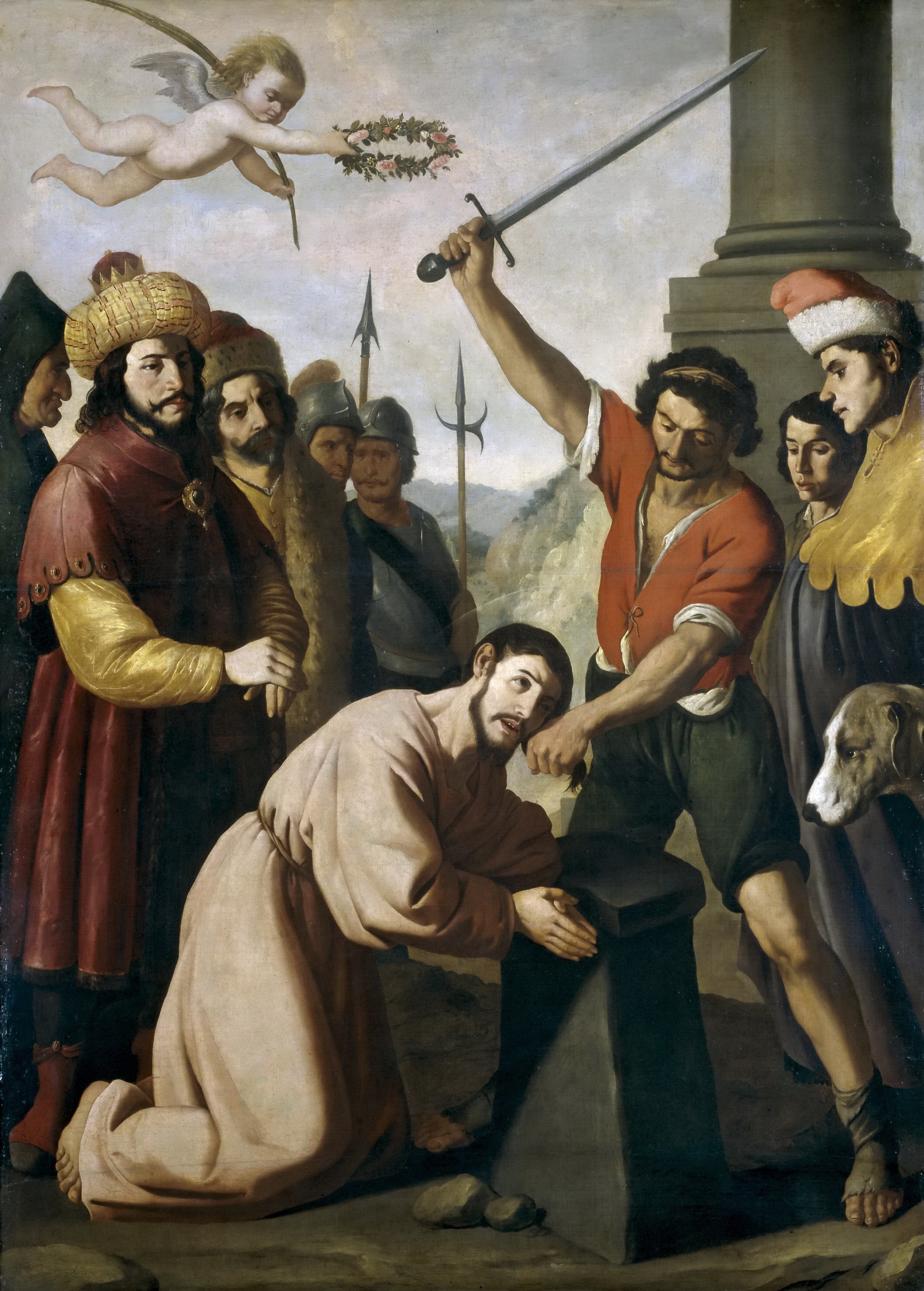
The Martyrdom of St James, Francisco di Zurbaran, 1639, Museo Nacional del Prado, Madrid.

The Martyrdom of St James, Francisco di Zurbaran, 1639, Museo Nacional del Prado, Madrid.

“Allow us to sit one at your right hand and the other at your left in your glory,” ask James and John in today’s Gospel.  Jesus replies, “You do not know what you are asking!.. Can you drink the cup that I must drink, or be baptised with the baptism with which I must be baptised?’

“We can,” they reply in their ignorance, and Jesus, knowing already what will happen in the future, says, “The cup that I must drink you shall drink, and with the baptism with which I must be baptised you shall be baptised.”  For God, glory doesn’t mean what we think it means – it is instead a life of service and self-giving.  James (the Greater, son of Zebedee) did indeed drink of the cup of suffering and eventually became the first apostle to be martyred in the year 44 A.D. when he was put to the sword by Herod Agrippa.  He is the only one of the Twelve whose death is recorded in Scripture (read Acts 12:1-2).  This is how the Church historian, Eusebius (260/265 – 339/340), recounts it in Church History, Book 2, chapter 9:

Chapter 9. The Martyrdom of James the Apostle.

  1. Acts 12: 1-2.  Now about that time (it is clear that he means the time of Claudius) Herod the King stretched forth his hands to vex certain of the Church. And he killed James the brother of John with the sword.
  2. And concerning this James, Clement, in the seventh book of his Hypotyposes, relates a story which is worthy of mention; telling it as he received it from those who had lived before him. He says that the one who led James to the judgment-seat, when he saw him bearing his testimony, was moved, and confessed that he was himself also a Christian.
  3. They were both therefore, he says, led away together; and on the way he begged James to forgive him. And he, after considering a little, said, Peace be with you, and kissed him. And thus they were both beheaded at the same time.
  4. And then, as the divine Scripture says, (Acts 12:3 sqq) Herod, upon the death of James, seeing that the deed pleased the Jews, attacked Peter also and committed him to prison, and would have slain him if he had not, by the divine appearance of an angel who came to him by night, been wonderfully released from his bonds, and thus liberated for the service of the Gospel. Such was the providence of God in respect to Peter.

All of the other apostles, except John, were martyred for proclaiming their faith in Christ. You can read more about their ultimate fates here from the 3rd century Bishop of Caesarea.

But what does all this have to do with you and me?  Does it mean I should be afraid to ask God for good things in case he expects me to suffer instead?  No, it means we should re-examine our motives in our requests.  God wants to give us good things, but he also wants to purify our hearts so that we don’t become slaves to Aquinas’s four typical substitutes for God: wealth, power, pleasure or honour.  Fr Robert Barron has a wonderful homily for today on Real Spiritual Power: take the time to listen to it.

Our Readings for today:

Word format: Year B 29th Sunday 2015

Pdf format: Year B 29th Sunday 2015


1 Comment

27th Sunday in Ordinary Time, Year B | How to read the story of Adam and Eve

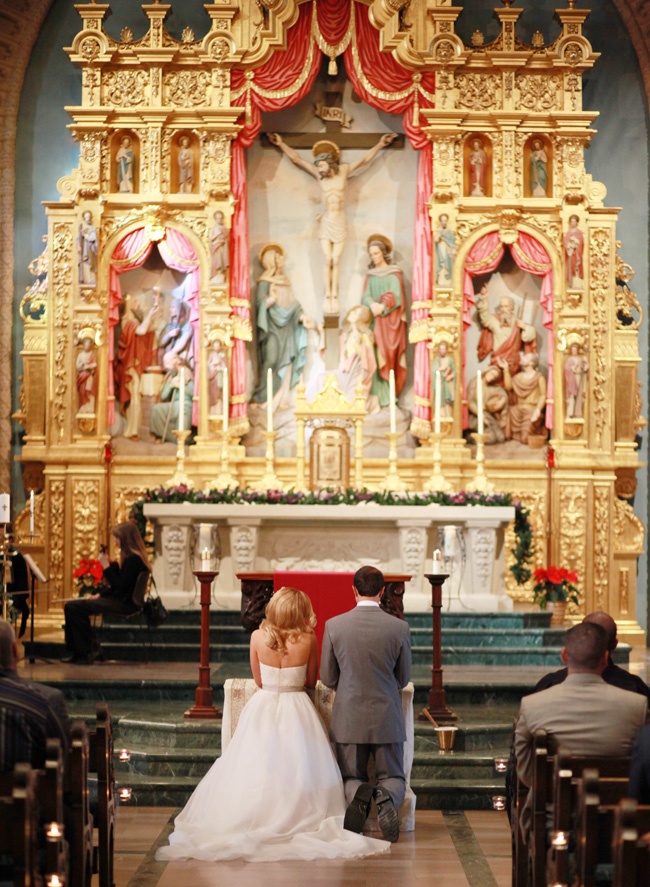
Catholic weddingCrucial to interpreting The Bible correctly is our understanding of genre.  Many people abandon the Bible, because they can’t reconcile Genesis with evolutionary theory.  But if we can get rid of two major hangups first, Genesis becomes more-easily interpretable to the modern ear.

  1. Genre.  The first few chapters of Genesis are a kind of theological poetry or myth-drama.  ‘Myth’ here is used in the technical sense, not the popular one.  As in any legal document, I have to define my terms here to prevent misunderstandings.

Myth: popular meaning = a fantasy story which is unrelated to truth or fact.

Myth: technical meaning = supernatural or fantasy-like stories that explain reality and natural truths.

(for more on this, read Peter Kreeft’s chapter on The Bible: Myth or History? in his Handbook of Catholic Apologetics, where he gives six definitons of myth.)

So when looking at today’s first reading, ask yourself, “What theological truths is this trying to teach me?”

  1. Reconciling Evolution and Scripture. By the grace of God, the Catholic church has never been against evolutionary theory, but has only placed limits on its scope.  From Dr Edward Feser:

On the subject of human origins, both the Magisterium and Thomist philosophers have acknowledged that an evolutionary explanation of the origin of the human body is consistent with non-negotiable theological and philosophical principles.  However, since the intellect can be shown on purely philosophical grounds to be immaterial, it is impossible in principle for the intellect to have arisen through evolution.  And since the intellect is the chief power of the human soul, it is therefore impossible in principle for the human soul to have arisen through evolution.  Indeed, given its nature the human soul has to be specially created and infused into the body by God — not only in the case of the first human being but with every human being.  Hence the Magisterium and Thomist philosophers have held that special divine action was necessary at the beginning of the human race in order for the human soul, and thus a true human being, to have come into existence even given the supposition that the matter into which the soul was infused had arisen via evolutionary processes from non-human ancestors.

I would highly recommend this two-part outline of the Church’s approach to human origins by Dr Feser.

Part 1: Knowing an Ape from Adam

Part 2: Monogenism or Polygenism?: The Question of Human Origins

Having got these points out of the way, we can now turn to today’s readings and focus on what God is trying to tell us – for which I will refer you to some great commentaries on the beauty of sexuality, love and responsibility, love and children.  Enjoy!

Bishop Robert Barron: Sexuality, Love and Marriage

Michael Barber: The Two Shall Become One Flesh

John Bergsma: God loves Marriage and Children

Edward Sri: Theology of the Body from Eden to Today

Today’s readings:

Word format: Year B 26th Sunday 2015

Pdf format: Year B 26th Sunday 2015


1 Comment

26th Sunday in Ordinary Time, Year B | Pope Francis the Crafty

Read in the light of Pope Francis’s addresses to the UN and the US Congress, our Gospel for today encourages us to see the bigger picture.  The Gospel of Mark (9:38-43) tells us, “Anyone who is not against us is for us.”  So let’s not condemn the world, but give it a chance to be ‘for us’.

Today’s readings:

Word format:Year B 26th Sunday 2015

Pdf format:Year B 26th Sunday 2015

Pope Francis has been much in the news this week, and there’s an interesting article on him by Daniel Burke for CNN.  In it, he quotes from Rev. Angel Rossi, whom Pope Francis has referred to as his ‘spiritual son’.  He describes Pope Francis in these words:

He is humble but confident, a disciplined rule-breaker. He is quiet but freely speaks his mind. He is deeply spiritual, but crafty — a cross between a desert saint and a shrewd politician. He is a man of power and action, who spends a great deal of time in prayer and contemplation.

I like that word ‘crafty’, not in the sense of underhandedly sneaky, but in the Biblical sense of:

Behold, I am sending you out as sheep in the midst of wolves, so be wise as serpents and innocent as doves (Matthew 10:16)

Let us be in no doubt that we are in a war, but the war is not against humans.  The war is against the devil and his evil army, who delight in human dysfunction and want to drag us all down to hell.  No doubt, Pope Francis has been meditating on his primary responsibility, that is winning souls for Christ. He has to be both ‘crafty’ and ‘wise’ about it.  Some Catholic commentators have been bemoaning the fact that Pope Francis has not spoken out sufficiently clearly on the evils of our time.  But like Jesus in today’s Gospel, Pope Francis’s tactics involve  some PSYOP – Psychological Operations; he wants to ‘hearts-and-minds’ the people, in the language of military strategy used in various conflicts (the Malayan Emergency and the Vietnam and  Iraq Wars come to mind).

Pope Francis understands people’s psychology.  In current American society, the people on the right of politics think they have the monopoly on God (I’m thinking pro-life and pro-traditional marriage causes).  Pope Francis sees the need for connecting with the left as well where he can find points that fit in with Catholic social teaching (migrants, the environment, the death penalty).  He knows that if he spends his time appearing like a member of the GOP, a swathe of people on the left won’t hear his core message. Not only that, but he knows no-one will listen to him if his personal behaviour contradicts what he is preaching.  Everyone loves to poke fun at a hypocrite.  So first he tries to remove the splinter from his own eye by avoiding ostentation in his choices of housing, transport and clothing, and in his willingness to embrace the disfigured, the homeless and the weak.

Pope Francis is trying to weave a positive narrative of human dignity, the solidarity of all humans, subsidiarity and the common good.  He deliberately uses subtle and hope-filled language, so that nobody could accuse him of being hateful.  Here are some quotes from the speech to US congress, showing how carefully The Holy Father chooses his words (I have added my plainspeak in red).

A political society endures when it seeks, as a vocation, to satisfy common needs by stimulating the growth of all its members, especially those in situations of greater vulnerability or risk. Legislative activity is always based on care for the people.

Moses provides us with a good synthesis of your work: you are asked to protect, by means of the law, the image and likeness fashioned by God on every human face.  (Subtext: Don’t forget the unborn, like those babies exploited by Planned Parenthood.)

I also want to dialogue with all those young people who are working to realize their great and noble aspirations, who are not led astray by facile proposals, and who face difficult situations, often as a result of immaturity on the part of many adults.  (Subtext: children caught up in broken families, whose parents are not willing to make personal sacrifices but put their own selfish desires first )

Building a future of freedom requires love of the common good and cooperation in a spirit of subsidiarity and solidarity. (Subtext: Beware the mob who gangs up on any portion of society or who seek to remove religious freedoms.)

A delicate balance is required to combat violence perpetrated in the name of a religion, an ideology or an economic system, while also safeguarding religious freedom, intellectual freedom and individual freedoms(Hint to Obama: please safeguard the religious freedom of those who oppose your Obamacare package, like the Little Sisters of the Poor.)

The contemporary world, with its open wounds which affect so many of our brothers and sisters, demands that we confront every form of polarization which would divide it into these two camps. We know that in the attempt to be freed of the enemy without, we can be tempted to feed the enemy within. To imitate the hatred and violence of tyrants and murderers is the best way to take their place.  (Subtext: let’s be careful that the language we use is always charitable)

 The challenges facing us today call for a renewal of that spirit of cooperation, which has accomplished so much good throughout the history of the United States. The complexity, the gravity and the urgency of these challenges demand that we pool our resources and talents, and resolve to support one another, with respect for our differences and our convictions of conscience. (Subtext: do not make laws that interfere with freedom of conscience!)

In this land, the various religious denominations have greatly contributed to building and strengthening society. It is important that today, as in the past, the voice of faith continue to be heard, for it is a voice of fraternity and love, which tries to bring out the best in each person and in each society.  (Subtext: religion isn’t something that should be restricted to the private domain, as some atheists would prefer.)

Politics is, instead, an expression of our compelling need to live as one, in order to build as one the greatest common good: that of a community which sacrifices particular interests in order to share, in justice and peace, its goods, its interests, its social life.  (Subtext: we need to sacrifice our selfishness to achieve what is best for society as a whole … for example, lying about and changing the meaning of marriage will only bring grief and more dysfunction to future generations.)

Building a nation calls us to recognize that we must constantly relate to others, rejecting a mindset of hostility in order to adopt one of reciprocal subsidiarity, in a constant effort to do our best. (Play nicely, children!)

We must not be taken aback by their numbers, but rather view them as persons, seeing their faces and listening to their stories, trying to respond as best we can to their situation. To respond in a way which is always humane, just and fraternal. We need to avoid a common temptation nowadays: to discard whatever proves troublesome.  (Subtext: don’t be afraid of migrants and that they will rob you of your comfort.  Figure out a way to cater for them.)

In a word, if we want security, let us give security; if we want life, let us give life; if we want opportunities, let us provide opportunities. The yardstick we use for others will be the yardstick which time will use for us. The Golden Rule also reminds us of our responsibility to protect and defend human life at every stage of its development.  (Subtext: No abortion, no euthanasia!)

In Laudato Si’, I call for a courageous and responsible effort to “redirect our steps” (ibid., 61), and to avert the most serious effects of the environmental deterioration caused by human activity.  (Subtext: The environmentalists have a point!  We need to care for God’s creation.)

It is my wish that throughout my visit the family should be a recurrent theme. How essential the family has been to the building of this country! And how worthy it remains of our support and encouragement! Yet I cannot hide my concern for the family, which is threatened, perhaps as never before, from within and without. Fundamental relationships are being called into question, as is the very basis of marriage and the family. I can only reiterate the importance and, above all, the richness and the beauty of family life.  (And he said this without mentioning divorce, contraception or homosexual acts.  Take note, Catholics, on how to promote the beauty of the family without sounding scornful of others.)

I would like to call attention to those family members who are the most vulnerable, the young. For many of them, a future filled with countless possibilities beckons, yet so many others seem disoriented and aimless, trapped in a hopeless maze of violence, abuse and despair. Their problems are our problems. We cannot avoid them. We need to face them together, to talk about them and to seek effective solutions rather than getting bogged down in discussions. At the risk of oversimplifying, we might say that we live in a culture which pressures young people not to start a family, because they lack possibilities for the future. Yet this same culture presents others with so many options that they too are dissuaded from starting a family.  (Subtext: People who live without the joy of the Gospel become trapped in a life of meaninglessness and despair.  Let us help them to recover the truth!)

Let us pray for all Catholics to be able to transmit the joy of the Gospel!  And for a scripture study on today’s readings, read Dr John Bergsma’s commentary.


2 Comments

25th Sunday in Ordinary Time, Year B | What were you arguing about on the road?

Christ with Children, Carl Heinrich Bloch, 1834-1890, Frederiksborg Palace, Copenhagen, Denmark.

Christ with Children, Carl Heinrich Bloch, 1834-1890, Frederiksborg Palace, Copenhagen, Denmark.

Our second reading today from the Letter of St James could have been written for our turbulent federal parliament this week:

Wherever you find jealousy and ambition, you find disharmony, and wicked things of every kind being done; whereas the wisdom that comes down from above is essentially something pure; it also makes for peace, and is kindly and considerate; it is full of compassion and shows itself by doing good; nor is there any trace of partiality or hypocrisy in it.  Peacemakers, when they work for peace, sow the seeds which will bear fruit in holiness.

So now we see recriminations from both Tony Abbott and Malcolm Turnbull supporters against those whom they think did not place the party’s interests first.

Without dwelling on what is happening in politics, let us have a look at our own church and see what Christ is saying to us.  Like the Liberal party previously, you could say that the Pastoral Area of Yanchep to Lancelin is failing in the popularity polls.  Our numbers have dropped from 72 members who attended more or less regularly in the early 2000s to about 12 regular attendees today – and I’m just talking about Yanchep (sorry people in Guilderton and Lancelin, but I would love dearly to hear about your experience as well).  As someone who has been attending Mass at Yanchep since 1993, I could give you a list of reasons.  What I find strange is that we, as a Pastoral Area, have not sat down and talked about the reasons among ourselves.  I think I know why.  It’s because it involves being completely open and honest about what we are doing wrong and could do better.  It involves people being willing to listen to each other and examine our own role in this trend.  It takes a person of great sanctity to examine themselves with perfect honesty and realise their own imperfections.  It takes leadership from the priest or a layperson with vision to start the ball rolling.  Such a leader needs to be a person of such exalted holiness that he can handle criticism without needing to fire back in anger.  In fact it takes such effort that sometimes it’s just easier for a parishioner to drive an extra 20 minutes to another parish rather than to keep banging away and not getting anywhere.  And finally, it takes prayer and the Holy Spirit for such an examination to happen fruitfully.  Let’s take James’s advice in the second reading seriously:

Why you don’t have what you want is because you don’t pray for it; when you do pray and don’t get it, it is because you have not prayed properly, you have prayed for something to indulge your own desires.

… and follow it up with Jesus’ recommendation to the apostles in today’s Gospel:

If anyone wants to be first, he must make himself last of all and servant of all.

Not easy, is it?  We have some wonderful people in our small Catholic community here.  I’m thinking of Giovanni who faithfully attends every week, picks up the key for the Community Centre, and with his wife, Ann, sets up the chairs for the parishioners and then organises to deliver bread from Baker’s Delight to the needy.  I’m thinking of Janie who helps Fr Augustine carry in his bags and equipment every week, sets up the altar and, what’s more, does all his gardening (and she’s over 70 years old)!  I’m thinking of people like Christina and Peter who, although they are elderly, persevere in looking after their severely disabled daughter Ruth and still manage to contribute as Lectors.  These people never draw attention to themselves but are able to make themselves ‘last of all and servant of all’.  I am sure there are many more of you whose good works I am not aware of, precisely because you don’t go about parading them.

But we want to do more!  In fact, Archbishop Costelloe is asking us to do more, and he has started a programme of consultation with parishes so that he can have everyone’s input about what we should be doing in the Archdiocese more broadly and how we can go about it.  He has asked all Catholics throughout the Archdiocese to go to the Archdiocesan website and complete the questionnaire, The Way Forward.  Or save a print copy here: Archdiocese Questionnaire The Way Forward.

There is quite a useful commentary for priests today from Fr Genito OSA at Augustinian Friends,

Jesus exhorts us to listen to him today, just as he exhorted his disciples to learn from him when he placed the child in their midst. St. Augustine spoke of the true leader as one who walks alongside his people, not lording it over them. He used the imagery of being on the journey with his people, the leader shepherding his people as one among them, a fellow Christian. One of his most famous statements was from a sermon commemorating his ordination when he said, “For you, I am a bishop; with you I am a Christian.” In a related sermon he made a similar statement: “We have been placed at the head and we are servants. We are in command, but only if we are useful.” All of us are called to exercise this same attitude whenever we find ourselves in leadership, whether that be as leader of a family, a group, a parish, a city, a nation. The ultimate leader – Jesus – modeled this for us and showed us that it would not be easy.

Today’s readings:

Word format  Year B 25th Sunday 2015

Pdf format  Year B 25th Sunday 2015

Finally, go here to listen to Bishop Robert Barron’s homily for today on The Undoing of Original Sin.