Catholic in Yanchep

Go out into the deep.


Leave a comment

Mass times for the Solemnity of the Assumption, 15th August

Assumption Murillo 600 px

For anyone living in Perth’s far north-western suburbs, and wondering about Mass times that fit in with your work schedule, here are a few options:

7 a.m. Our Lady of the Mission, Whitfords
9 a.m. Our Lady of the Mission, Whitfords
9 a.m. Presbytery, 3 Blaxland Ave, Two Rocks
9 a.m. St Anthony’s, Wanneroo (with school)
9 a.m. St Simon Peter, Ocean Reef (with school)
6 p.m. St Andrew’s, Clarkson
7.30 p.m. Our Lady of the Mission, Whitfords
7.30 p.m. St Simon Peter, Ocean Reef


Leave a comment

Our condolences to Peter and Christina

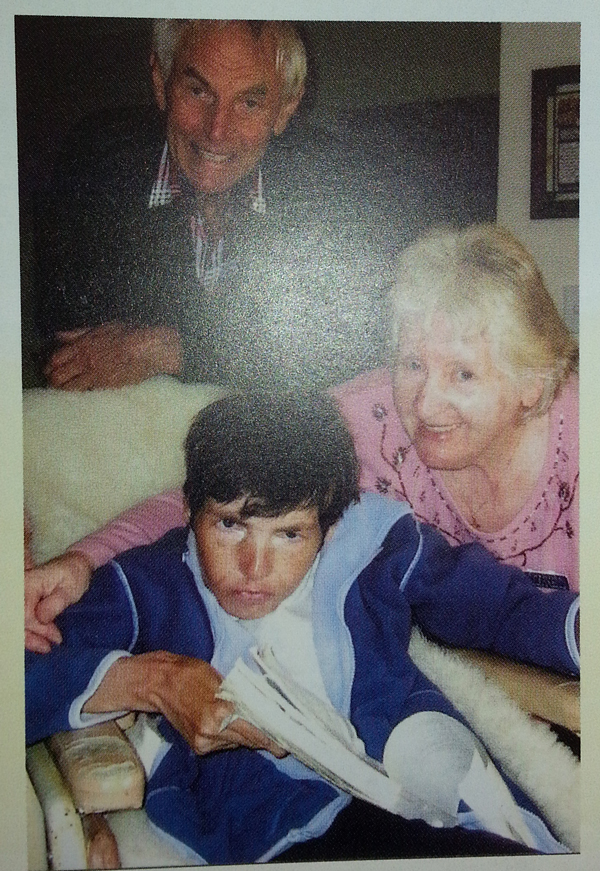
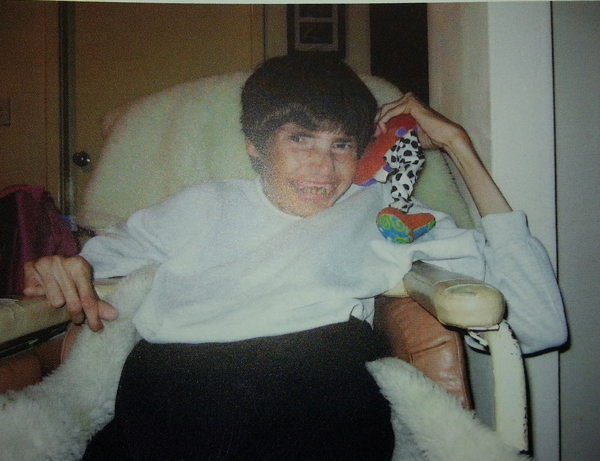
We extend our deepest sympathies to Peter and Christina Even on the loss of their daughter, Ruth Anne-Mary Even.  Ruth was a beloved member of our church in Yanchep.  Ruth passed away peacefully on Thursday, 11 August, in the arms of her father.  Ruth’s funeral Mass will be held at St Anthony’s Church, Wanneroo at 10.15 a.m. on Thursday, 18th August, followed by a burial service at Pinnaroo Memorial Park on Whitfords Ave.

Ruth-Even-3

Ruth with her parents, Christina and Peter Even.

Christina and Peter have been beautiful witnesses to their faith through their love and care for Ruth over many years – and their wonderful family is such a sign of God’s goodness!

Christina-Peter-Even-50th-Wedding

Peter and Christina on the occasion of their 50th wedding anniversary, with their children, Elvira, John, Ingrid, Ben, Maree and Gloria, and their extended family, which includes seventeen grandchildren.

Rev. 21:4  “He will wipe away every tear from their eyes, and death shall be no more, neither shall there be morning, nor crying, nor pain anymore, for the former things have passed away.”

Eternal rest grant unto her, O Lord, and let perpetual light shine upon her!

Ruth-Even-2


Leave a comment

19th Sunday in Ordinary Time, Year C | Faithful and Wise Stewardship

The Faithful and Wise Steward Jan Luyken Etching Bowyer Bible

The Faithful and Wise Steward, Jan Luyken (1649-1712), etching, Bowyer Bible, Bolton, Greater Manchester, England.

“What sort of steward, then, is faithful and wise enough for the master to place him over his household to give them their allowance of food at the proper time?  Happy that servant if his master’s arrival finds him at this employment.” (Luke 12: 43-44)

This week’s Gospel talks about responsible stewardship.  I want to continue my theme from last week and ask if we are being wise and faithful stewards of our Pastoral Area from Yanchep to Lancelin.  It’s interesting that Jesus says that one of the steward’s jobs is to ‘give them their allowance of food’.  Yes, we can interpret this as referring to the Eucharist, but there is more to following Christ than the Mass and the Eucharist.  Christians need to be fed with the Word of God in Scripture, in excellent and inspirational homilies, and in the practice of the Word.  We need to remember that people leave Churches (or don’t even think of joining a Church) if they are not getting fed, if there is no sense of Communion in action.  They may be longing to see the Word of God being carried out in a communal plan.  We could say that a responsible steward gathers and feeds, but a slothful steward starves and scatters.  One of the signs that Jesus was the Christ, was that he gathered the tribes – he brought together the apostles and gathered a great many other disciples around himself; he took the trouble to heal, to talk to the crowds, to exorcise demons, to get out of his comfort zone par excellence.

One of the ways I was fed this week was through a thought-provoking interview of Andrew Bolt of Sky News by Pastor James Macpherson of Calvary Christian Church.  Bolt makes the point that

Tearing down things is a much easier way of asserting your individuality, your strength, your very existence, than creating something.  For every Leonardo da Vinci, there are ten thousand people that find it quite empowering to put a scratch in his work.

Bolt is an agnostic, but very aware that the popular trend of attacking Christianity will remove many of the freedoms and benefits that Christianity has brought to Western Civilisation.  So right here in our own little pastoral area, we need to be creating, gathering and building, witnessing strongly and not keeping our light under a bushel.  This week we have Census night and one of the questions is about religion.  How good have we been at making a difference to our local area’s Census results on the Catholic faith?

It seems to me that we should be asking (of ourselves) questions like these:

  1. Do the members of the church, under the leadership of the Priest, gather to ask questions like the ones I am asking?
  2. What is the mission of a Pastoral Area? Are we expecting ourselves to grow from a Pastoral Area to a Parish without actually doing any work or having a structured plan?  It seems to me that different members of our Pastoral Area  are carrying out some sort of mission in their own way, but there is no co-ordination of our activities so that we all feel we are working towards a common goal.
  3. Do we discuss how we can witness to Christ in our area, and actually form and document some implementable plans?
  4. Is it enough just to attend Mass, and not have any formal plans for outreach to former parishioners, outreach to the sick, outreach to the wider community, outreach to current members of our church who feel they are not being fed?
  5. Is anyone else, like me, interested in building our sense of Community, being fed through Bible Studies, film nights (I have plenty of inspirational Catholic material) and shared dinners.  Does anyone see that we need to meet together to give each other mutual support, plan for the future, reach out to the community and divide up the work so that we can all be assured that our stewardship duties are being addressed?

I am happy to host a discussion, if only I can find others who are on the same page.  Fellow parishioners or, for that matter, any residents of Yanchep, Guilderton and Lancelin, please let me know what you would like to see done in our Pastoral Area (just reply via the comment box – or phone me (Deirdre) at 0400 660 337).  If you are doing something already, please let us know how you are already contributing.

And do watch the Andrew Bolt interview!

Today’s readings:

Word format: Year C 19th Sunday 2016

Pdf format:Year C 19th Sunday 2016


Leave a comment

18th Sunday in Ordinary Time, Year C | The Spiritual Equivalent of the Rich Man

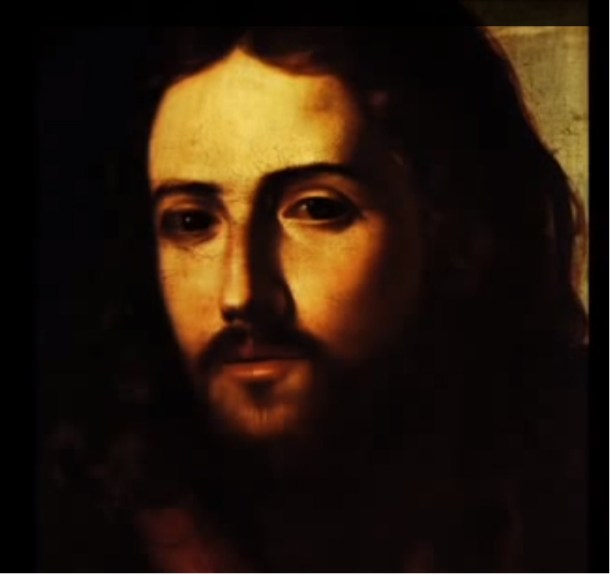
Jesus-Christ

Christ Blessing Children (detail), Pacecco de Rosa, 1600-1654, Metropolitan Museum of Art, New York.

“I will say to my soul: ‘My soul, you have plenty of good things laid by for many years to come; take things easy, eat, drink and have a good time.” (Luke 12:19)

If we are not particularly well off, it might be easy for us NOT to identify with the man in the parable in today’s readings.  Or if we are, say, a priest, we might feel that we’re immune from being compared with the rich man in the parable.  But I think Jesus wants us all to have a good hard look at how attached we are to worldly comfort, rather than storing up treasure for ourselves in heaven.

For instance, would it be right for a priest to say, “I offer Mass every day, and I pray the Divine Office,  meditating on every word, so now I can relax and enjoy the other worldly comforts of my life”?  In fact, it is easy for Priests to be somewhat removed from the realities which confront their ordinary parishioners.  No matter how poorly a priest might carry out his job, he receives a guaranteed income from the Archdiocese.  His parishioners who might be running businesses or working for the public or private sector, understand that they only hold their jobs if the business is profitable, or if they are meeting key performance review criteria.  And a business will only be profitable with the dedicated hard work of the employees.  Employers who sit back and cream off the profits created by the efforts of their workforce, breed resentment and will not grow their enterprise with integrity.  When the workers know that the employer doesn’t have any interest in hearing their input, attending to their concerns or being, so to speak, a shepherd to them, they will have little loyalty to the company and will readily seek for employment elsewhere.

So it is, that in our parish life, there are several things that pastors are supposed to be doing to store up their treasure in heaven and to build parish life.  If a pastor says he only has time to say Mass and pray the Divine Office, he has seriously misunderstood his role and responsibilities.  I would ask such a pastor to meditate and reflect on Canon 528 and 529 about the duties of pastors.  It is important for pastors to be aware that parishioners will vote with their feet by walking away to a different parish (or if their faith is wavering, even leaving the Church altogether) if they feel that the pastor is inward-looking, not outward-looking, defensive when questioned, prone to report parishioners who have genuine concerns to the vicar general  for correction, instead of dealing with their concerns courageously and honestly, and with a genuine spirit of humility and self-examination.

When God makes a demand for our souls, will we truly be able to say that we have stored up treasure in heaven and addressed the duties outlined below in our pastoral area?  What example are we setting in the wider community?  Do people see us as a clique turned in on itself, or as people filled with the light of Christ who bring a message of hope, help and outreach to Yanchep, Guilderton and Lancelin?

Here are some excerpts from the duties of pastors according to Canon Law:

PARISHES, PASTORS  AND PAROCHIAL VICARS

Can. 528 §1  … He is to make every effort, even with the collaboration of the Christian faithful, so that the message of the gospel comes also to those who have ceased the practice of their religion or do not profess the true faith.

Can. 528 §2 … The pastor … is bound to watch over [the parish] so that no abuses creep in.

Can. 529 §1.  In order to fulfil his office diligently, a pastor is to strive to know the faithful entrusted to his care.  Therefore he is to visit families, sharing especially in the cares, anxieties and griefs of the faithful, strengthening them in the Lord.  With generous love, he is to help the sick, particularly those close to death, by refreshing them solicitously with the sacraments and commending their souls to God; with particular diligence he is to seek out the poor, the afflicted, the lonely … and similarly those weighed down by special difficulties.  He is to work so that spouses and parents are supported in fulfilling their proper duties and is to foster growth of Christian life in the family.

Can 529 §2 . A pastor is to recognize and promote the proper part which the lay members of the Christian faithful have in the mission of the Church, by fostering their associations for the purpose of religion.

Let’s all pray for our Pastoral Area, that it will be able to carry out its mission with greater faithfulness and zeal for the people of our area to encounter the love of God.

Today’s readings:

Word format: Year C 18th Sunday 2016

Pfd format: Year C 18th Sunday 2016


Leave a comment

17th Sunday in Ordinary Time, Year C | A blueprint for prayer

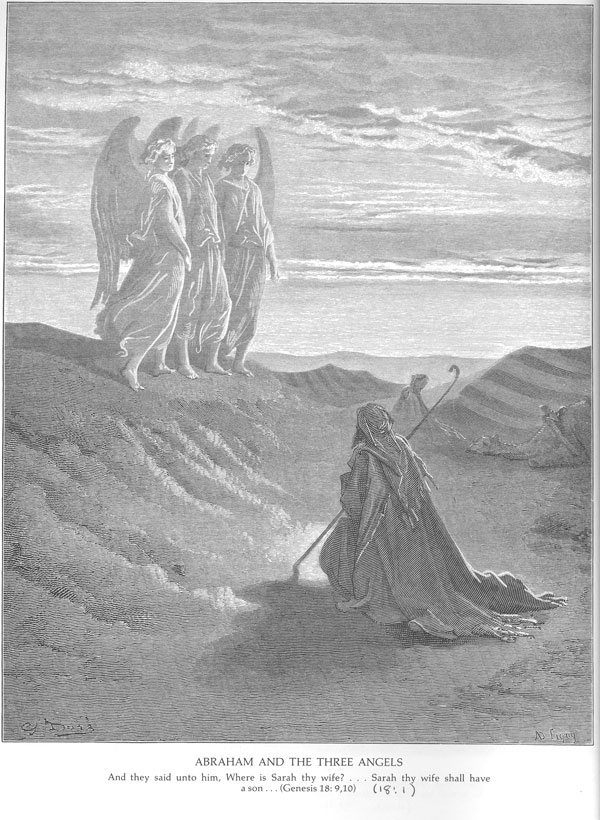
Abraham-and-the-three-angels-Dore-600x820

Abraham and the Three Angels, Gustav Doré (1832-1883), woodcut.

Have you tried praying?  When people tell me they don’t believe in God, I ask them how much they’ve spoken to God about that.  Why are they so ready to trust their own preconceived ideas on the matter (or is it that deep down, they don’t want God to be true)?  You see, Jesus says in our Gospel today, “How much more will the heavenly Father give the Holy Spirit to those who ask him!”  So go on, ask away.

I don’t want to drone on, so I’ll merely refer you to Bishop Barron’s homily for today’s readings, as well as Brant Pitre’s video presentation here:

https://www.youtube.com/watch?v=8rnlJWL2FNE

Today’s readings

Word format: Year C 17th Sunday 2016

Pdf format: Year C 17th Sunday 2016


Leave a comment

16th Sunday in Ordinary Time | God, are you in control or do I have to take over?

Detail Jesus in the home of Mary and Martha Tintoretto

Christ in the House of Martha and Mary (detail), Jacopo Tintoretto, c. 1570, oil on canvas, Alte Pinakothek, Munich, Germany.

How often do you want to tell God what he’s supposed to be doing?  I find myself doing this increasingly, especially now in our unusually mixed-up times.

Martha does it, in today’s Gospel:   ‘Lord, do you not care that my sister is leaving me to do the serving all by myself? Please tell her to help me.’  James and John did it when they said, of the inhospitable Samaritans, ‘Lord, do you want us to command fire to come down from heaven and destroy them?’  Peter did it, when he rebuked Jesus for foretelling the suffering he would undergo: ‘Never, Lord!  This shall never happen to you!’  Even Mary and Joseph did it when they said, ‘Son, why have you treated us like this?  Your father and I have been anxiously searching for you.’

Jesus just doesn’t seem to do what any normal, sensible person would.

But then, perhaps that’s because he’s God, and we are not.

‘As the heavens are higher than the earth,

so are my ways higher than your ways

and my thoughts than your thoughts.’ (Isaiah 55:9)

We have to remember that we aren’t God, and that God has ways of doing things that might not occur to us from our cramped and self-indulgent perspective.

A lot of us think we are God (or at least we ought to be).  We want to be able to define things for ourselves.  Some of us want to redefine the scope and purpose of marriage.  Some of us want to define exactly when a baby can be regarded as a human (or not).  Some of us want to be able to decide the manner and the time of our death.  Some of us want to subjugate anyone who refuses to submit to Allah.  Some of us want to hound Christians out of the public square.  Some of us are just very angry at all the other people who are being disagreeable.  With all these people wanting to take over God’s role, it’s enough to make anyone anxious, or at least want to crawl into a hole.

Well, in today’s Gospel, Mary has chosen ‘the better part’.  She is sitting in rapt attention at Jesus’ feet, absorbing everything he says.  Jesus’ advice to Martha?  ‘Martha, Martha,’ he said, ‘you worry and fret about so many things, and yet few are needed, indeed only one. It is Mary who has chosen the better part; it is not to be taken from her.’

If you’re feeling anxious, get close to Jesus.  He knows your problems.  Trust him to have a plan.  If you can’t see his plan right now, immerse yourself in the Gospel and cast all your worries on Him.  It’s easier if we remember that we’re not in Paradise yet, and this life wasn’t meant to be comfortable.  We only get there if we navigate through life, remaining faithful to Him throughout our quest.  God probably hasn’t put you in control of the world, so stick to doing good in the little things you can control – small acts of kindness, for example.

Today’s readings:

Word format: Year C 16th Sunday 2016

Pdf format: Year C 16th Sunday 2016


Leave a comment

Fr Augustine sick, Mass relocated this weekend!

Sick person

Fr Augustine is ill, so Mass is relocated this weekend (9-10 July, 2016).

Mass is available at St Andrew’s Clarkson either on Saturday at 6 p.m. or Sunday at 7.30 a.m., 9.00 a.m. and 5.30 p.m.

Gingin Mass is at St Catherine’s, Vincent St, at 6.00 p.m Saturday.

We wish Fr Augustine a speedy recovery!  We have done a ring-around to all parishioners who have given us their contact details.


Leave a comment

14th Sunday, Year C | Our Binary Option

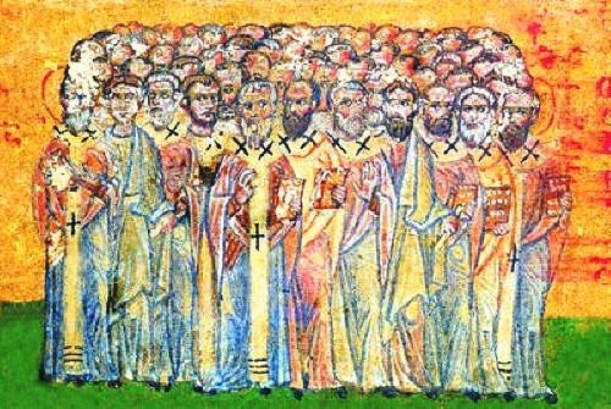
Seventy Apostles Russian Icon

Cathedral of 70 Apostles (miniature from the Greek-Georgian Manuscripts , XV century ). Собор 70 апостолов (миниатюра из греко-грузинской рукописи, XV век).

We all have a fundamental choice, and it’s not complicated.  Imagine your life as a computer program.  At every moment, God presents you with certain choices.  It’s up to you to decide what you do.  The fact that you’re given a choice is a good thing.  It means that God is not trying to compel you – he respects your freedom.  But it’s not the freedom to choose as such that decides your outcome, it’s the actual choice you make that determines where you end up: heaven or hell.

Let’s take as an example the towns Jesus is sending the 72 apostles to this week.  They are travelling from Galilee to Jerusalem via Samaria, announcing that the kingdom is at hand.  Jesus is ‘gathering the tribes’ as prophesied in Isaiah 11:12 “He will raise a signal for the nations and will assemble the banished of Israel, and gather the dispersed of Judah from the four corners of the earth.”

The people in these towns have the fundamental option of welcoming the apostles or rejecting them.  It’s that simple.  Now maybe some of the people are naturally fearful of strangers, or possibly Samaritan haters of Jews.  No wonder our Lord instructs the disciples to make their first statement “Peace to this house”.  But Jews in general (and also Samaritans) followed the Pentateuch, which clearly states the principles of hospitality, according to the Jewish Encyclopedia.

The “ger,” the sojourner who lived with a Hebrew family or clan, was assured by the Biblical law not only of protection against oppression (Ex. xxiii. 9) and deceit (Lev. xix. 33), but also of love from the natives (Deut. xvi. 14), who were to love him even as themselves (Lev. xix. 34).

So, when the apostles report back, it seems that many of the towns have in fact been welcoming to them and accepted the proclamation of the Kingdom:

The seventy-two came back rejoicing!

We understand that some did actually reject Christ and his apostles, for he says,

“Woe to you, Chorazin! Woe to you, Bethsaida! For if the mighty works done in you had been done in Tyre and Sidon, they would have repented long ago, sitting in sackcloth and ashes.”

We’re all afraid of evangelizing our friends and families, because we’re fundamentally afraid of rejection.  Stop worrying and start obeying Jesus.  Yes, our families may choose to reject us.  But keep trying in various ways, and go as a man of peace, and not as an argumentative spirit, and the Holy Spirit will open hearts and minds wherever there is an opportunity.

Concrete example: every night I do some spiritual reading on the Saint of the next day.  On Thursday night, I read about St Thierry, who died on 1 July, 533.  I happen to know someone called Thierry, and thought, “Wouldn’t it be amazing if he happened to ring on 1 July.  I could tell him about this saint!”  Now I usually only hear from Thierry about half a dozen times a year, and it’s always in a work context.  But lo and behold, at 12 o’clock on Friday, my mobile rang and who should it be but Thierry himself, so I was able to carry out my plan by sending him a link to this saint’s life story.  (Fortunately, he reads French.)  I’m always amazed when God creates these opportunities.

Jesus says in Luke 10: ‘Anyone who listens to you listens to me; anyone who rejects you rejects me, and those who reject me reject the one who sent me.’  The more you give people the opportunity of listening to you explain the kingdom of God, the more likely they are to move towards the option of following Christ themselves.  And don’t we want everyone to be able to ‘rejoice that their names are written in heaven’?

Today’s readings:

Word format: Year C 14th Sunday 2016

Pdf format: Year C 14th Sunday 2016


1 Comment

12th Sunday in Ordinary Time | How to Respond to Acts of Hatred

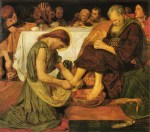
Jesus_washing_Peter's_feet-Ford Madox Brown

Jesus Washing Peter’s Feet, Ford Madox Brown (1852-56), oil on canvas, Tate Gallery, London.

In the week that added the Orlando Massacre to our violent world, we are confronted as Christians with questions on how to talk about and respond to this kind of act.  The whole conversation is made worse by the identity politics that is rampant in our time.  Our tribal nature as humans makes us want to belong to a particular tribe: LGBTQ, Muslim, Liberal, Labor, Anti-vaccine, All Natural, Pro-Choice, Pro-life, Catholic, Protestant – choose your hashtag.  Identity politics helps us to feel loved, accepted and understood within our chosen group.  It is comforting to us to know that we are not alone in the world, that there are others who see things our way.  I felt this myself when I changed from watching the news on ABC (which, though being our public broadcaster, inclines to a singularly left-wing version of reality) to watching the Bolt Report on Sky Channel.  I thought, “At last, the voice of reason and sanity!”

But an unfortunate side-effect of identity politics is that it sets up any opposing groups as ‘the enemy’.   Identifying with one group often leads to stereotyping of other groups, rather than peaceful encounter.  Pope Francis has the measure of this, when he asks us to go out and encounter others.  Encounter helps us to humanise people; separation helps us to demonise people.  He sets the example by going out of his way to arrange meetings not only with other Catholics but with people like Mahmoud Abbas, gay couple Yayo Grassi and Iwan Bagus, Patriarch Kirill, prisoners, George Clooney, Rabbi Boruch Perton and so on, people with whom he has only a very limited shared set of beliefs, BUT who all share in our common humanity.

Some people get upset that Pope Francis has met with x, y or z, and think this means that he is showing support for the beliefs of Muslims, Hindus, LGBTQs, etc.  On the contrary, this is where the Catholic understanding of separating the person from their acts is so useful.  It allows us to love the person, while feeling perfectly free to analyse and possibly critique their beliefs, and we shouldn’t be ashamed to do so.  I would say that these things are necessary in any encounter with someone who identifies with a different group from us:

  1. We, as Catholics, must thoroughly understand and be confident about our own Church’s position on any particular point.
  2. We must not be afraid to talk to someone from another identity group, and ask them how they understand their beliefs (listening is always helpful).
  3. We need to be able to explain our beliefs on the same topic, without getting angry or self-righteous!
  4. We should then work out what common beliefs we have so that we can identify our common humanity and foster love, not hatred.
  5. We should pray for our friend with sincerity of heart and leave the Holy Spirit to do the rest.
  6. Note that if you are friends with another person who disagrees with you, it will be harder for them to indulge in hatred themselves.  An important point to understand is that disagreement is not synonymous with hate.
  7. If your friends choose to take a path of hatred towards you for disagreeing with them, then we need to be ready to embrace the cross of rejection or persecution. Jesus did, and he prayed, “Forgive them Father, for they know not what they do.”  This is what it will come down to in the end, whether we can embrace the cross.

But maybe, just maybe, they will be converted by our teaching and our behaviour, as, for example, these Muslims converting to Christianity, or even James Parker, the gay Catholic apologist:

Along the journey of acrimonious engagement with different expressions of Christianity I came across some startling, dare I say life-changing, revelations. In short, I came to understand that some of the people and organisations that I had consistently learned to blame and finger-wag for my despair were in fact conduits of my discovering an equal standing with others. This in turn led to a deeper sense of self-acceptance and my despair metamorphosing into a rich hope … It is the last thing I ever imagined doing when I first came out as a gay man in my late teens, especially as I saw the Catholic Church’s teaching as being the most archaic of all. The group’s policy is to refuse to diminish anyone by using labels … while honestly facing the reality of thoughts, feelings and actions. We seek to meet each other on our unique life journeys with authenticity and to bring them to the cross. (James Parker’s Story).

Today’s readings speak loudly about the necessity of embracing the cross in our walk with Christ:

Word format: Year C 12th Sunday 2016

Pdf format:Year C 12th Sunday 2016


Leave a comment

11th Sunday in Ordinary Time | The Deepest Desire of Our Hearts

Rothermel Thou Art the Man David and Nathan

Thou Art The Man [King David with Nathan the Prophet], Peter Frederick Rothermel, 1884, Pennsylvania Academy of the Fine Arts, Philadelphia.

Today’s Communion Antiphon is one of my favourite verses in the Bible, and there’s a story to why this verse became important to me:

There is one thing I ask of the Lord, only this do I seek: to live in the house of the Lord all the days of my life. (Psalm 27(26):4)

Back in about 1977, when I was seventeen, I decided to read the Bible cover to cover.  It wasn’t as if I didn’t know the Bible, as I had been a churchgoer all my life, but it’s one thing to hear homilies and the Mass readings in a disjointed way, and quite another to read the Bible as a continuous narrative, albeit a narrative in a number of different genres.

What struck me, when I read the Bible like this, was the seriousness with which God takes our sin and disobedience.  Each person’s life is like a quest where even the tiniest decisions determine the state of one’s soul, the course of one’s life, and then finally, the fate of one’s soul in the afterlife.

Enter by the narrow gate. For the gate is wide and the way is easy that leads to destruction, and those who enter by it are many.  For the gate is narrow and the way is hard that leads to life, and those who find it are few. (Matthew 7:13-14) 

What I wanted was certainty that I was on the right path.  It’s very easy to live a double life – to think you’re on the right path, but to be blind to your own faults.  I could see that I was living a life of relative comfort, while in the same street homeless people were sleeping on park benches.   I could see that most of my day to day activities revolved around pleasing myself, rather than helping others.  I was sure God expected more of me, and I worked myself up into a state of great anxiety wondering whether I would ever be able to walk the narrow way.  I was aware that many of the Protestant churches play down the importance of our actions (works), and attribute salvation entirely to our faith, but reading the Bible made it clear to me that this was only half the story: works are important too!  (For more on this, see Faith – what must we do to be saved.)

It was in this frame of mind that I kept asking God, “Please give me some assurance that you will help me to inherit eternal life!  Because I definitely don’t want to miss out on eternal life through my own selfishness, laziness, stupidity and ignorance.  I just want to know that I won’t end up in hell.”

How times have changed: I can’t think of anyone I know who actually worries about this question any more and talks about it.  But I’ve heard people say they would rather be in hell than have to obey a God who allows the possibility for hell to exist.  Go figure.  Maybe this is because they haven’t had hell explained to them accurately.  But God has to have somewhere to put souls who have self-selected not to love him during their earthly lives.

Bishop Robert Barron explains hell here:

Anyway, around that time, I had entered a Nazareth House knit-a-thon.  Nazareth House was the Convent across the road which provided housing and care for abandoned children and the aged, and they were going to use the knitted strips to make blankets for the needy.  I remember pestering everyone at work to sponsor me a certain amount of money per knitted row.  And I ended up winning the competition (surprisingly, as I am a terrible knitter), so the Nuns gave me a small prize, which included a prayer card with a special message:

There is one thing I ask of the Lord, only this do I seek: to live in the house of the Lord all the days of my life. (Psalm 27(26):4)

It was as if God was giving me his personal assurance not to worry, and to keep persevering in my walk with him.  I still have this card, which is so precious to me for its reminder that God wants to have a conversation with us and answer the deepest desires of our hearts.

For a great homily on today’s readings, try this one – yes, we have God’s grace, but it doesn’t come cheap.  David discovered this in today’s first reading, where God sends Nathan to point out to David his hypocrisy and contempt for the Lord.

Today’s readings:

Word format: Year C 11th Sunday 2016

Pdf format: Year C 11th Sunday 2016