Catholic in Yanchep

Go out into the deep.


Leave a comment

4th Sunday of Easter, Year B | Anzac Day and the Good Shepherd who lays down his life for his sheep

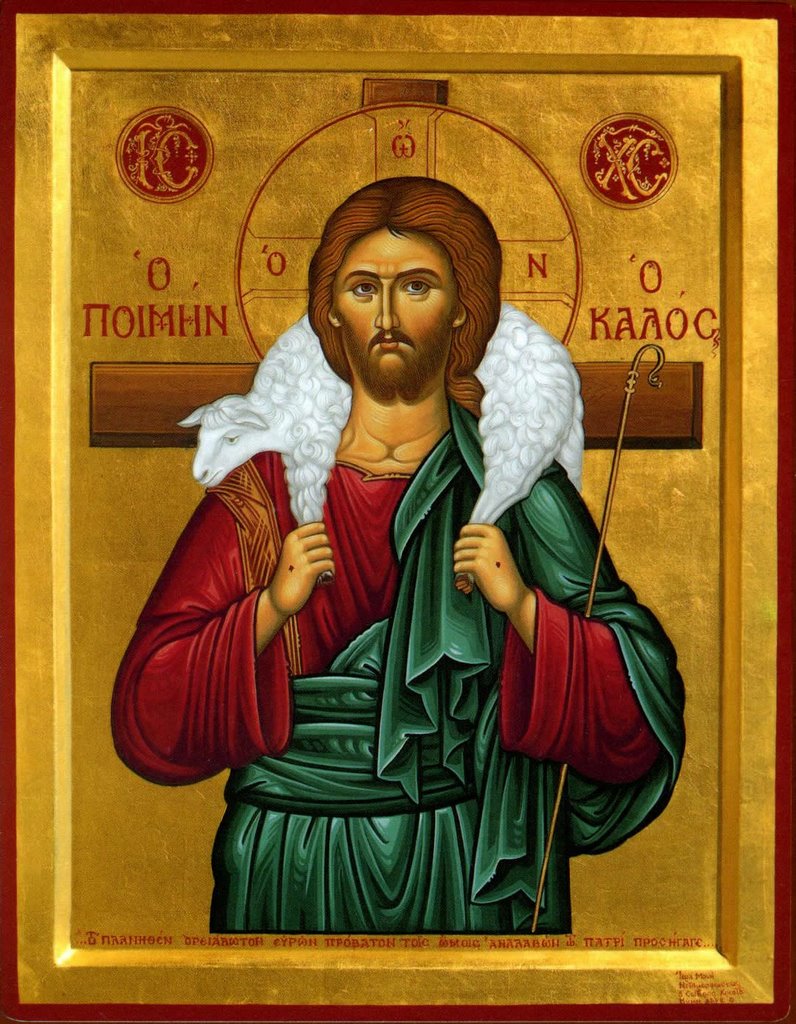
The Good Shepherd, Greek Orthodox Byzantine Icon, egg tempera on wood panel.

The Good Shepherd, Greek Orthodox Byzantine Icon, egg tempera on wood panel.

Today’s Mass readings:

Word format: Year B Easter 4th Sunday 2015

Pdf format: Year B Easter 4th Sunday 2015

This year Anzac Day is celebrated on the same weekend as Good Shepherd Sunday, the 4th Sunday of Easter.  Every year, the crowds attending Anzac Day ceremonies get bigger.   It is as if we humans instinctively understand sacrifice, our hearts know that sacrifice is crucial to salvation and we need to honour those who have made sacrifices in the service of others.  The Christian understanding of redemptive suffering adds value to our interpretation of the Anzac sacrifice.

Dom Carrigan CSSR draws some parallels between Easter and Anzac Day here:

Easter and Anzac Day are inextricably intertwined. Anzac Day always falls in the Easter season. They have marked differences, yet have much in common.

Both deal with suffering, sacrifice and death. At Gallipoli in Turkey, thousands of soldiers on both sides suffered terribly and died for their causes. At Calvary, Jesus, the Word of God- become-man, suffered terribly and died on a cross as a sacrifice for the world.

At Gallipoli, the Australian and New Zealand troops rejoiced that they were going to war. They wanted to test themselves internationally on the battlefield. At Calvary, Jesus prayed in the Garden of Gethsemane that the ‘cup’ of suffering would be taken from him. Yet each faced the future with courage and conviction.

At Gallipoli, there were tens of thousands of soldiers and, in general, a tremendous spirit of mateship. At Calvary, Jesus was deserted by his own disciples (except for a few, mainly women) and felt completely abandoned.

At Gallipoli the soldiers had rifles, bayonets, guns, as well as other instruments of war to wound and to kill. At Calvary, Jesus was defenceless. He had even told Peter to put away his sword (John 18:11).

Gallipoli was a military defeat, yet it was regarded as a victory for the Anzac spirit as well as for the brilliant way Australian Brigadier-General Brudenell White organised the withdrawal of the troops. It was feared in Britain that they would ‘lose 25,000 men and many guns’ in the withdrawal (FitzSimons, Gallipoli p. 616).  In fact, unbelievably, there were no fatalities in the withdrawal.

Calvary was seen as a defeat for Jesus and his followers. Instead it turned out to be the necessary way to his victory. Jesus had said to the two disciples on the road to Emmaus, “Was it not ordained that the Christ should suffer and so enter into his glory?” (Luke 24:26).

This year there will be celebrations greater than ever, both at Gallipoli and around Australia and New Zealand, because of the Anzac centenary. At Easter, millions of Christians will celebrate the triumph of Jesus over sin and evil and death.

In today’s Gospel, Jesus says,

I am the good shepherd:
the good shepherd is one
who lays down his life for his sheep.
The hired man, since he is not the shepherd
and the sheep do not belong to him,
abandons the sheep and runs away
as soon as he sees a wolf coming,
and then the wolf attacks and scatters the sheep;
this is because he is only a hired man
and has no concern for the sheep.

I am the good shepherd;
I know my own and my own know me,
just as the Father knows me and I know the Father;
and I lay down my life for my sheep.

To understand more about the purpose of Jesus’ death and suffering, read on at The Sacred Page, where Dr John Bergsma goes in deep with today’s readings.  In fact it is Yeshua of Nazareth, Jesus the Christ, the ultimate sacrifice, the cornerstone rejected by the builders, who is the key to our salvation.  He knows us personally, and those who are seeking the truth will recognise his voice and he will speak to their hearts.  For some extra thoughts on Jesus knowing and loving you personally in the light of today’s readings, listen here.


1 Comment

3rd Sunday of Easter, Year B | They stood there dumbfounded

The Resurrection, showing Christ raising Adam and Eve, Greek Orthodox Byzantine Icon, egg tempera on wood panel.

The Resurrection, showing Christ raising Adam and Eve, Greek Orthodox Byzantine Icon, egg tempera on wood panel.

Why do people change their minds?  In today’s readings the apostles are dumbfounded to realise that Jesus’ resurrection is right here, right now and not at some vague time ‘at the end of the age’.  Matt Nelson writes about the reasons atheists change their minds about God and and more specifically, about Christ.  An extract from his latest article:

The Word of God is living. It has power beyond human comprehension because it is “God-breathed.” God speaks to man in many ways; but especially through prayer and the reading of the inspired Scriptures. When curiosity (or even interest) of non-believers leads to experimentation with prayer or reading the Bible the results can be shocking, as many converts attest.

One former atheist who was profoundly affected by prayer and the Scriptures is author Devin Rose. On his blog, he describes the role that God’s Word played in his gradual conversion process from atheism to Christianity:

“I began praying, saying, “God, you know I do not believe in you, but I am in trouble and need help. If you are real, help me.” I started reading the Bible to learn about what Christianity said…”

Once Rose began to read the Scriptures and talk to God, even as a skeptic, he found himself overwhelmed by something very real:

“Still, I persevered. I kept reading the Bible, asking my roommate questions about what I was reading, and praying. Then, slowly, and amazingly, my faith grew and it eventually threatened to whelm my many doubts and unbelief.”

And the rest was history for the now rising Catholic apologist and author of The Protestant’s Dilemma.

Similarly, renowned sci-fi author John C. Wright distinctly recalls a prayer he said as an adamant atheist:

“I prayed. ‘Dear God, I know… that you do not exist. Nonetheless, as a scholar, I am forced to entertain the hypothetical possibility that I am mistaken. So just in case I am mistaken, please reveal yourself to me in some fashion that will prove your case. If you do not answer, I can safely assume that either you do not care whether I believe in you, or that you have no power to produce evidence to persuade me…If you do not exist, this prayer is merely words in the air, and I lose nothing but a bit of my dignity. Thanking you in advance for your kind cooperation in this matter, John Wright.’”

Wright soon received the answer (and effect) he did not expect:

“Something from beyond the reach of time and space, more fundamental than reality, reached across the universe and broke into my soul and changed me…I was altered down to the root of my being…It was like falling in love.”

Wright was welcomed into the Catholic Church at Easter in 2008.

Read more here.

Today’s readings:

Word format: Year B Easter 3rd Sunday 2015

Pdf format: Year B Easter 3rd Sunday 2015

And for a scripture study on today’s readings go to Dr Michael Barber’s commentary here.


1 Comment

2nd Sunday of Easter, Year B | Does God’s Divine Mercy mean you don’t have to do anything to be saved?

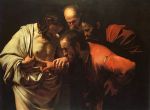
The Incredulity of St Thomas, Caravaggio, (1602), oil on canvas, Sanssouci Palace, Potsdam, Germany.

The Incredulity of St Thomas, Caravaggio, (1602), oil on canvas, Sanssouci Palace, Potsdam, Germany.

This Sunday is the Divine Mercy Sunday, and Pope Francis is about to convoke a Jubilee of Divine Mercy starting on 8th December.  A jubilee year is a time of joy and universal pardon (see Leviticus 25).  Does this mean we are all going to be pardoned without our cooperation?  Let’s remember what St Augustine said:

“He was handed over for our offenses, and He rose again for our justification (19).” What does this mean, “for our justification”? So that He might justify us; so that He might make us just. You will be a work of God, not only because you are a man, but also because you are just. For it is better that you be just than that you be a man. If God made you a man, and you made yourself just, something you were doing would be better than what God did. But God made you without any cooperation on your part. For you did not lend your consent so that god could make you. How could you have consented, when you did not exist? But he who made you without your consent does not justify you without your consent. He made you without your knowledge, but He does not justify you without you willing it.” (Sermon 169, 13, ca. 391-430 A.D.)

To quote Billy Kwan in The Year of Living Dangerously, “What then, must we do?” To understand what you need to do, listen to Fr Barron’s homily here.  It’s not enough just to be ‘a nice person’.  Or as Dietrich Bonhoeffer said,

Cheap grace is the preaching of forgiveness without requiring repentance, baptism without church discipline. Communion without confession. Cheap grace is grace without discipleship, grace without the cross, grace without Jesus Christ. (The Cost of Discipleship)

Today’s readings can be downloaded here:

Word format: Year B Easter 2nd Sunday 2015

Pdf format: Year B Easter 2nd Sunday 2015


Leave a comment

Easter | The Resurrection of Jesus Christ: Myth or Reality?

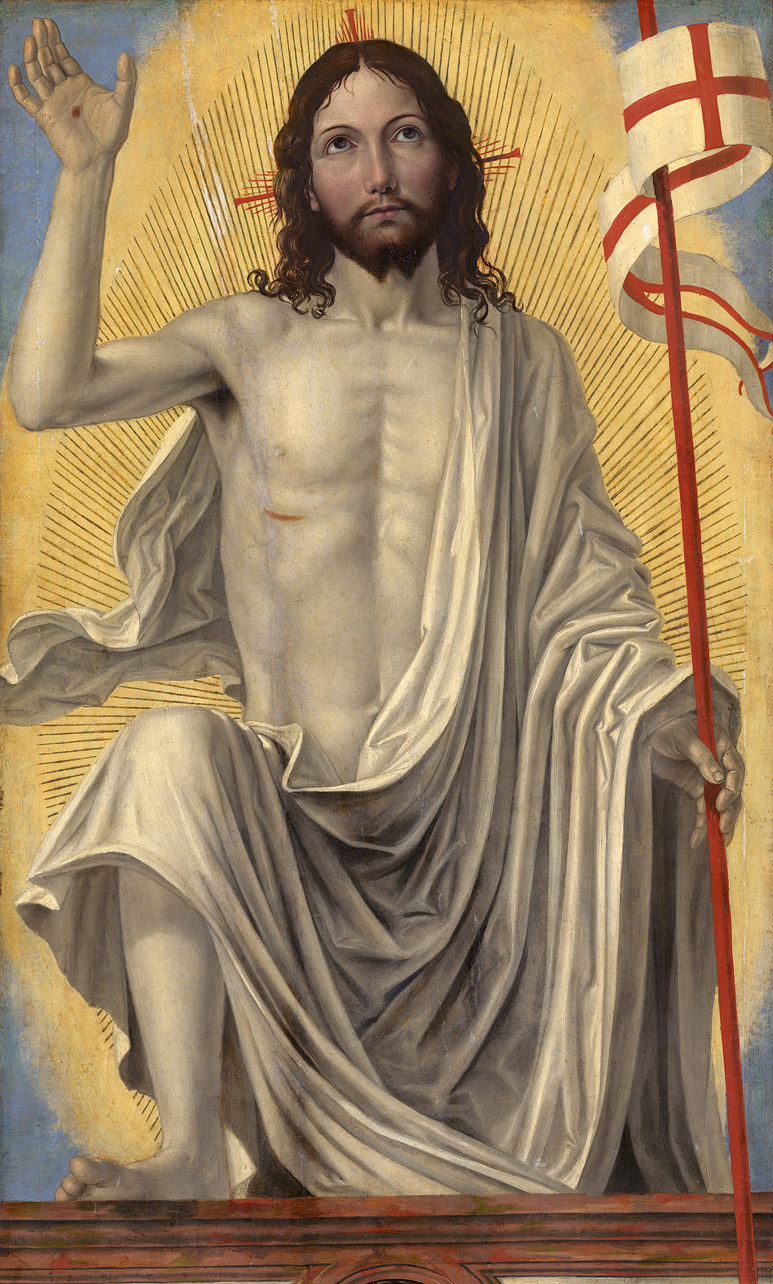
Christ Risen from the Tomb, Ambrogio Bergognone (c. 1470-1523), Samual H. Kress Collection, National Gallery of Art, Washington.

Christ Risen from the Tomb, Ambrogio Bergognone (c. 1470-1523), Samual H. Kress Collection, National Gallery of Art, Washington.

A very happy and blessed Easter to all our readers! Please join us at 6.30 tonight for the Vigil.

Readings for the Easter Vigil:

Word format:  Easter A B C

Pdf format: Easter A B C

Let’s face it, our culture has walked so far away from Jesus that it is now high time we turned around and saw him with fresh eyes.  Christians are not worshipping some mythical figure, wise teacher or guru.

The first witnesses maintain that the same Jesus who had been brutally and unmistakably put to death and buried was, through the power of God, alive again. He was not vaguely “with God,” nor had his soul escaped from his body; nor had he risen in a purely symbolic or metaphorical sense. He, Jeshoua from Nazareth, the friend whom they knew, was alive again. What was expected for all the righteous dead at the end of time had happened, in time, to this one particular man, to this Jesus. It was the very novelty of the event that gave such energy and verve to the first Christian proclamation. On practically every page of the New Testament, we find a grab-you-by-the-lapels quality, for the early Christians were not trading in bland spiritual abstractions or moral bromides. They were trying to tell the whole world that something so new and astounding had happened that nothing would ever again be the same. ( Fr Robert Barron: continue reading at  http://www.wordonfire.org/resources/article/what-easter-means/482/)

Watch this video to find out why the Resurrection of Jesus Christ is credible.

Even today, miracles are occurring to confirm that Jesus is alive and with us.  They just don’t get into the mainstream media.  Read here about the Eucharistic Miracle witnessed by Pope Francis, and attested to by well-known Australian investigative journalist, Mike Willesee.

http://www.loamagazine.org/nr/the_main_topic/eucharistic_miracle_in_buenos.html


Leave a comment

Good Friday | Why did Jesus die?

The Crucifixion, Isenheim Altarpiece, centre panel, Matthias Grünewald, 1512-1516, chapel of the Hospital of Saint Anthony, Isenheim, Germany, c. 1510-15, oil on wood, 9' 9 1/2" x 10' 9" Unterlinden Museum, Colmar, France.

The Crucifixion, Isenheim Altarpiece, centre panel, Matthias Grünewald, 1512-1516, chapel of the Hospital of Saint Anthony, Isenheim, Germany, c. 1510-15, oil on wood, 9′ 9 1/2″ x 10′ 9″ Unterlinden Museum, Colmar, France.

Today is the most solemn day of the year, and Catholics spend it in prayer, fasting and abstinence.  Why do we do it?  What is the significance of Jesus dying on the cross?

Billy Kangas discusses this question on his blog

An excerpt …

One day I came in and there was a giant banner hanging over the pulpit that read, “Why did Jesus die?” At first I didn’t take too much notice of it, but as I sat alone in the room for the next two hours the question began to gnaw at me. It got under my skin, it infected me. It became more than a question, it became a challenge. The question “why did Jesus die,” eventually drove me to question my faith, rethink my dogma and eventually set me on a path that ended in my joining the Catholic Church in the 2013 Easter Vigil.

Kangas goes on to explain the difference between the Protestant ‘penal substitution’ explanation (Jesus has to suffer for us because God is angry) and the Catholic view:

Augustine realized that God could have saved us with his power. God is fully capable of overpowering any creature, sin, vice, or person. God chooses to overcome with Christ’s death because God wanted to create a life with humanity where they could participate in God’s saving action with Him. A pure exercise of divine power would not have given humanity a way of participation. God used the shedding of blood because he wanted to give humanity a path of salvation that they could imitate, and even be united in through the sacramental life of the church.

Although men and women are freed from death and forgiven of their sins, they are not made perfect when they are baptized into Christ. People still fall into temptation and sin. Augustine also viewed the Cross as a sure guide for endurance in Christ. God’s action in Christ’s life, and death is the starting point that demonstrates what true obedience to God looks like. The salvation which is inaugurated on the cross is worked out as God’s grace works actively in us, and is made perfect as the Church as a whole is saved from even their sinful desires through the purgative life of the saints in unity with one another in Christ. (c.f. Augustine, Sermon 222; 232; 233)

Read more: http://www.patheos.com/blogs/billykangas/2014/01/how-this-simple-question-turned-me-catholic.html#ixzz3WCXudEBj.

I have put together a booklet for The Lord’s Passion, which we remember this afternoon at 3 p.m.  Please join us for this and Stations of the Cross this morning at 10 a.m.

Word format: Good Friday A B C

Pdf format: Good Friday A B C


Leave a comment

Mass Times and Venues for Holy Week, Yanchep to Lancelin

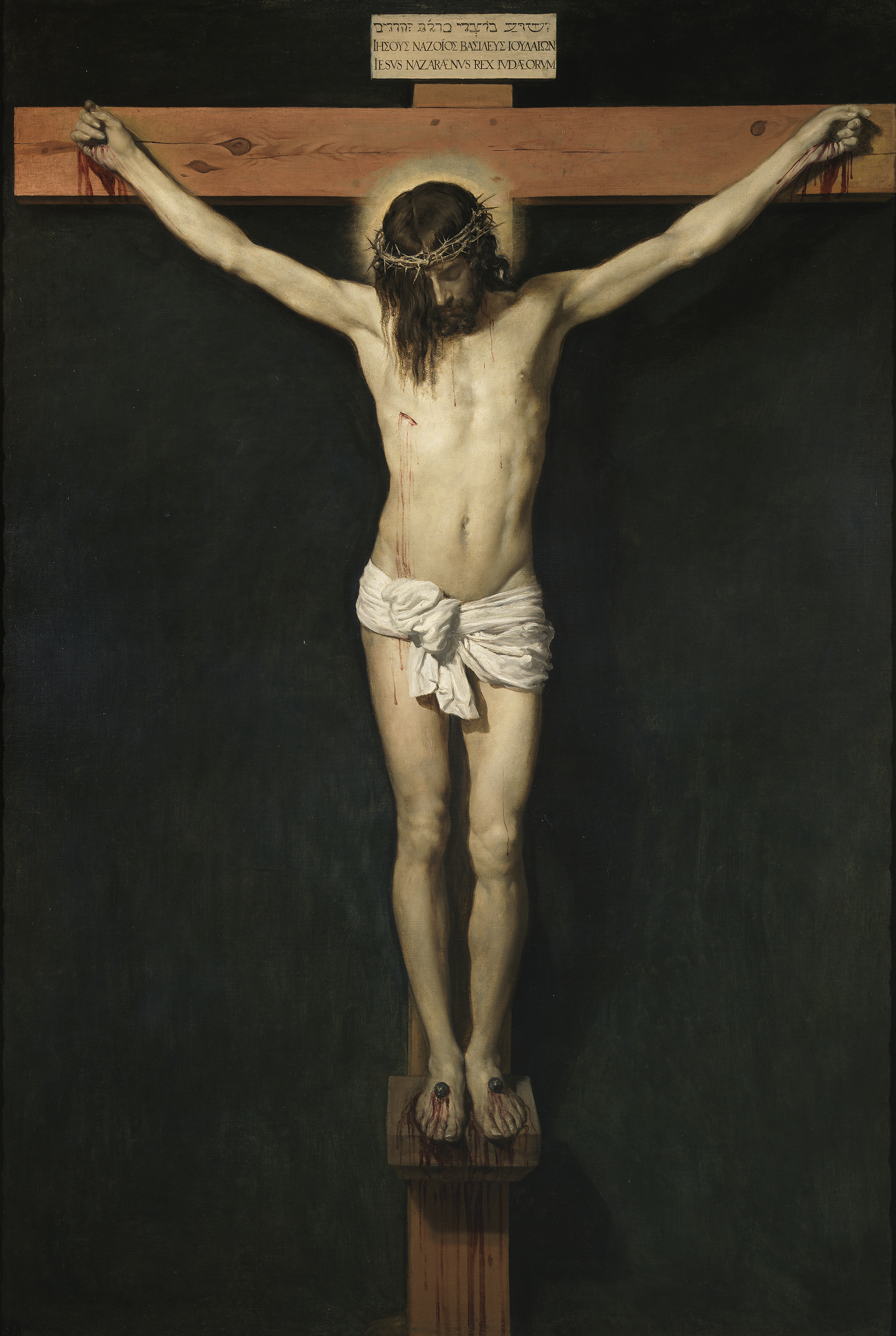
Christ Crucified, Diego Velazquez, 1632, oil on canvas, Museo del Prado, Madrid

Christ Crucified, Diego Velazquez, 1632, oil on canvas, Museo del Prado, Madrid

HOLY THURSDAY, 2 April: Confession 6 p.m. before Mass, Presbytery, 3 Blaxland Ave, Two Rocks.

MASS OF THE LORD’S SUPPER:   6.30 p.m., 2 April, Presbytery, 3 Blaxland Avenue,Two Rocks.

GOOD FRIDAY, 3 April:  STATIONS OF THE CROSS, 10 a.m., St James Church,  Lagoon Drive, Yanchep.

GOOD FRIDAY, 3 April: THE LORD’S PASSION, 3 p.m., St James Church, Yanchep

EASTER VIGIL:  YANCHEP: Saturday 4 April, 6.30 p.m., St James Church, Lagoon Drive.

EASTER SUNDAY: GUILDERTON:   Sunday, 5 April, 8 a.m., Guilderton Community Hall, Wedge Street.

EASTER SUNDAY: LANCELIN:   Sunday, 5 April,  10.00 a.m., 33 Gingin Road.

CONFESSIONS:       Please ask Fr Augustine before Mass.

Any questions?  Phone 9561 2172 or 0400 660 337.